-
-
January 3, 2021 at 3:36 pm
amitt515
SubscriberHello everyone, n I am running my simulation with the following reference values: nWhere I am changing the velocity to 1 m/s, 3 m/s, and 5 m/s and keeping everything else constant. I am finding that when I change the speeds (even to more extreme ones like 50 m/s), it is giving me a constant lift and drag coefficients but the Lift and Drag forces are changing more realistically. I am not sure why this is happening as my understanding is that the coefficients are proportional to velocity. Is this a simulation error or some physical phenomenon? nThanks nAarushin -
January 3, 2021 at 4:53 pm
-
January 4, 2021 at 2:47 pm
RK
Ansys EmployeeHello Aarushi, nCan you please go to Solution --> Reports --> Definitions and calculate the coefficients from there and let me know if you are facing the same issue? n n -
January 4, 2021 at 3:37 pm
amitt515
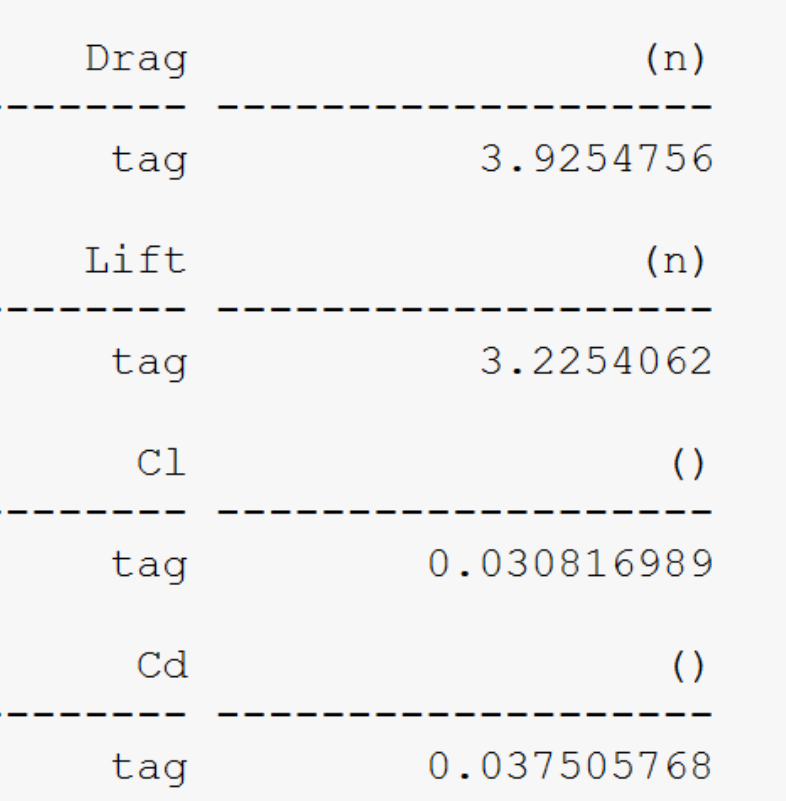
SubscriberHi, nThank you so much for your response.n I tried to do that and I am having the same problem. I have included screenshots of what I see for the same geometry simulated at three different speeds. nReport on the model at 3 m/s n
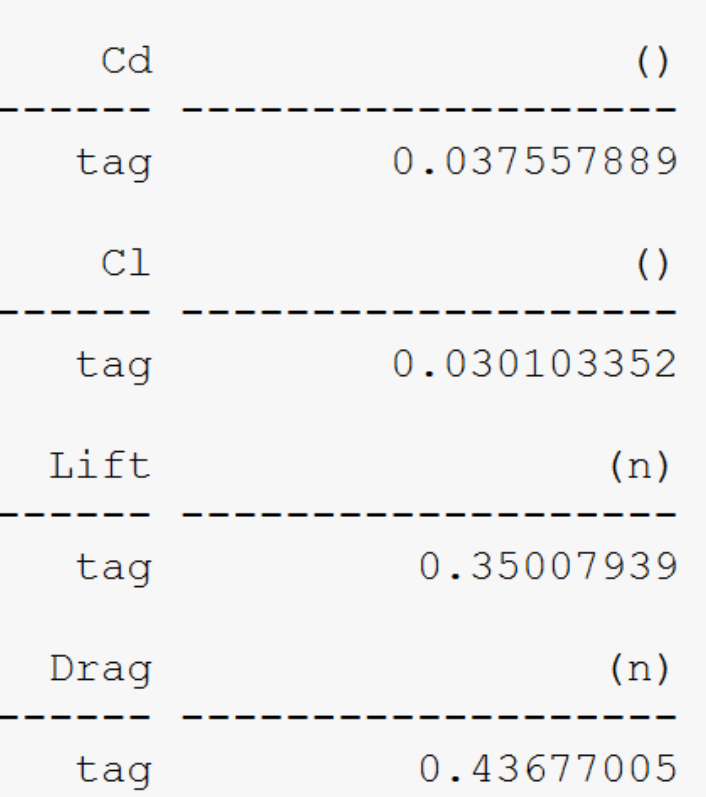
Report on the model at 1 m/s: n
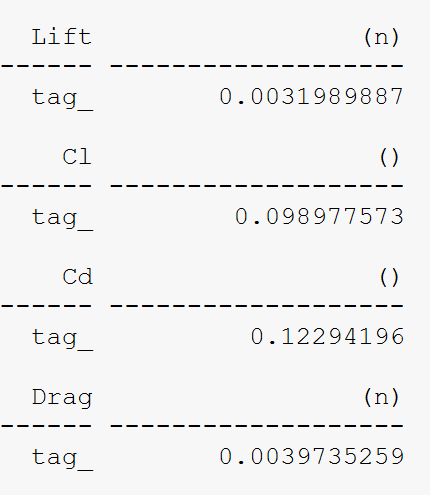
Report on the model at 5 m/s (rounded to the hundredth): n
Is there anything else I can try?nThanks again nAarushin
-
January 4, 2021 at 7:23 pm
YasserSelima
SubscriberAt high Reynolds number, the drag coefficient approaches a constant value. However, the drag force changes as it is proportional with V^2. May be this is the case in your simulation. Try decreasing Reynold's significantly and check the results. Try a velocity of 0.1 m/s or even less. You should find higher drag coefficient. n -
January 5, 2021 at 11:19 pm
amitt515
SubscriberHello, nThank you for your response.nI have tried what you have said with a velocity of 0.1. My original Reynolds number was 7.03 x 10^−8 and with this new velocity, it was 1.41 x 10^-7. It did increase the Cd significantly. However, why are Cd and Cl increasing? I thought that drag in general increases with increasing speeds because the object has to hit more water particles at higher speeds. Is this the relationship you are referring to? n
nLet me know and it would be great if you could send some further sources.nn
n
-
January 6, 2021 at 4:58 am
YasserSelima
SubscriberWhat I meant is something similar to that figure you posted. This chart will be different for different geometry, but you will get constant Cd at high Reynold's number.nThe drag force is equal to (Cd * Area * rho * V^2)/2. So, as the velocity V increases, the drag force keeps increasing even with constant Cd.nYour physical explanation makes sense if we ignore the separation. However, at higher Re, the boundary layer separates earlier affecting the drag coefficient Cd. n -
January 6, 2021 at 4:58 pm
amitt515
SubscriberOk, that makes sense.
-
Viewing 7 reply threads
- The topic ‘Drag and Lift force changing but Drag and Lift coefficient staying constant’ is closed to new replies.

Innovation Space
Trending discussions
Top Contributors
-
5899
-
1906
-
1420
-
1306
-
1021
Top Rated Tags
© 2026 Copyright ANSYS, Inc. All rights reserved.
Ansys does not support the usage of unauthorized Ansys software. Please visit www.ansys.com to obtain an official distribution.