-
-
July 5, 2020 at 2:41 am
Abdulsalam
SubscriberI want to add PDMS Slygrd 184 in my ANSYS workbench Material library manually. What are the main properties of the material I need to add so that when I perform various analysis on ANSYS than I can get the correct results and compare it with my experimental result . I have the experimental result of uniaxial test can I use it and then use any of the hyperelastic models like Ogden model. Will this be enough or do i need to go for more properties. If i need to look more properties than which are those? Is using the hyperelastic models only is enough to define my PDMS Slygrd 184 properties ?Â
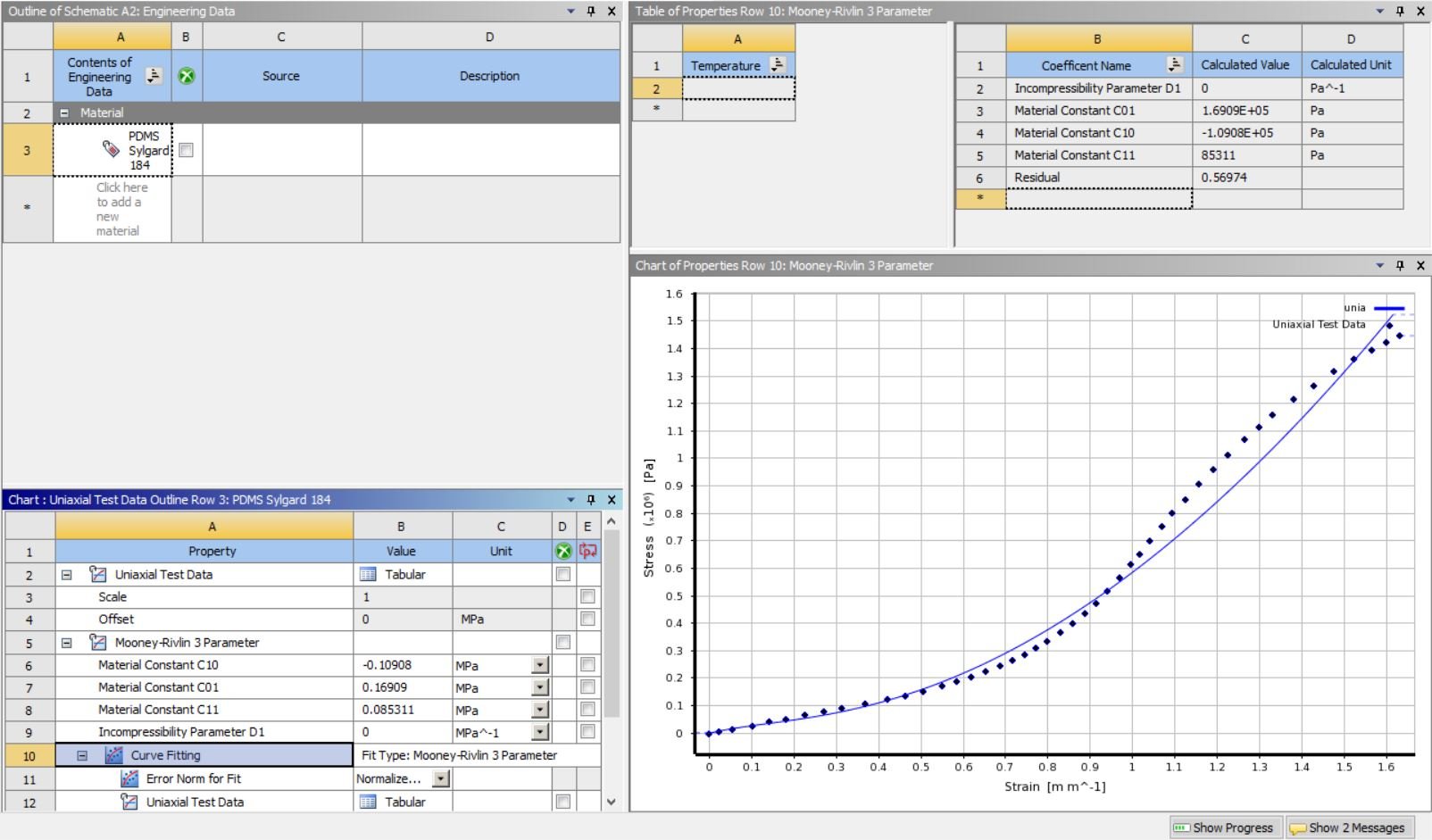
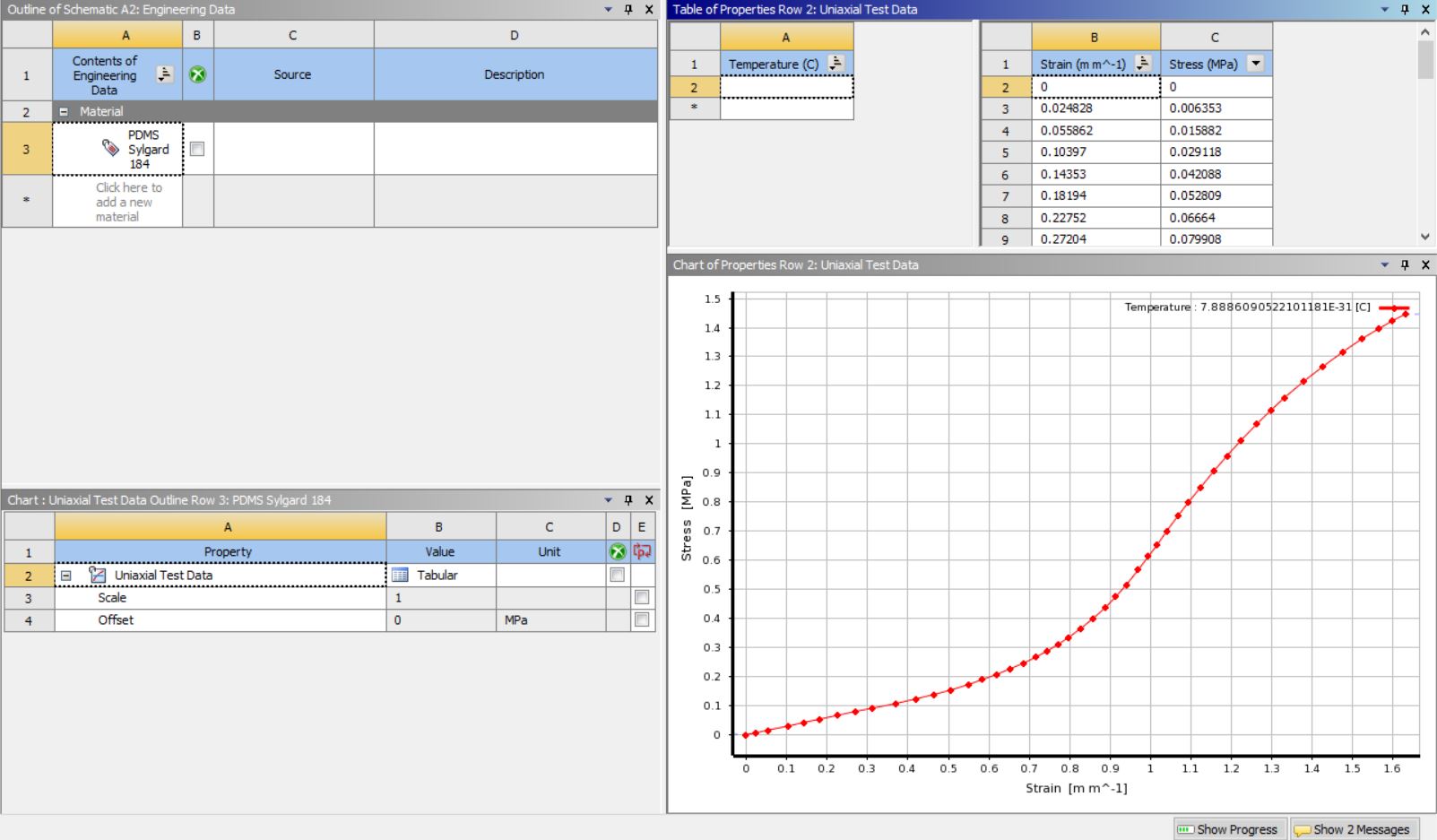
I have attached a photo of my work for your reference. please I need your help As soon as possibleÂ
Â
 Thanks In AdvanceÂ
-
July 6, 2020 at 6:16 pm
Karthik Remella
AdministratorHello,
This looks like an Ansys Mechanical question. Could you please confirm this here?
Thank you.
Karthik
-
July 7, 2020 at 7:02 am
Abdulsalam
Subscriberfirst, thank you for replying really appreciate it.Â
I am not really sure what you exactly meant by ansys mechanical question?, However, what I am trying to do is to simulate the behavior of Dielectric elastomer actuator (DEA) and I want to add the material I used which is PDMS Sylgard 184 into the Ansys. I have the experimental result of stress and strain of the uniaxial test and I added the data already. know I want to do simulation for the material and compare the result I get from the simulation with my experimental result.
The question here is, If I used the hyperelastic models provided like Ogden, Neo-Hookean,..etc. Is my material going to be fully defined already like the properties ?Â
I have attached photos for your references.
Â
Thank you,Â
Abdulsalam
-
July 9, 2020 at 10:07 am
John Doyle
Ansys EmployeeHi Abdulsalam:
From the screen captures that you shared, it looks like you have already read in some stress-strain test data for your material and performed a curve fit for a Mooney-Rivlin 3 parameter Hyperelasticity model. The FEA code uses the calculated coefficients (C01, C10, C11, and D1) in a strain energy density function to define the material. It does not use the stress-strain test data directly.  Please refer to Section 4.6 of Material Reference Guide for more details on Strain Energy Density Functions for Hyperelastic materials used in ANSYS. This applies to both MAPDL and Mechanical UI.
Regards,
John
Â
Â
-
July 13, 2020 at 5:19 am
Abdulsalam
SubscriberDear John,Â
Thank you for your reply and explanation.Â
Regards,Â
AbdulsalamÂ
-
February 28, 2021 at 7:24 am
razular
SubscriberHi Abdulsalam
Can you please share your PDMS material data with me?
-
January 2, 2022 at 12:09 am
dylpickles50
Subscriber.Abdulsalam could I also get your PDMS material data? I'd like to model the same thing but don't know where to look. Thank you so much!
. -
January 2, 2022 at 5:00 pm
peteroznewman
Subscriber.dylpickles50
Since Abdulsalam has not visited this site since March 2021, I suggest you digitize the values from the plot. There are many utilities that allow you to do that.
.
-
- The topic ‘Adding a new Hyperelastic material in ANSYS Workbench Library.’ is closed to new replies.

-
6625
-
1906
-
1469
-
1311
-
1022
© 2026 Copyright ANSYS, Inc. All rights reserved.