-
-
January 27, 2026 at 9:30 am
PRATHUNE001
SubscriberI would like to simulate the flow of Xenon (modeled as an ideal gas at STP) entering a flow chamber through the two pipes at a mass flow rate of 5 mg/s and study how the flow distributes within the chamber. I plan to use the standard k–ω turbulence model.I am unsure about what boundary conditions and operating pressure to specify, since the entire distributor is under vacuum. I also understand that vacuum problems ideally require evaluating the Knudsen number, but i have calculated it and it falls in the continuum regime so FLUENT can handle the flow entering the pipes and the chamber. I am hoping this discussion can help clarify the boundary conditions needed to simulate this as i am stuck on this for a while. I am assuming i am supplying Xe at STP.
What have i done
1. Made the geometry
2. Extracted the fluid volume
3. Meshed (min orthogonal quality: 0.18) -
January 27, 2026 at 9:57 am
Rob
Forum ModeratorYou can patch a lower pressure into the chamber to start with, but how confident are you with the boundary conditions? 5mg/s as a mass might be OK, but at 1Pa what will the inlet velocity be?
Knudsen Number is a guide. Fluent will solve outside of the continuum range but accuracy will suffer.
-
January 27, 2026 at 11:57 am
PRATHUNE001
SubscriberHi, the flow velocity is roughly 0.025 m/s at the pipe entrance. I am unsure what velocity to expect at the outlet, but I do know that the outlet discharges into a vacuum, so the ambient pressure there is zero Pa. This confuses me to choose the B.C.
-
January 27, 2026 at 12:01 pm
Rob
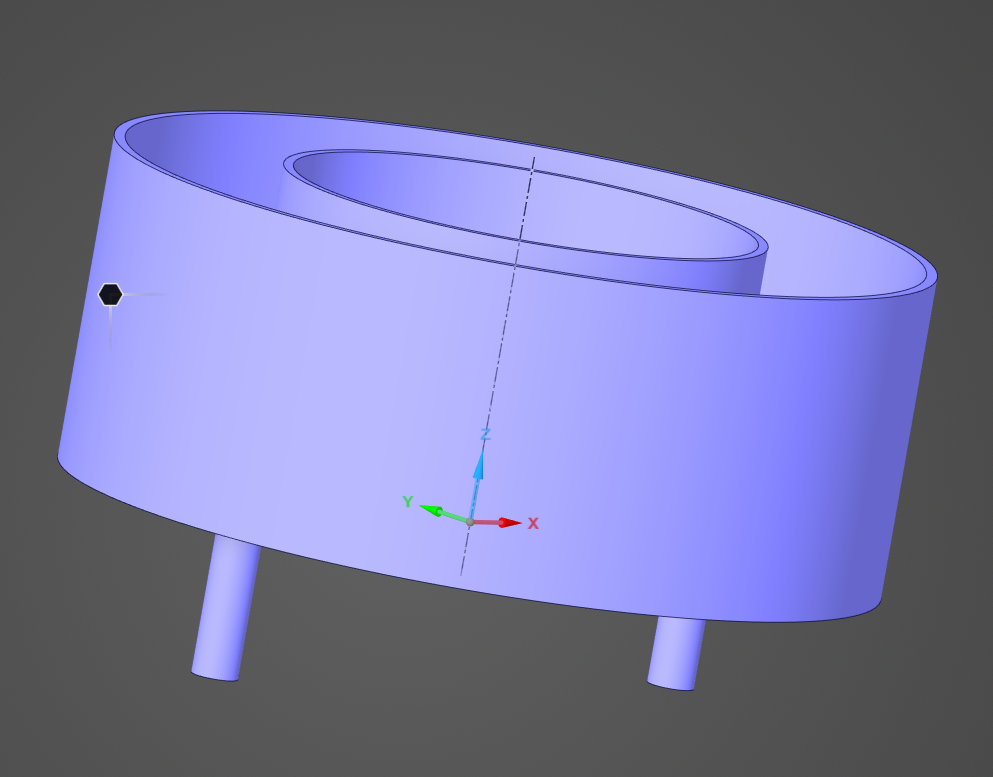
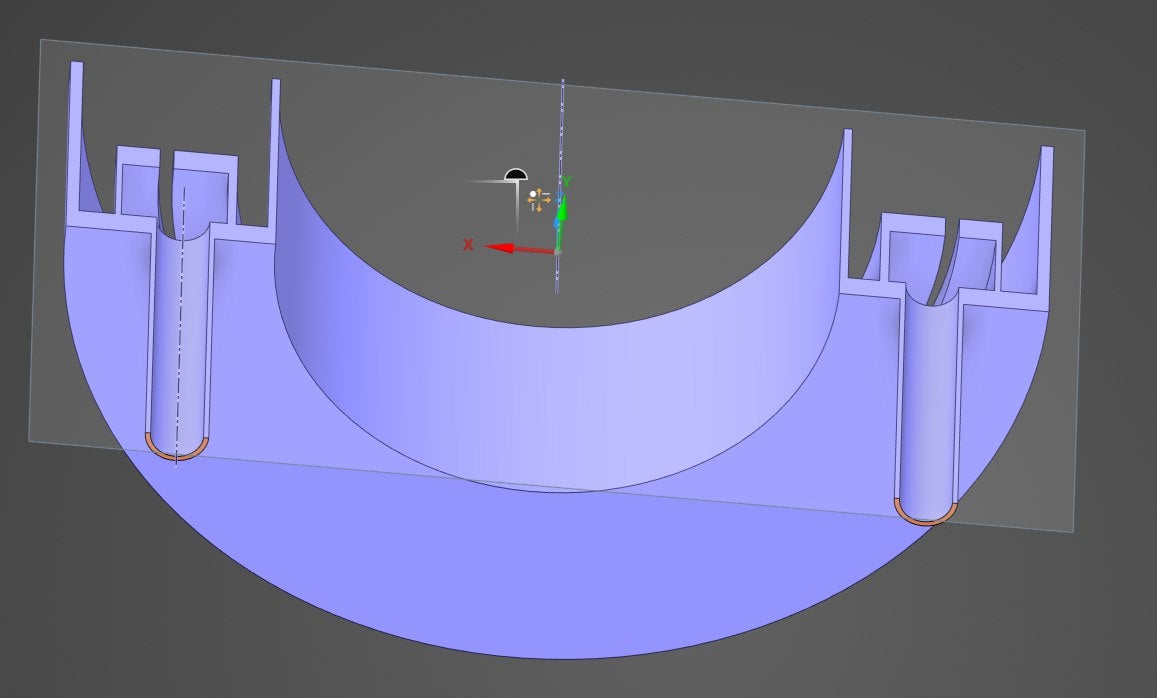
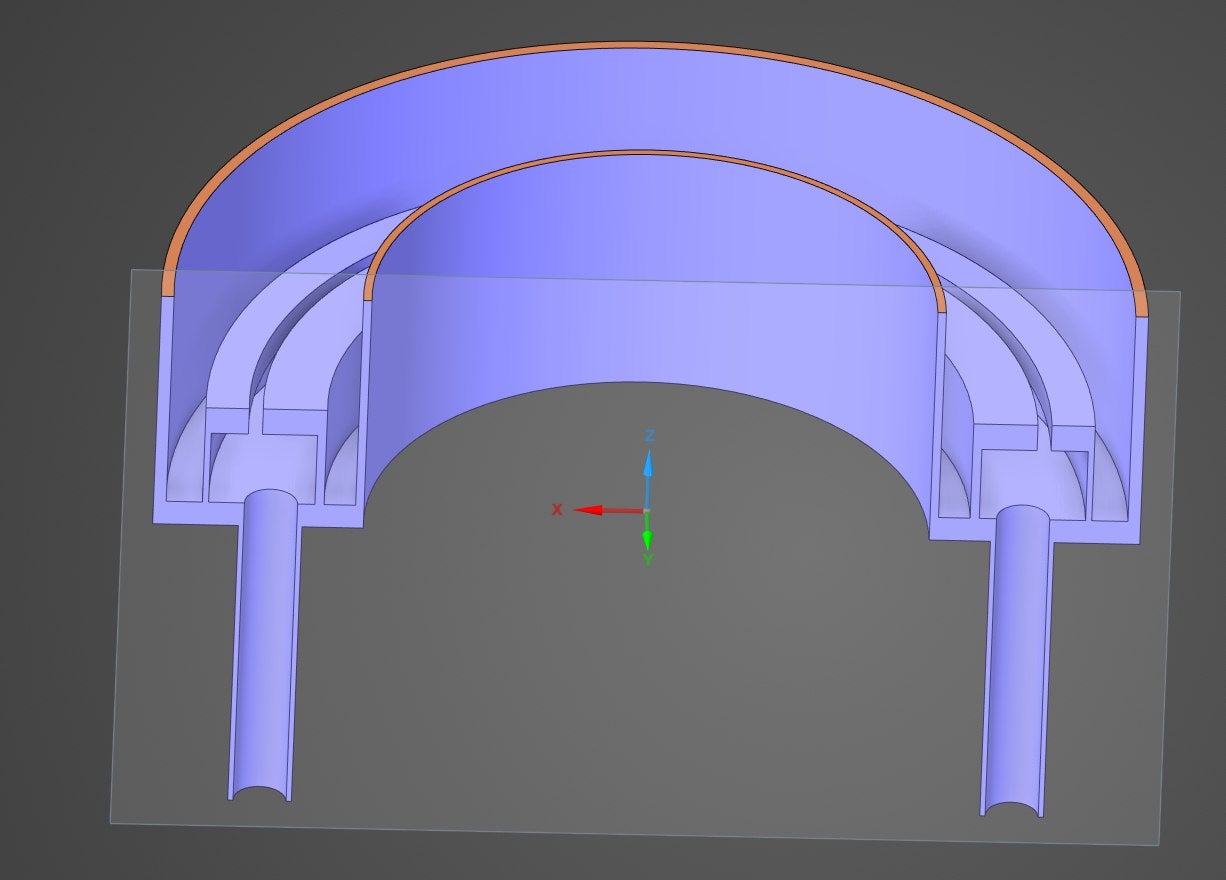
Forum ModeratorCan you put a picture up of the geometry with inlet & outlet marked? If you're modelling a chamber with an inlet & no outlet you can patch values.
-
January 27, 2026 at 12:47 pm
-
January 27, 2026 at 1:42 pm
Rob
Forum ModeratorOK, that's the solid. Hopefully the flow is in the "missing" bit. Is the whole larger annular surface open to vacuum or part of a plenum? If it's vacuum you may struggle with convergence. Mass flow (at correct pressure) and pressure out with 1Pa may work, but I'd be wary of the results.
What gas density are you using?
-
January 27, 2026 at 2:01 pm
PRATHUNE001
SubscriberFor this test case, the internal baffle that the gas would encounter prior to entering the channel was not modeled, the flow occurs in the void (fluid) region of the geometry. The annular surface represents a plenum while further downstream to it the flow exhausts into a vacuum environment.
Xenon was modeled as a compressible ideal gas, with its viscosity, thermal conductivity, and molar mass explicitly specified.
-
January 27, 2026 at 2:28 pm
Rob
Forum ModeratorSo you're not expecting the missing bits to have any effect on the region of interest?
-
January 28, 2026 at 12:57 am
PRATHUNE001
SubscriberFor this simulation i’m using the student version before getting access to the lab, so I simplified the geometry but kept the same boundary conditions to test things out.
-
- You must be logged in to reply to this topic.
-
4979
-
1650
-
1386
-
1242
-
1021
© 2026 Copyright ANSYS, Inc. All rights reserved.