Ansys Assistant will be unavailable on the Learning Forum starting January 30. An upgraded version is coming soon. We apologize for any inconvenience and appreciate your patience. Stay tuned for updates.
Fluids

Fluids

Topics related to Fluent, CFX, Turbogrid and more.

Multiphase Boiling Model

    • viswanath.ashish123
      Bbp_participant

      I am trying to simulate the boiling of water in a rectungular duct. I am using Eulerian Approach ( RPI boiling Model). i have my phase 1 as water liquid and phase 2 as water vapour with linearly varying densities, Cp, K and viscosities. and there is a "liquid Interface transfer Coefficient" in Mass Trasnfer Boiling settings, which cant be found either in fluent user guide or thoery guide. i dont know what this does and how to set it. i kindly request if anyone who already faced this issue and resolved. please give your inputs on this. and i tried changing this value from 1,10,100,1000,100000. but there are flucations in energy and turbulence of phase 2 and the simulation is crashing.( floating point error).


      I have my boundary conditions as following:


      Inlet-mass flow inlet-100kgs/s.
      Outlet- pressure outlet.
      Heated wall - heat flux-416666.6 W/m2. i.e 1000W on my area of heated wall.
      and all the other walls are adiabatic.

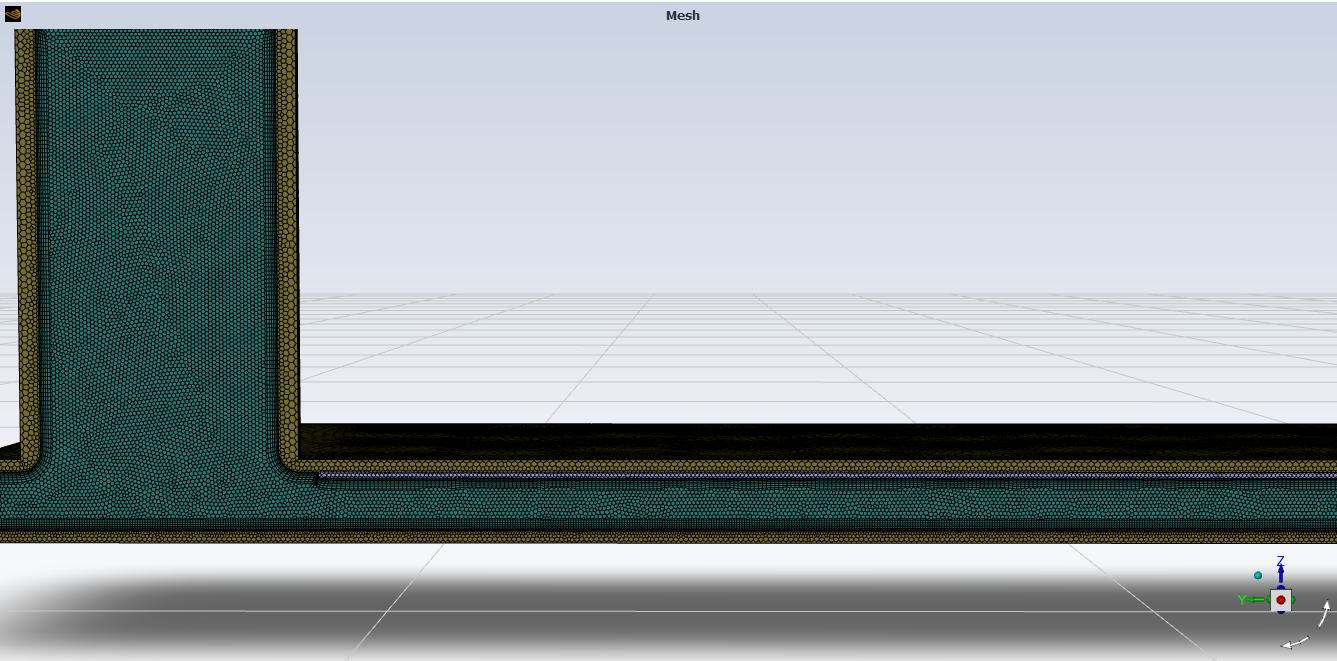
      Mesh.
       And in addition i would appreciate if you can provide any inputs on Forces. Like drag, Lift coefficients. and if i should use virtual mass and Interfecial Area Concentration Models.

      Thank You.

    • Rob
      Forum Moderator

      Start off simple. So, for the most part take the model defaults unless you read the manual & Learning for a good reason to change. 

      Now, look at the mesh. Why do we use inflation meshes in models? What limitations might I have for using these?

    • viswanath.ashish123
      Bbp_participant

      Thank you for your quick response.
      yes i have used those inflation layers to properly, resolve and capture mechanisms like heat transfer, turbulence and bubble dynamics. and yeah i strated off simple with the given default settings and have gone throught the user guide as well and made few changes required. my simulation is stable till enough vapour is formed and there are fluctuations in the velocities and turbulence properties of vapour phase.

    • Rob
      Forum Moderator

      Sounds about normal. 

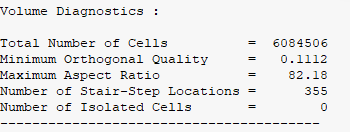
      OK, now think about aspect ratio. What problem might there be with an inflation mesh? 

      Note, you've (probably) not done anything wrong, but there are likely things that will improve the solution. 

    • viswanath.ashish123
      Bbp_participant

      It will cause high aspect ratios. and yeah might cause instabilities in velocity gradients. but my growth rate of these inflation layers is less, so i have these cells with less aspect ratio. but ofc there might be few cells with high AR in few areas(AR from 70-90).


    • Rob
      Forum Moderator

      Growth away from inflation may well be OK. With multiphase the solution tends to change along the cell too: inflation is really good for attached flows, not so much for bubbles. 

    • viswanath.ashish123
      Bbp_participant

      okay. i get it now why the simulation isnt stable. and what about the interface transfer coefficient? how does this effect?


    • Rob
      Forum Moderator

      That's to determine the "best" option for heat transfer. Ie a bubble flow will behave differently to a slug to a stratified flow. It should be covered in the manual, it is explained in the training content, but I'm not sure how much of that is on Learning as opposed to the subscription ALH. 

Viewing 7 reply threads
  • You must be logged in to reply to this topic.
[bingo_chatbox]