TAGGED: 3FDTD, calculation-time, fdtd, gpu-acceleration
-
-
January 22, 2025 at 2:06 am
Shangxuan Yu
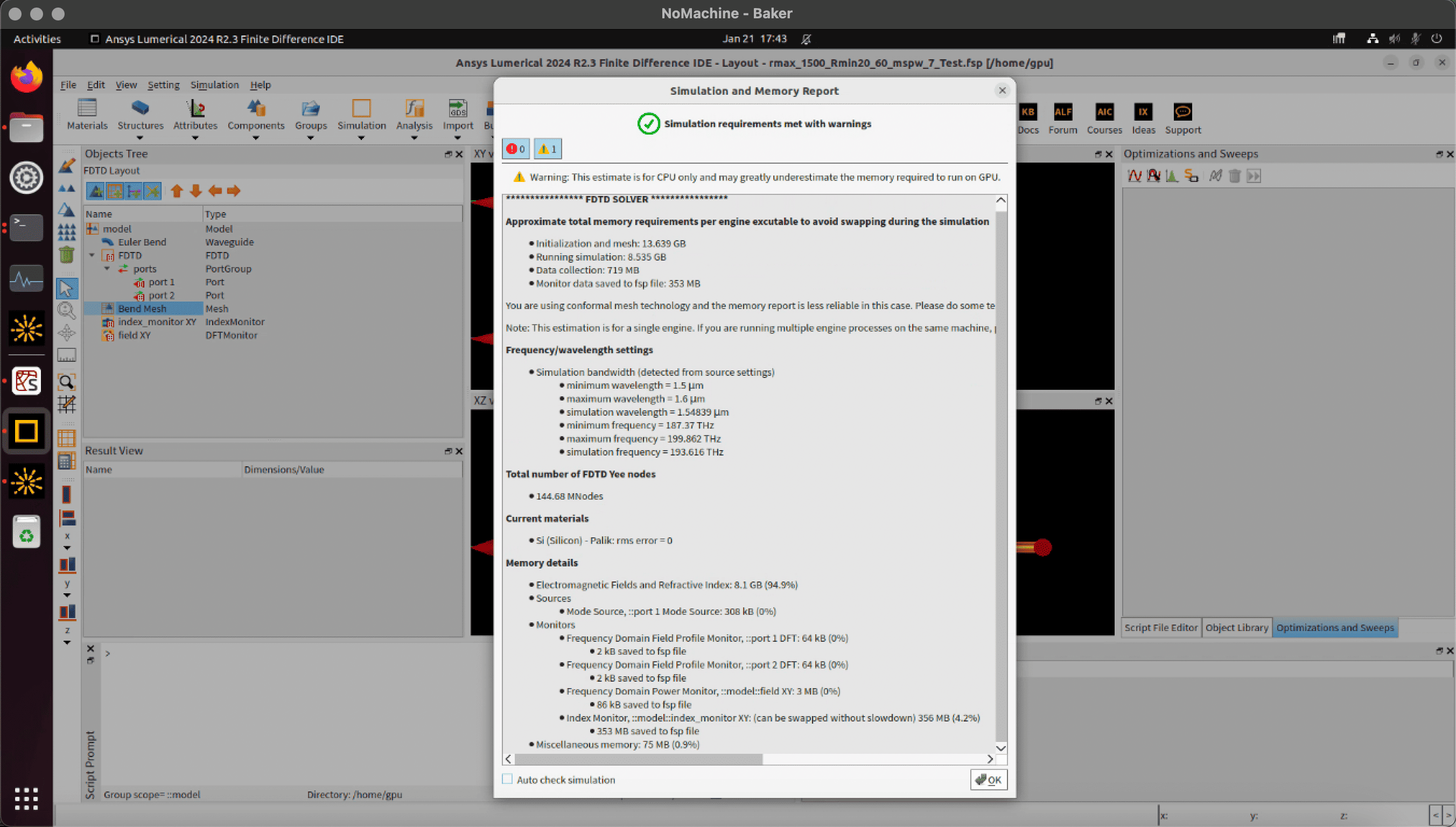
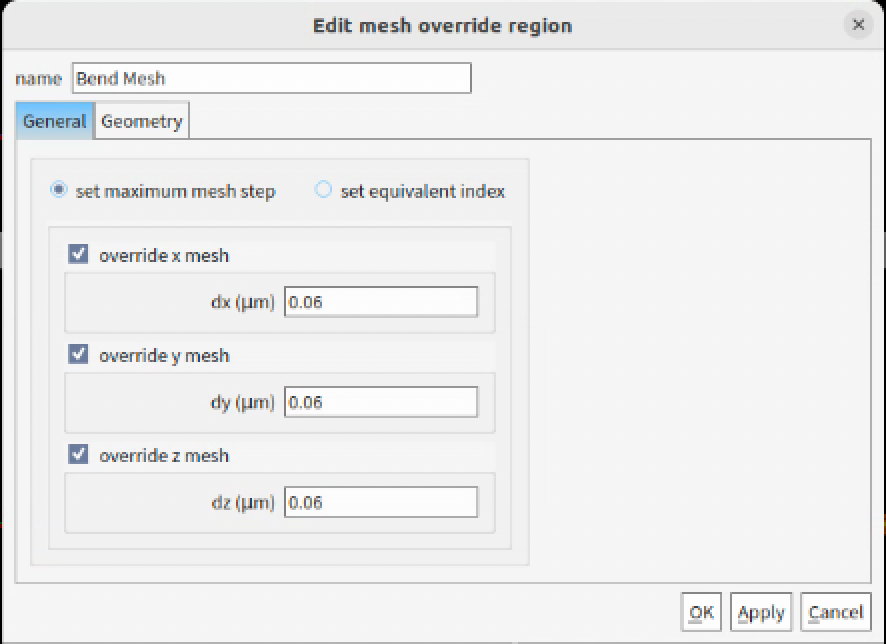
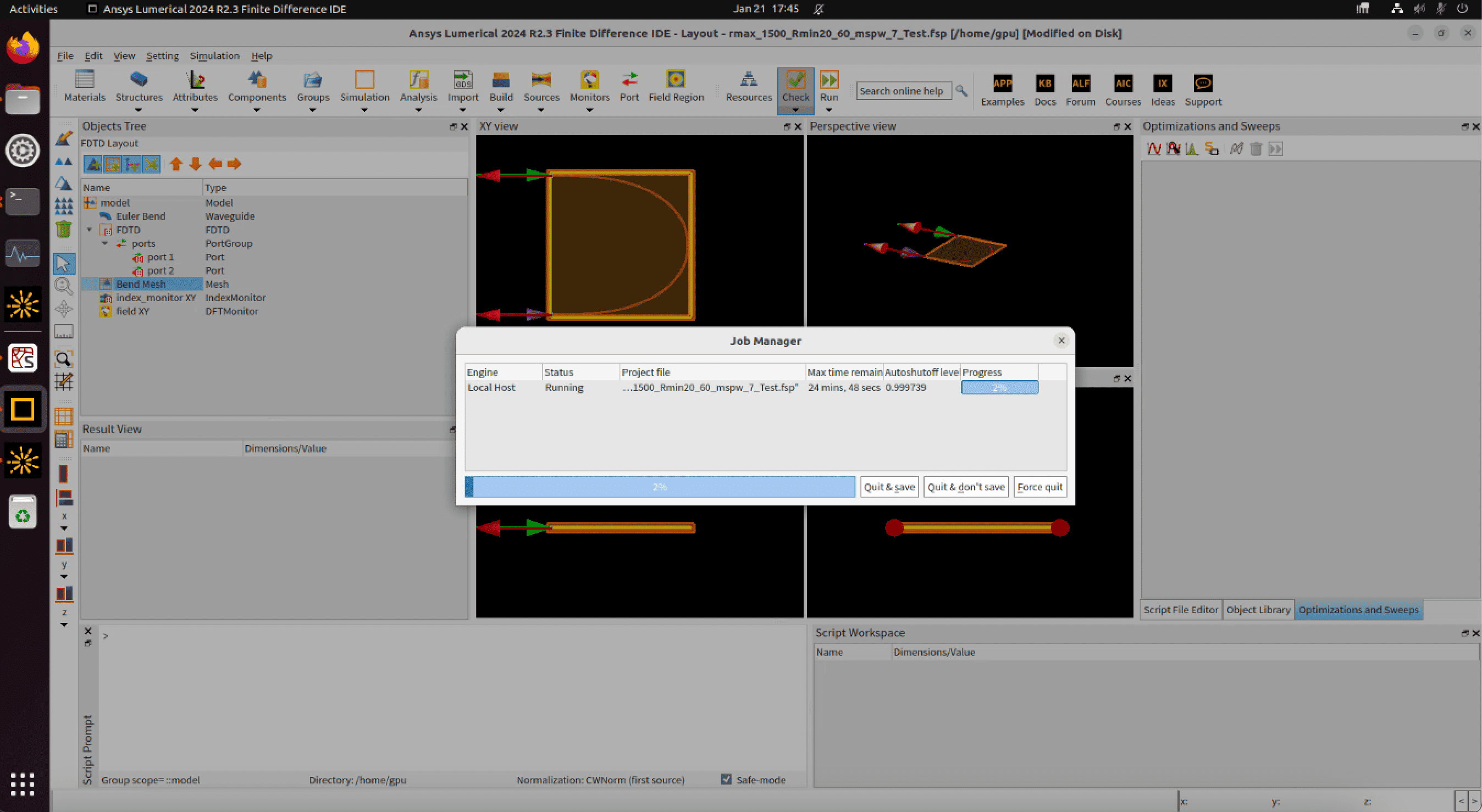
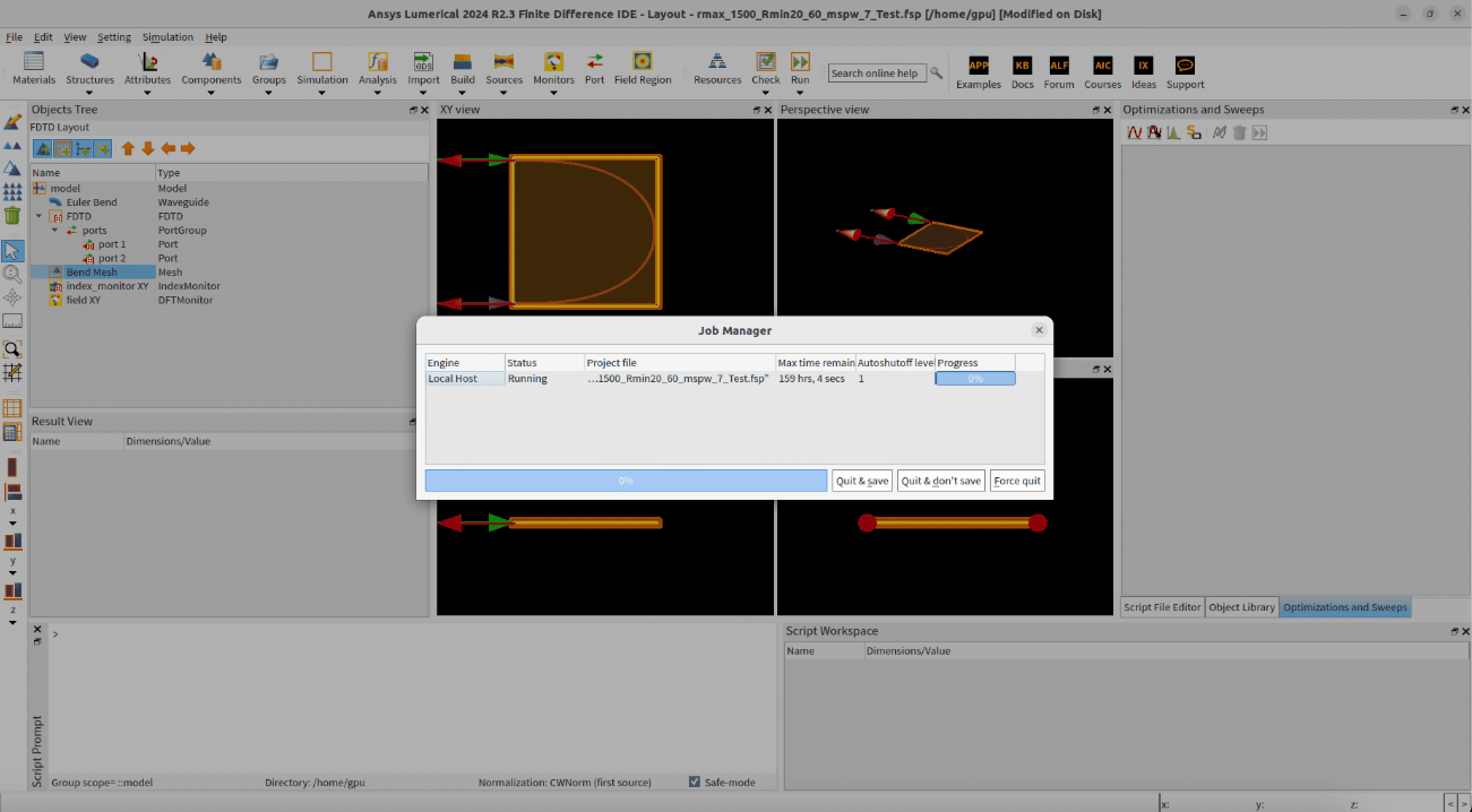
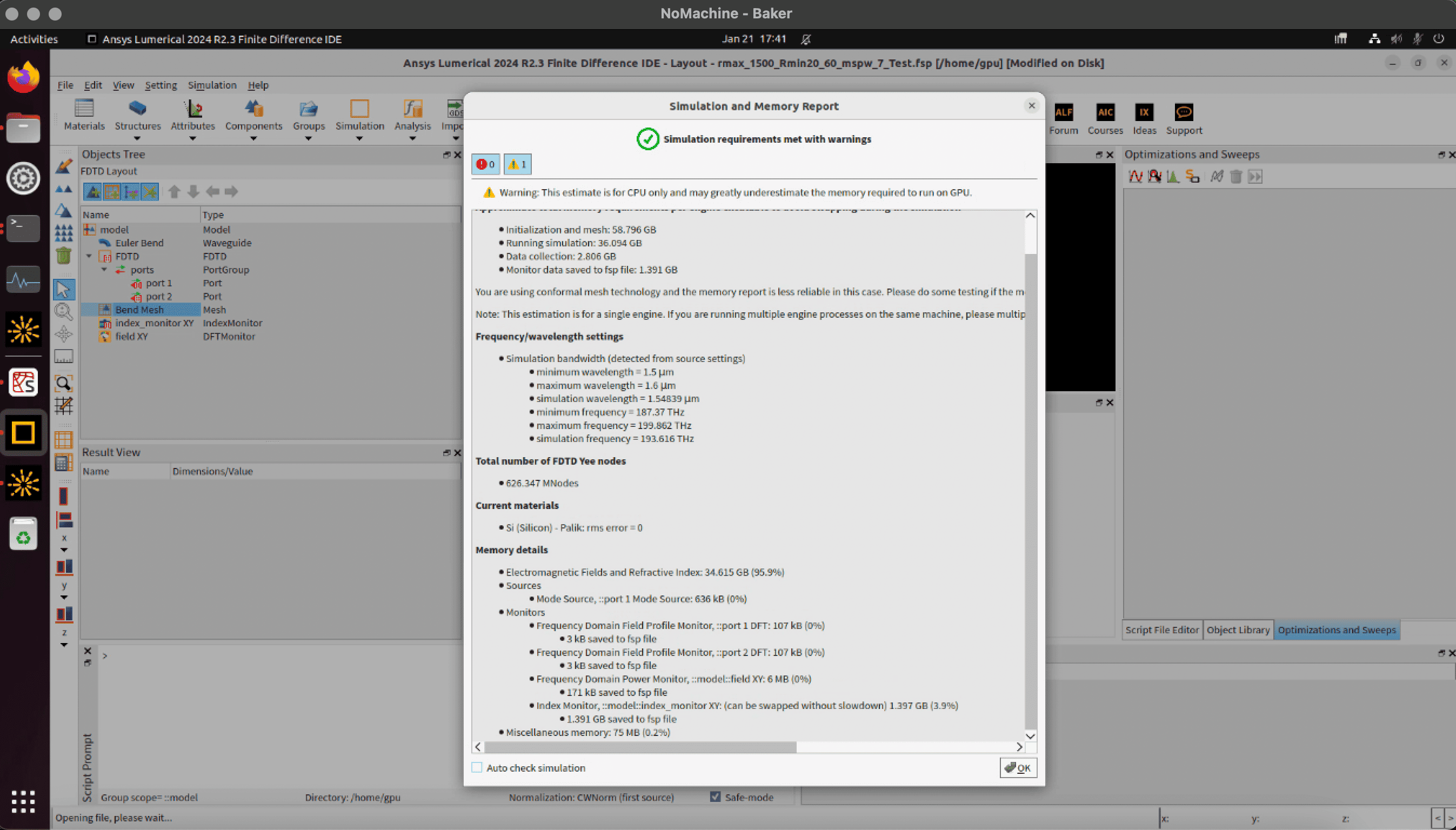
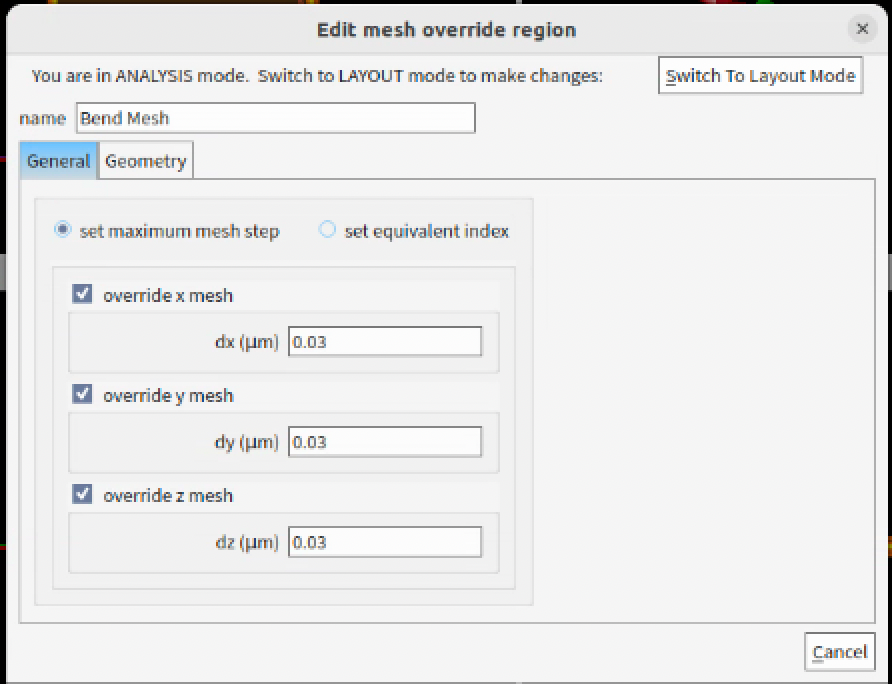
SubscriberI am running a FDTD simulation on GPU. I noticed that if I change the mesh overide region dx/y/z from 60 nm (144 milicon nodes) to 30nm (626 milicon nodes), all other parameters are the same, and the global mesh accuracy is kept at 3, though the total running time increase from 20ish minutes to more than 150 hrs. Based on info here: https://optics.ansys.com/hc/en-us/articles/360034382594-Understanding-Mesh-Refinement-and-Conformal-Mesh-in-FDTD, I am expecting the simulation time increase by 16 folds at max. I attached some screenshot for reference. I would appreciate if anyone can share some thoughts.Â
-
January 24, 2025 at 12:09 am
Kirill
Forum ModeratorDear Subscriber,
Initial time estimation can be inaccurate. Have you logged the actual simulation time?
Are you running the simulation on a single GPU or multiple?
What are the specifications of your GPU(s) in terms of MPs and VRAM?Best regards,
Kirill -
January 29, 2025 at 10:04 pm
Shangxuan Yu
SubscriberI am running my simulation on single GPU with 8 MPs, and VRAM is 24GB. I didn't log the time, but it seems it usually shows a long time, and there are several sudden drops after running the simulation for some time...
-
January 30, 2025 at 12:29 am
Kirill
Forum ModeratorDear Subscriber,
Were you able to complete the second simulation on the GPU? It seems it might require more memory than what’s available on the GPU.
Regarding the max time left estimation, it’s normal for it to change during the simulation as it depends on multiple factors. Usually, the actual simulation time is shorter due to the default early shutoff settings. What’s more important is the solver speed (in Mnodes/s). You can find this in the solver results and the log file once the simulation is complete. I’d recommend running a scaling experiment to determine the model size at which the GPU performs best.
Additionally, consider trying our new Lumerical 2025 R1 release. It includes several improvements, including updates related to GPU simulations. You can find more details in the 2025 R1 Release Notes.
Best regards,
Kirill
-
- You must be logged in to reply to this topic.
-
6455
-
1906
-
1457
-
1308
-
1022
© 2026 Copyright ANSYS, Inc. All rights reserved.