-
-
January 21, 2020 at 9:06 pm
ilardimichael26
SubscriberHello, this is sort of a follow-up to a previous post.
I made a 10x10x10 box with 1-inch thick walls. There is one inlet and one outlet opposite each other.
I am trying to do a simple fluid flow in FLUENT through the inlet to the outlet. My wall temperature at 320K and the air inside initially at 300K.
Â
No external boundary conditions. Wall-Fluid Boundary Coupled. Standard initialization at 300K, Box patched at 320K.
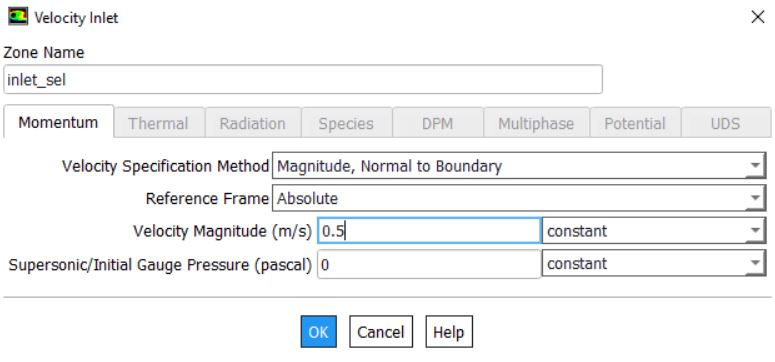
Inlet set to 0.5 m/s velocity magnitude.Â
Using k-epsilon viscous model.
Â
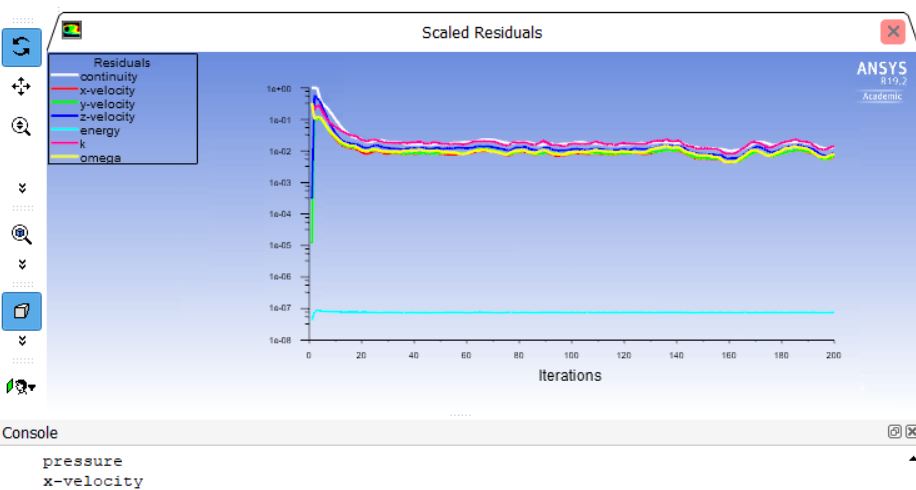
Everything appears fine in my set-up, but when I run the calculation my energy residual goes through the roof, setting insane temperature readings. Any idea what is causing the non-convergence?
Thank you

Â
-
January 22, 2020 at 6:09 am
DrAmine
Ansys EmployeeCan you share some pictures of BCS? Please check the material properties. Do not patch the solid with any temperature -
January 22, 2020 at 6:11 am
DrAmine
Ansys EmployeeMoving to Fluids category -
January 22, 2020 at 6:12 am
DrAmine
Ansys EmployeeMoving to Fluids category -
January 22, 2020 at 12:46 pm
ilardimichael26
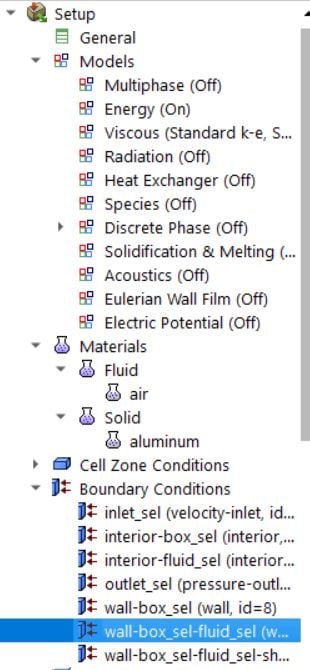
SubscriberI cannot get any screenshots at the moment, but i have the wall-box-fluid boundary coupled, and the inlet set to 0.5 m/s. That is the only change I've made.
And why not patch the box to a temperature? That is the only way I have been advised to set initial conditions. Is there another way to do that?
Thanks -
January 22, 2020 at 1:23 pm
DrAmine
Ansys EmployeeJust for debugging I was mentioning that. If you are doing steady run than initialization is not really relevant: it is only a guess. Please add screenshots as soon as you can and check the material properties.
-
January 22, 2020 at 2:40 pm
ilardimichael26
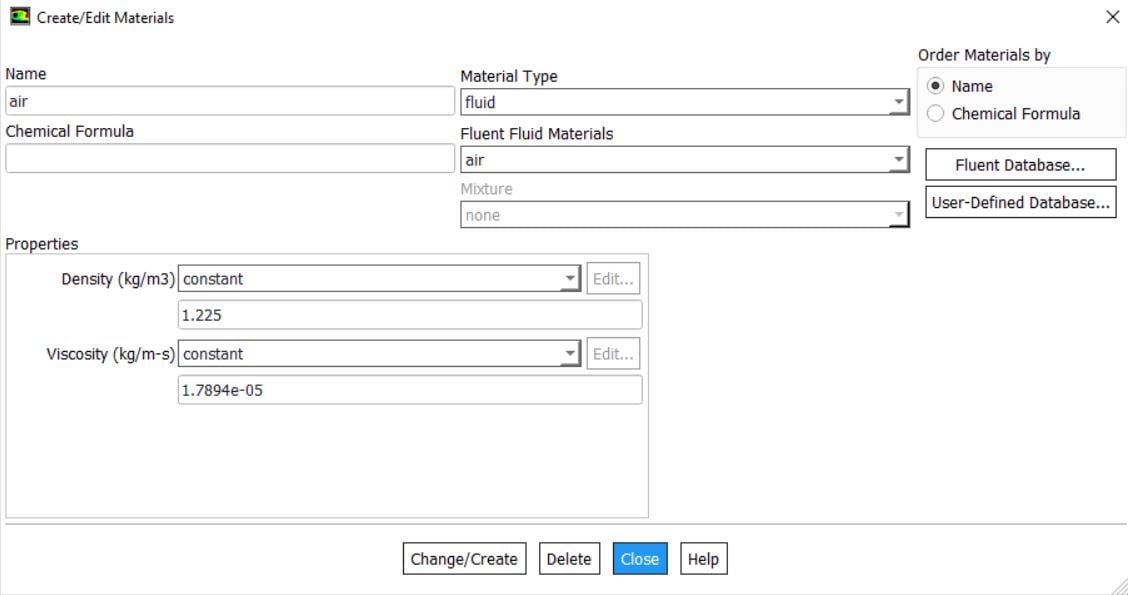
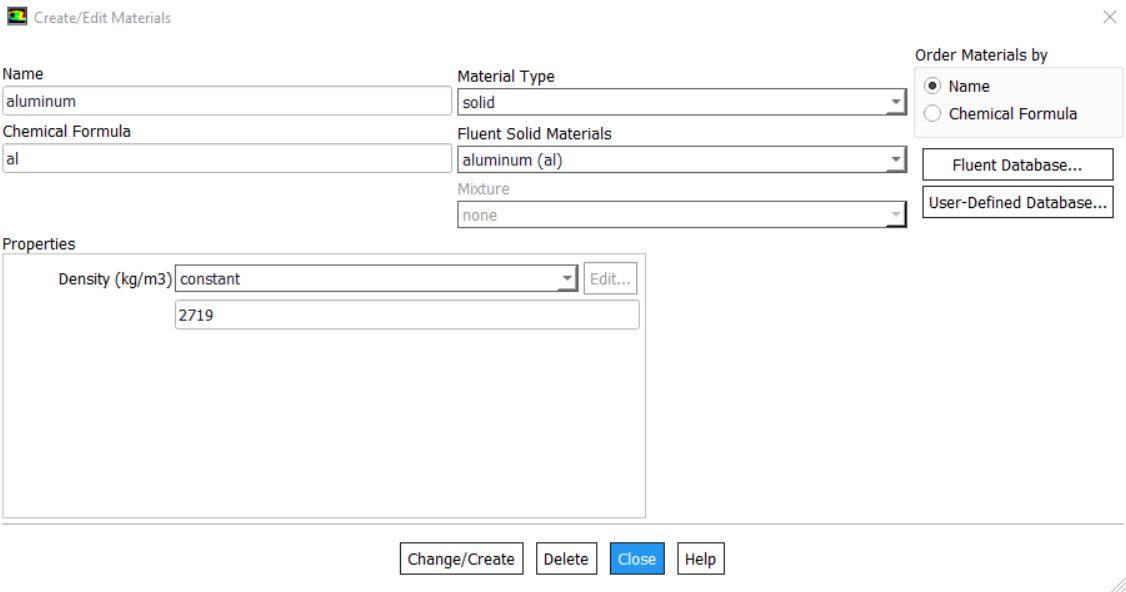
SubscriberI left all boundary conditions defaulted except for the inlet velocity. The materials are Air for the fluid and aluminum for the box.
Here are pictures:
A short summary of what I am doing:
I simple heat transfer via temperature difference between room (320K) and incoming air (300K, air in room also initially 300K).
There is one inlet and one outlet, left at 0 gauge pressure.
Â
Thanks
-
January 22, 2020 at 3:24 pm
DrAmine
Ansys EmployeeCan you share other information like residual plot and solution methods: I know the case is simple and I would probably recreate it within 10 minutes but we want to know what is going wrong here. Can you monitor the temperature inside the solid shell?
-
January 22, 2020 at 3:32 pm
DrAmine
Ansys EmployeeI cannot reproduce the issue on simple pipe with shell similar to your case: also check your mesh!
-
January 22, 2020 at 3:38 pm
ilardimichael26
SubscriberWhen I initialize with the patch and check the countours, I get 300K inside the box and 320K in the shell just as I wanted, but it still wont converge.
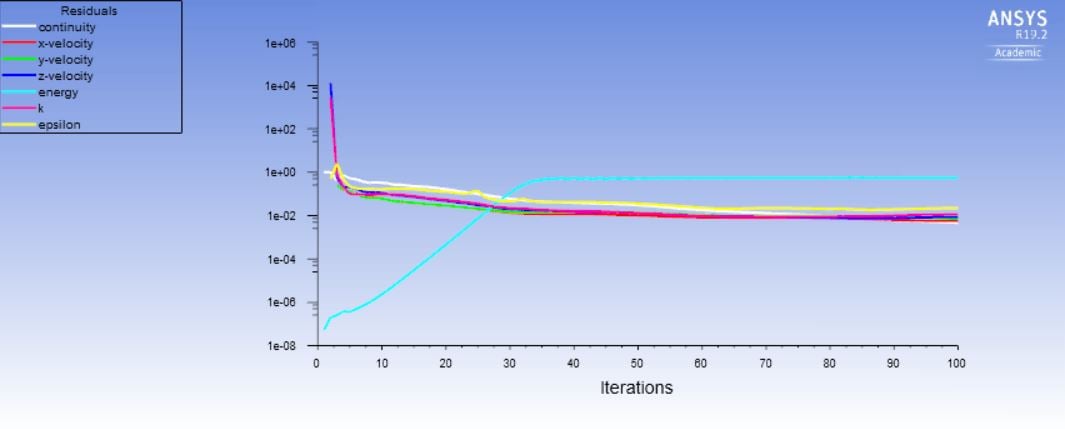
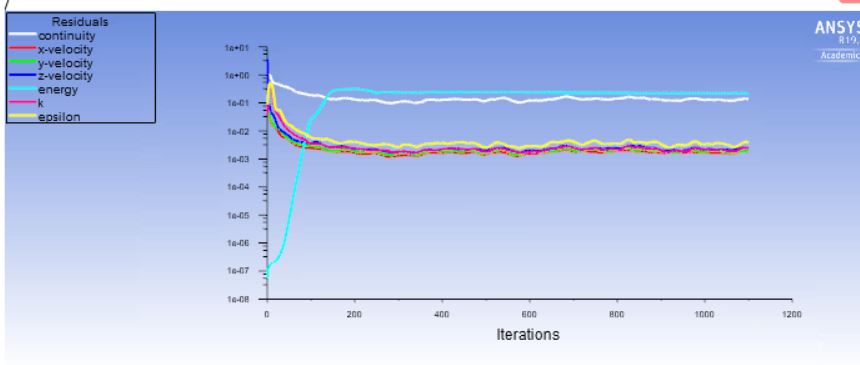
Here is my residuals. This time I did hybrid initialization with the settings previously screen-shot:
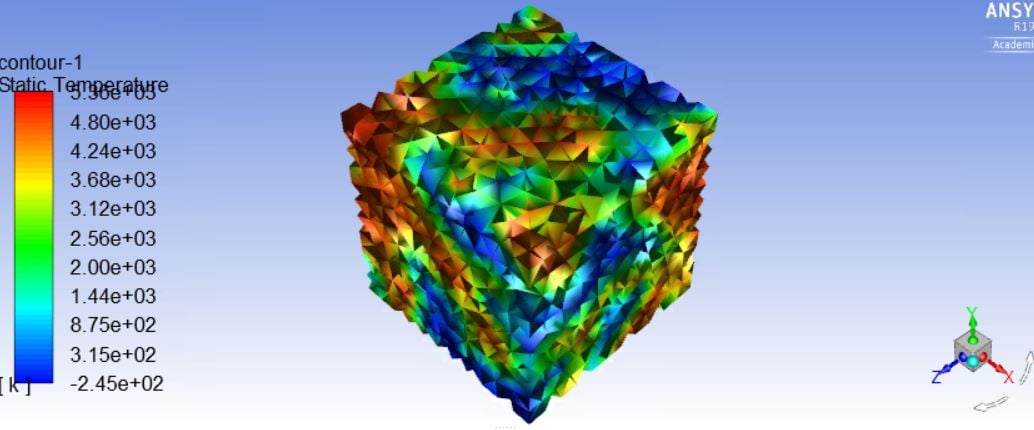
Inside Fluid Contour:
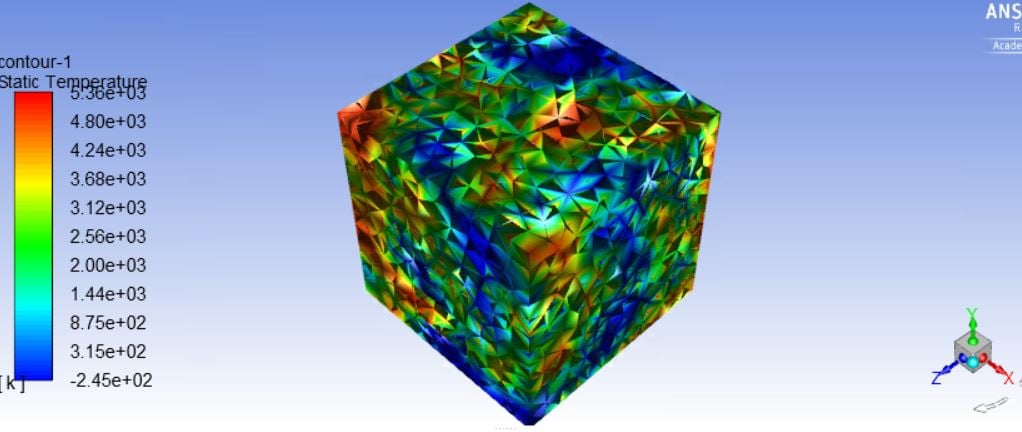
Box Interior Contour:
Â
Thanks
Â
-
January 22, 2020 at 3:40 pm
Rob
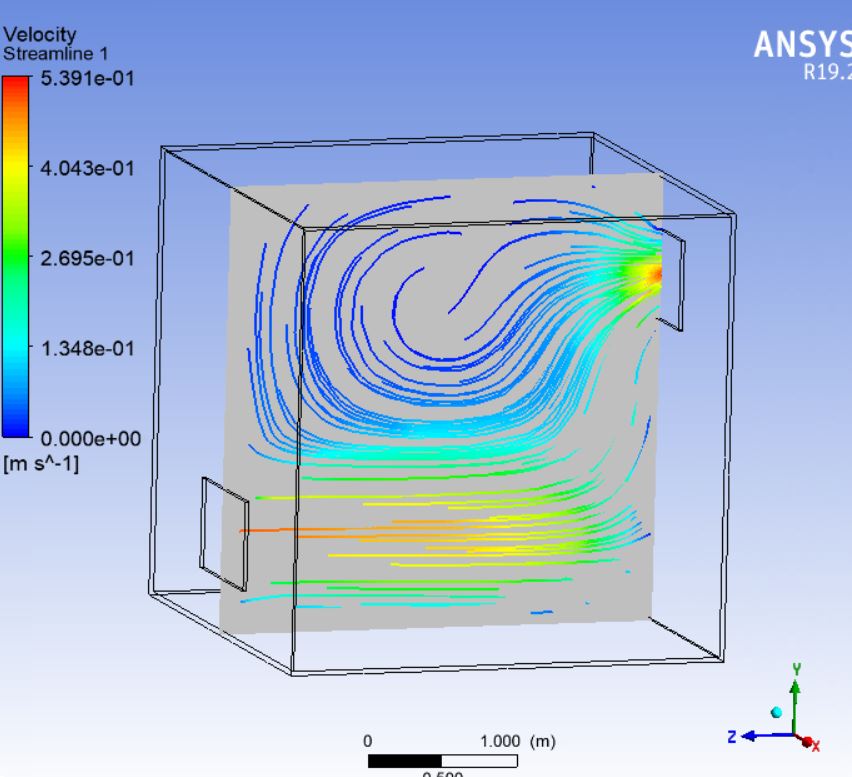
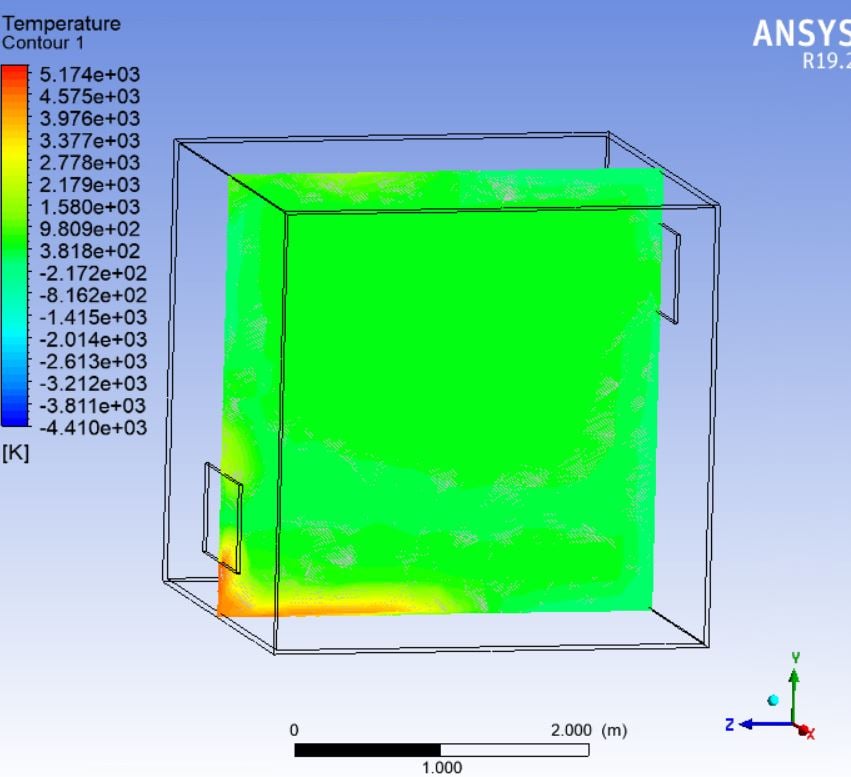
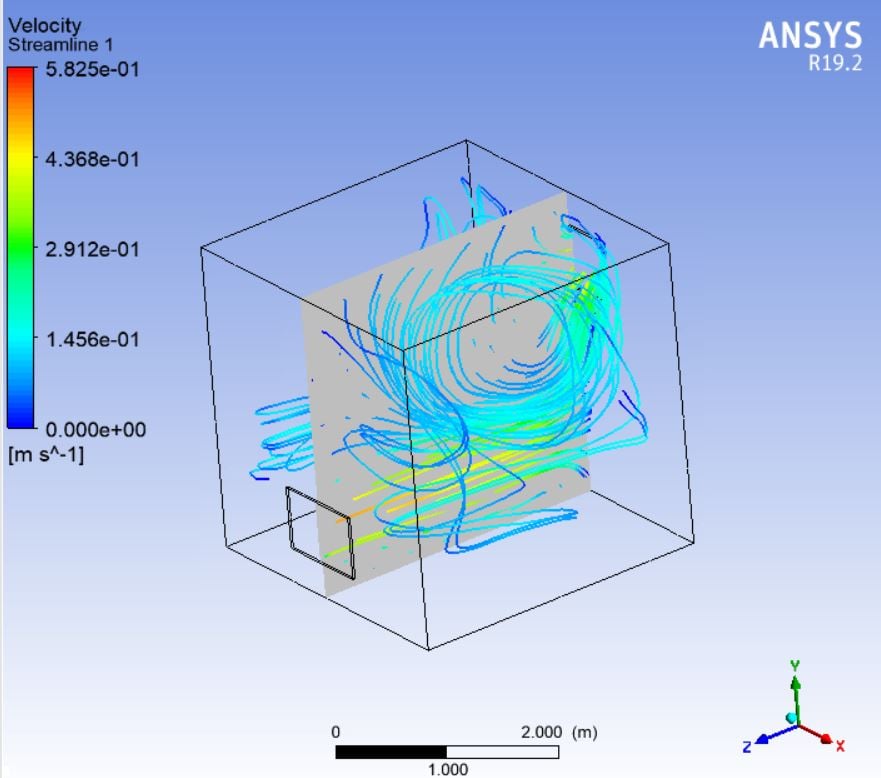
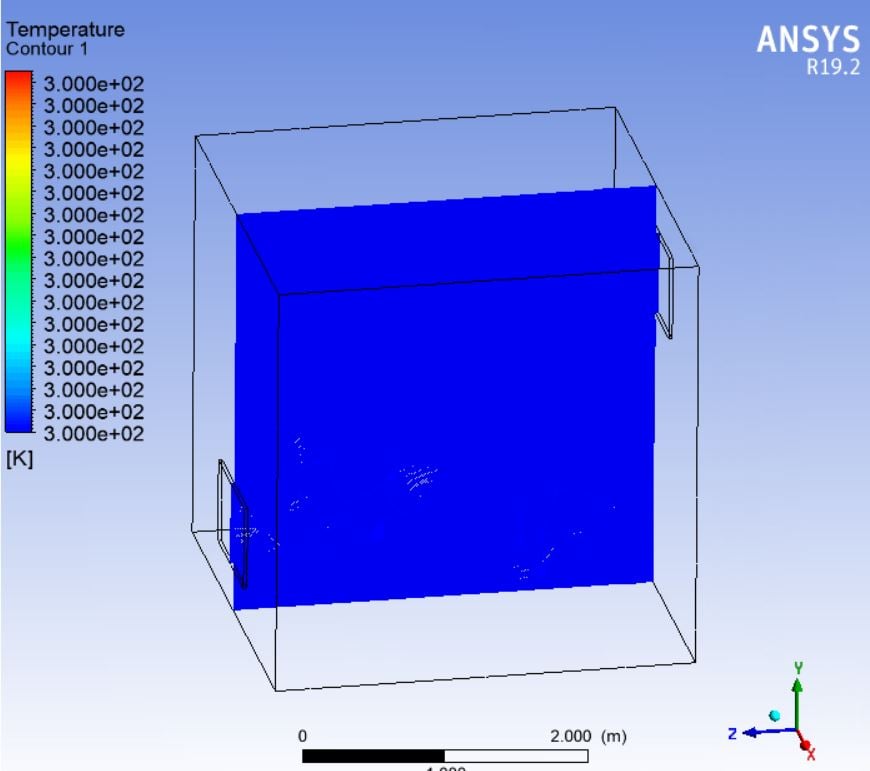
Forum ModeratorPlease create a plane through the domain and plot temperature & flow velocity on that.Â
As an aside, never plot on default:interior or the fluid:interior type labels. You're OK here as it's a small model, when you display on this surface you're displaying on every facet in the domain/model. With 10-1000M cells you'll generally cause the graphics card to become very upset & go on strike.Â
-
January 22, 2020 at 3:41 pm
DrAmine
Ansys EmployeeCan you show the grid and where one can see the BCs. It looks like there are some singularities in the corners. Moreover as it is steady-state and there is no heat flux defined at the solid earlier or later the solid will have the same temperature as the fluid. So think better in realistic boundary conditions.
-
January 22, 2020 at 3:45 pm
-
January 22, 2020 at 3:47 pm
DrAmine
Ansys EmployeeThe same result as?
Switch on coupled solver with pseudo-transient and run the case for longer time. Double check your mesh and use isothermal boundary condition at the outer wall of the solid first. There is definitely something wrong in your case which you need to figure out.
-
January 22, 2020 at 3:56 pm
ilardimichael26
SubscriberSame result meaning I get the same temperature values. Sorry for confusion.
Outside boundary should be isothermal because I didn't define it.
As far as meshing, I didn't do any fine meshing details or editing, but would that be the cause of this non-convergence?
Thanks -
January 22, 2020 at 4:00 pm
Rob
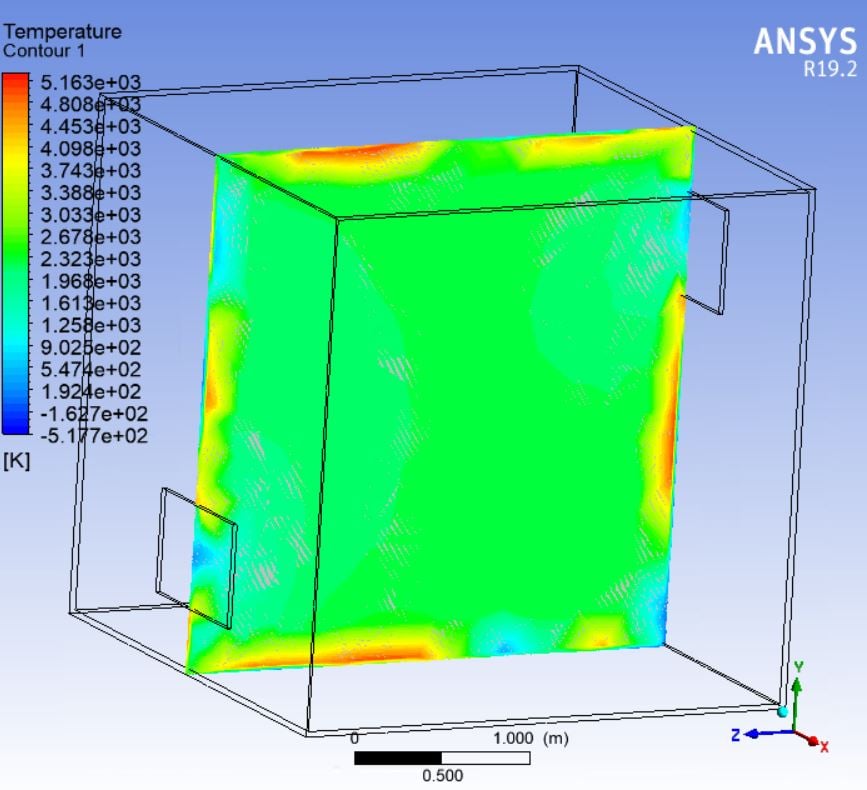
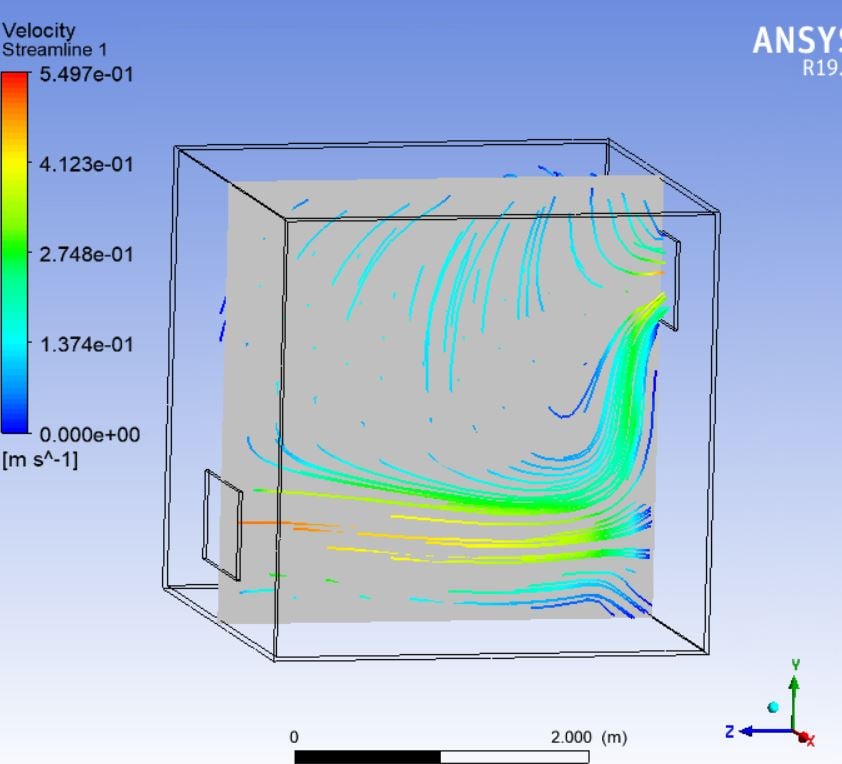
Forum ModeratorCan you plot velocity as well? With negative temperature (in Kelvin) there's something very wrong with the result.Â
-
January 22, 2020 at 6:21 pm
-
January 22, 2020 at 6:41 pm
-
January 22, 2020 at 9:38 pm
ilardimichael26
SubscriberI am also getting the message "temperature limited to 5.000e3 in xxx cells" and "temperature limited to 1.000e0 in xxx cells" repeatedly with iterations as I run the calculation. Not sure if this gives any more information considering the energy equations are failing to converge.Â
-
January 23, 2020 at 10:40 am
Rob
Forum ModeratorPlot vectors and mesh on the same plane. Residuals suggest the solution is not converged, so it's now a case of figuring out why.Â
-
January 23, 2020 at 3:22 pm
ilardimichael26
SubscriberYes, why is the solution not converging. Any idea? -
January 23, 2020 at 4:02 pm
DrAmine
Ansys EmployeeLets do a test: remove the shell solid zone at first, assign isothermal bc at the walls and use coupled solver and run: does it result in better behavior?
-
January 23, 2020 at 6:07 pm
-
January 23, 2020 at 7:08 pm
DrAmine
Ansys EmployeeLooks better but I still think your grid is not good. Know at the outer wall define shell conduction (in the wall panel) in Fluent and assign thickness and run again.
-
- The topic ‘Simple Box Model, Inlet/Outlet Flow’ is closed to new replies.
-
6379
-
1906
-
1457
-
1308
-
1022
© 2026 Copyright ANSYS, Inc. All rights reserved.