In AQWA Theory Manual the mud layer springs don't seem to provide a continuous force-displacement law. For simplicity let's considere the viscous spring force. In this case, the damping force is such that (k -> constant; v -> node velocity):
- 0, if the node is above mud line
- k x v, if the node is below the seabed
- k x v x sin(theta)^2, in between
Now, the theta variable is defined from the water depth (d), the mud layer thickness (z) and the node position (zj):
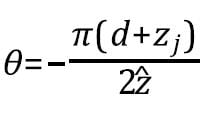
So, let's assume d=200 [m] and an unitary mud layer. In this case, for the point near the seabed and near the top of the mud layer, respectively:
- zj=-200 -> theta=0 -> sin(theta)^2=0 -> F=0
- zj=-d+z -> theta=pi/2 -> sin(theta)^2=1 -> F= k x v
So it seems the law provided is not connecting to the under seabed and above mud line regions in the proper way.
Is this correct?
Thanks in advance


















 You are navigating away from the AIS Discovery experience