Ansys Assistant will be unavailable on the Learning Forum starting January 30. An upgraded version is coming soon. We apologize for any inconvenience and appreciate your patience. Stay tuned for updates.
Fluids

Fluids

Topics related to Fluent, CFX, Turbogrid and more.

incorrect drag and lift coefficient (smooth ball vs golf ball)

    • Jim Beet
      Subscriber

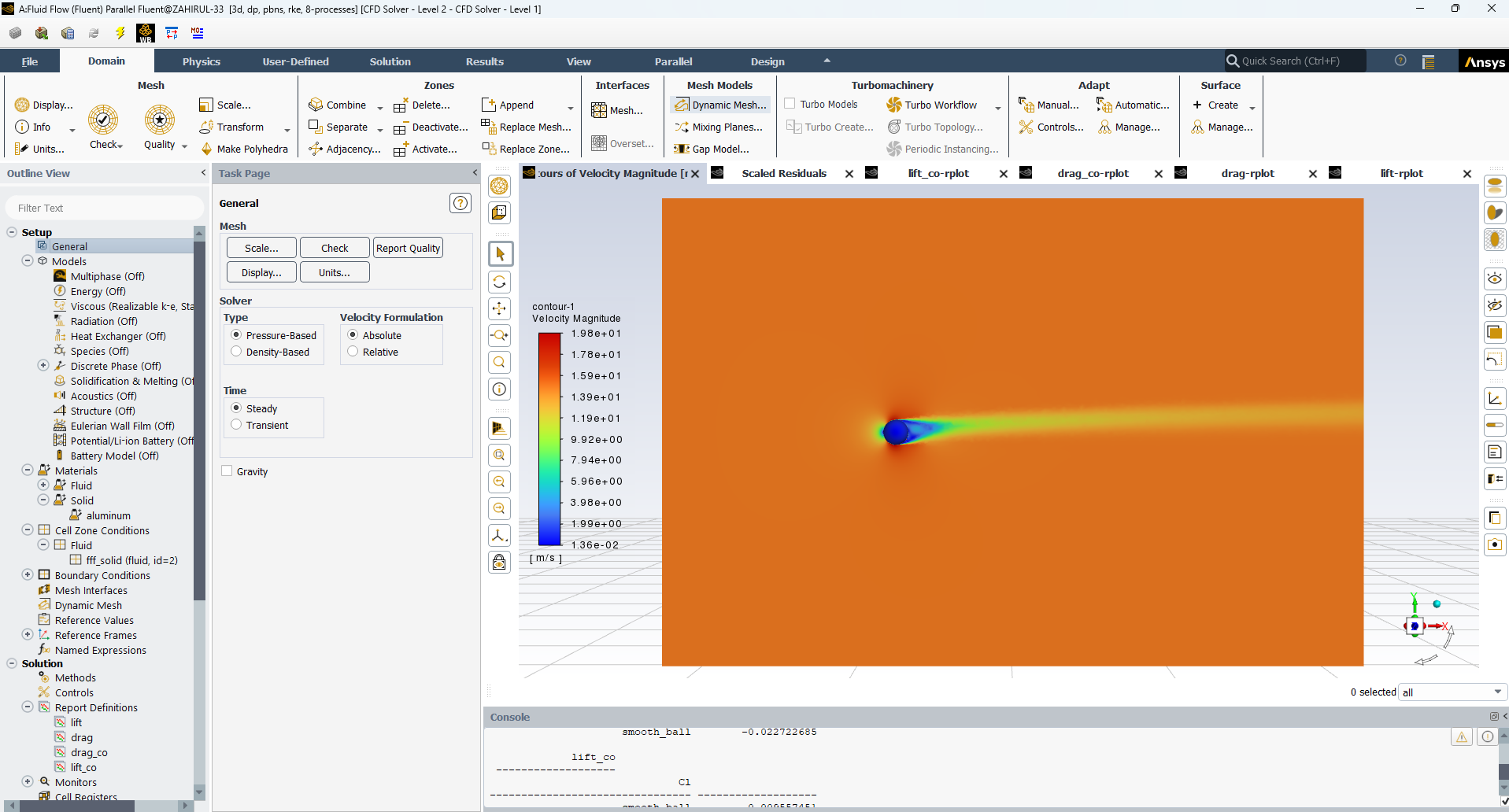
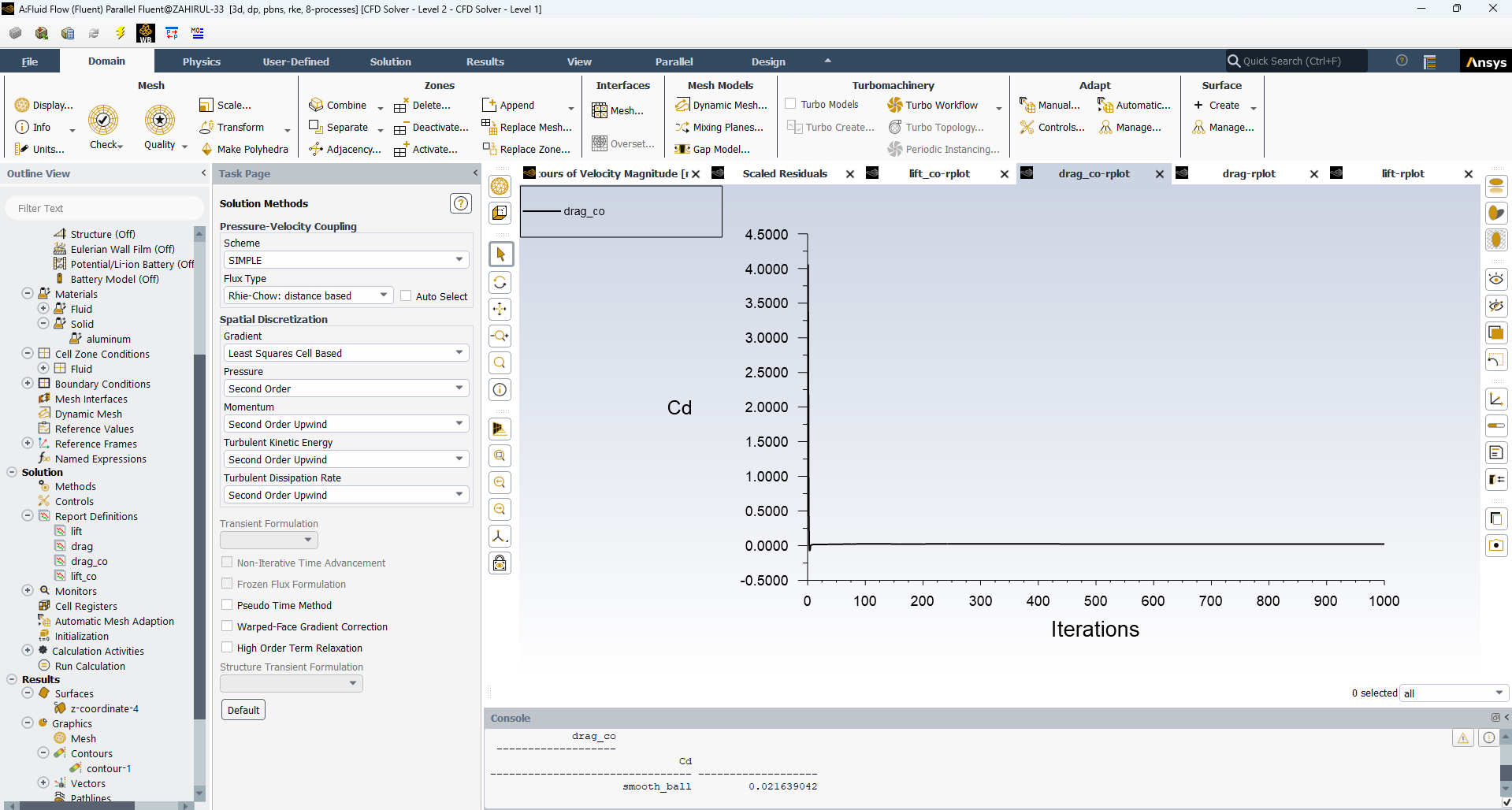
      I am conducting a simulation to compare the drag and lift coefficients of a smooth sphere and a golf ball under various rotational speeds and flow velocities. However, I have encountered difficulties with the smooth sphere simulation. The computed drag coefficient and lift coefficient differ significantly from those reported in previous studies. While past research indicates a decrease in the drag coefficient and an increase in the lift coefficient, my simulation results show the opposite trend. Specifically, I obtained a negative lift coefficient and a very small drag coefficient of 0.0216, which is substantially lower than the values reported in the literature (ranging between 0.4 to 0.5). I have checked my simulation setup, and the results appear to have converged. Could someone help me on what I am doing wrong.


    • Federico
      Ansys Employee

      Lift and drag coefficient will be highly dependent on surface mesh and boundary layer solution.

      How does your mesh look near the ball?

Viewing 1 reply thread
  • The topic ‘incorrect drag and lift coefficient (smooth ball vs golf ball)’ is closed to new replies.

[bingo_chatbox]