Hi everyone
I am using Ansys Workbench 22 and would like to make the following 2 analyses for an object that is completely submerged underwater.
The target structure is almost cylindrical shape.
1.
I would like to analyze the phenomenon that an object submerged deep underwater, static and exposed to only hydrostatic pressure, reduces the stiffness of the structure due to stress stiffening (weakening) and thus reduces the natural frequency.
To do this I worked on a ‘pre-stressed modal’, below is a screenshot of what I did.
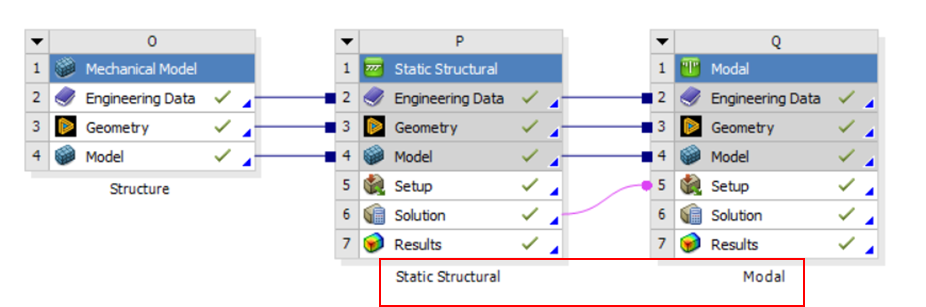
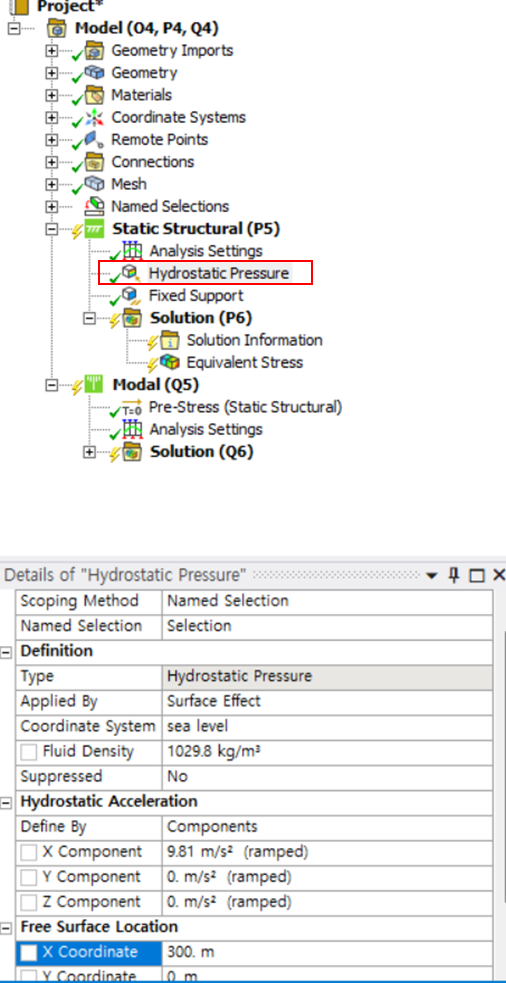
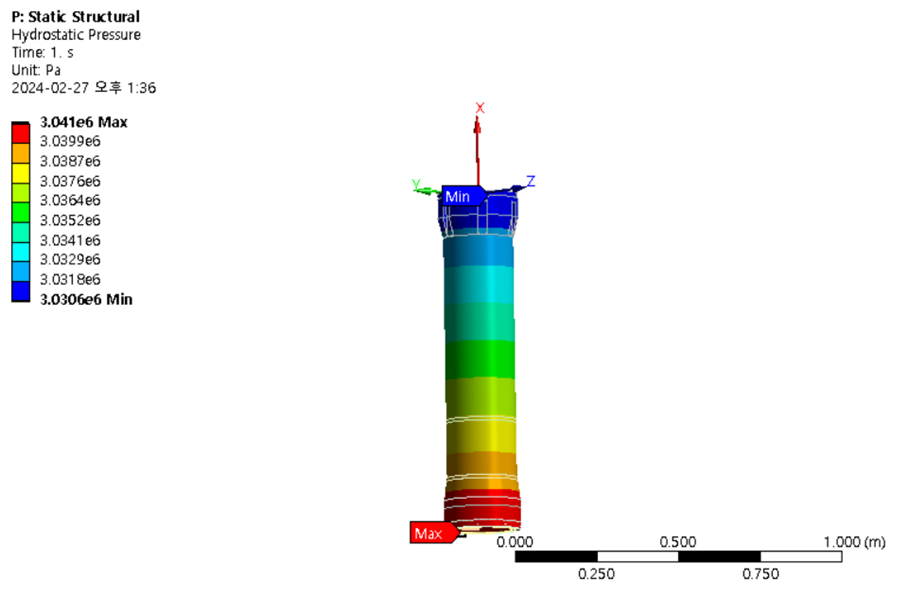
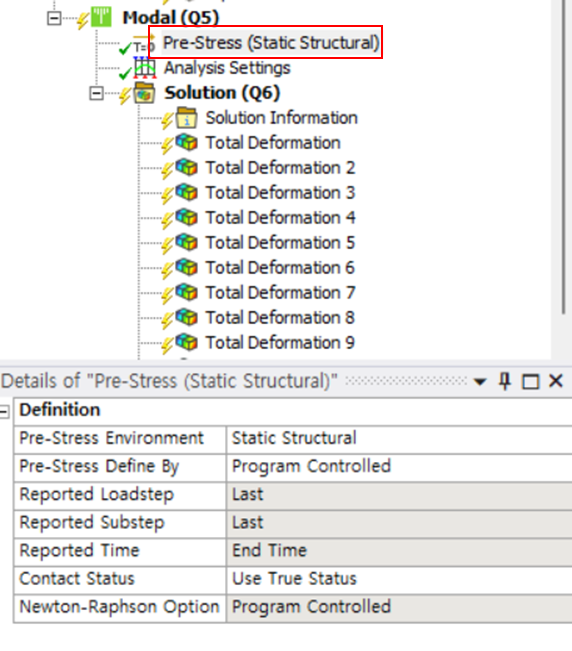
However, when I compared the modal analysis with and without hydrostatic pressure, there was no change in natural frequencies.
I'm not exactly sure what the reason for this result is.
Is my modeling conditions wrong?
Or is this result physically correct?
2.
I would like to analyze how the added mass from the fluid around the structure increases the mass of the structure and decreases the natural frequency compared to when it is not submerged in fluid.
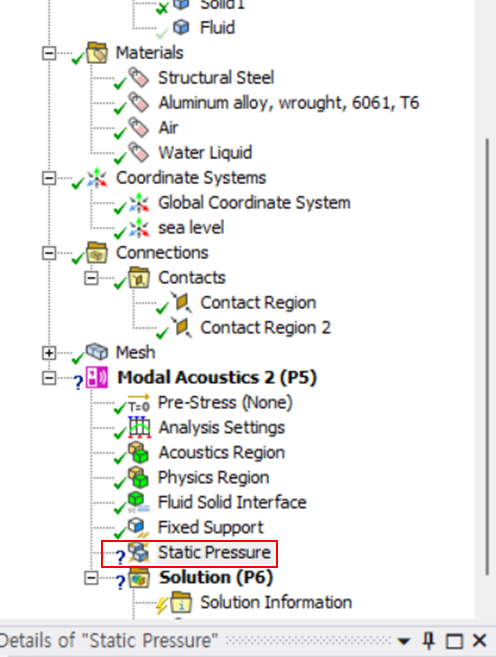
To do this, I used ‘modal acoustics’
I created a fluid field in the shape of a rectangle around the structure as shown below
I selected the acoustics region, the physics region, and the FSI selected the inside face of the fluid where the fluid interfaces with the structure.
then fixed one side of the structure.
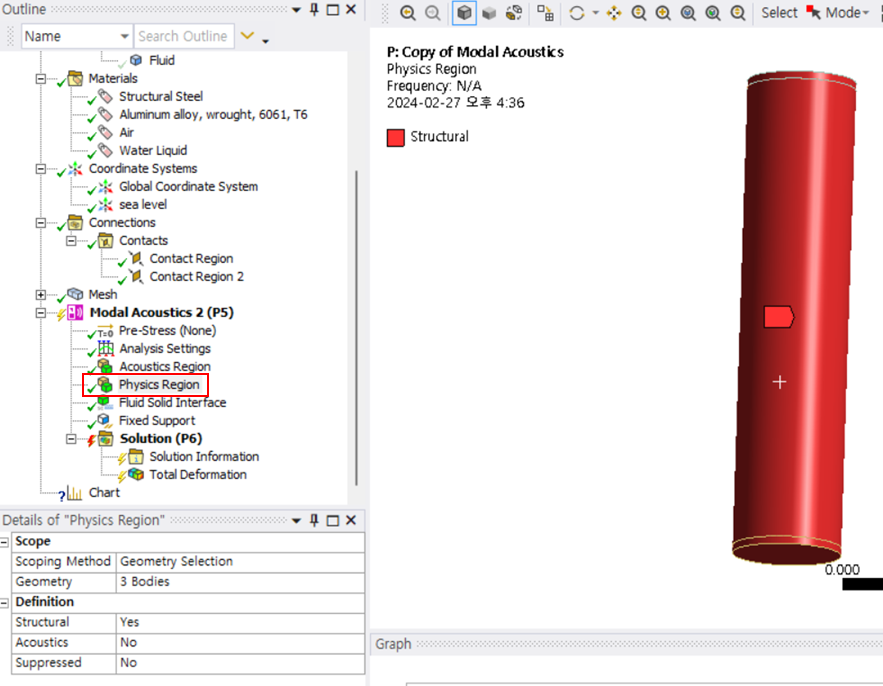
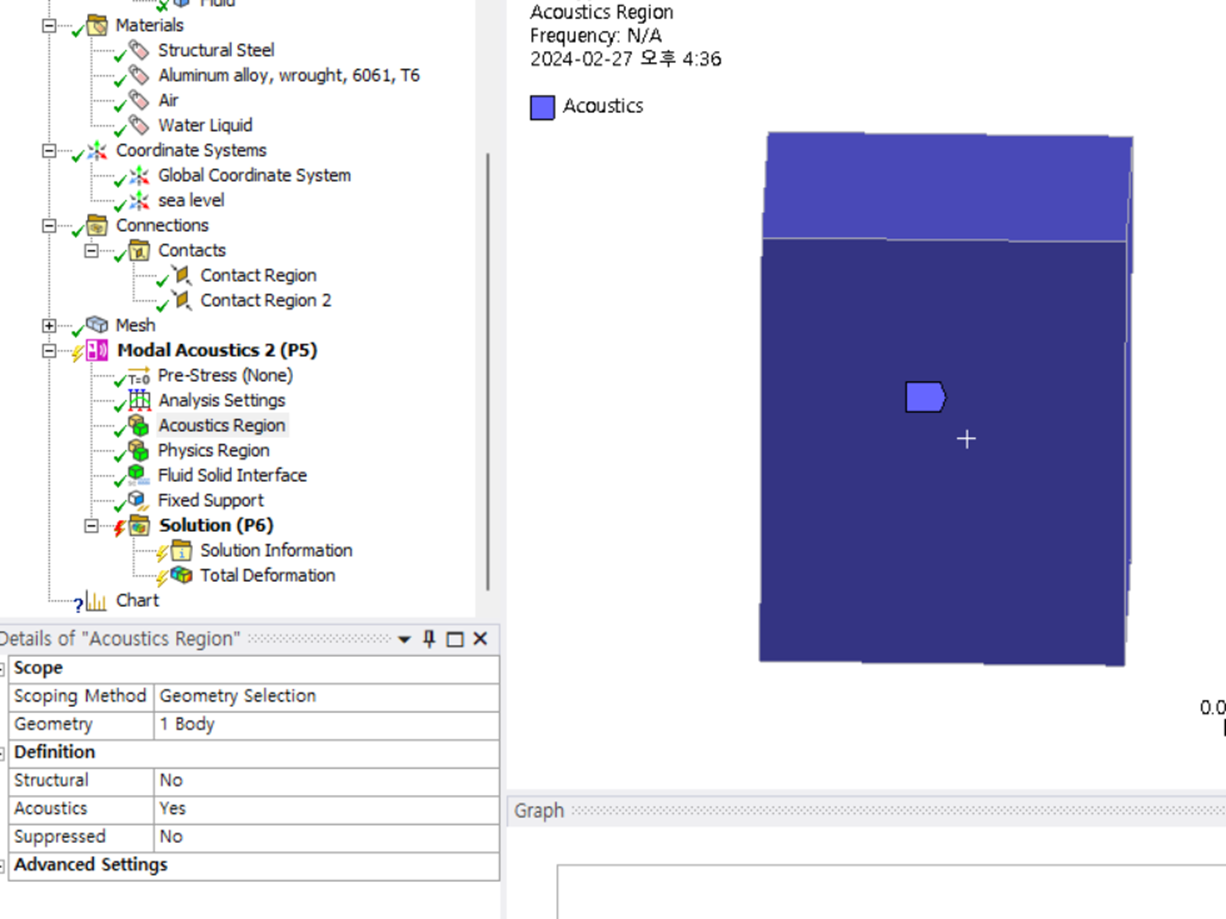
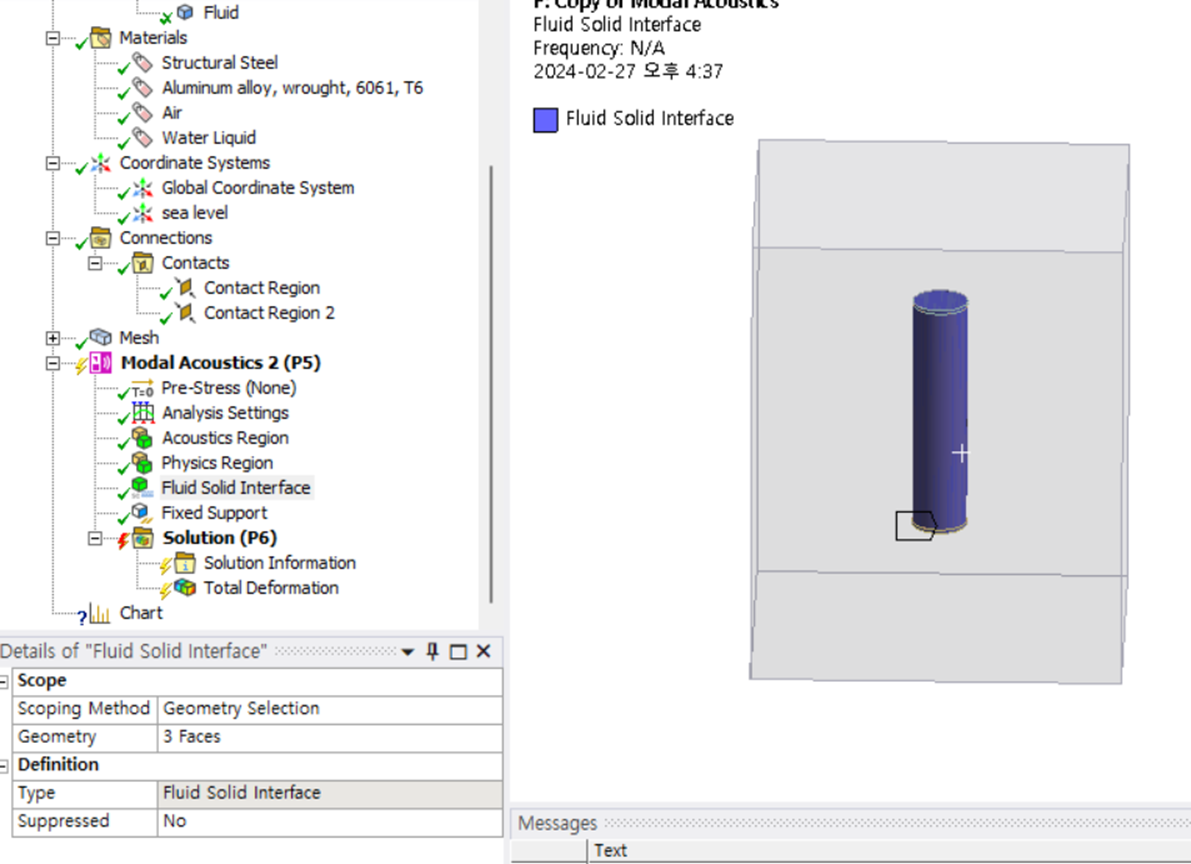
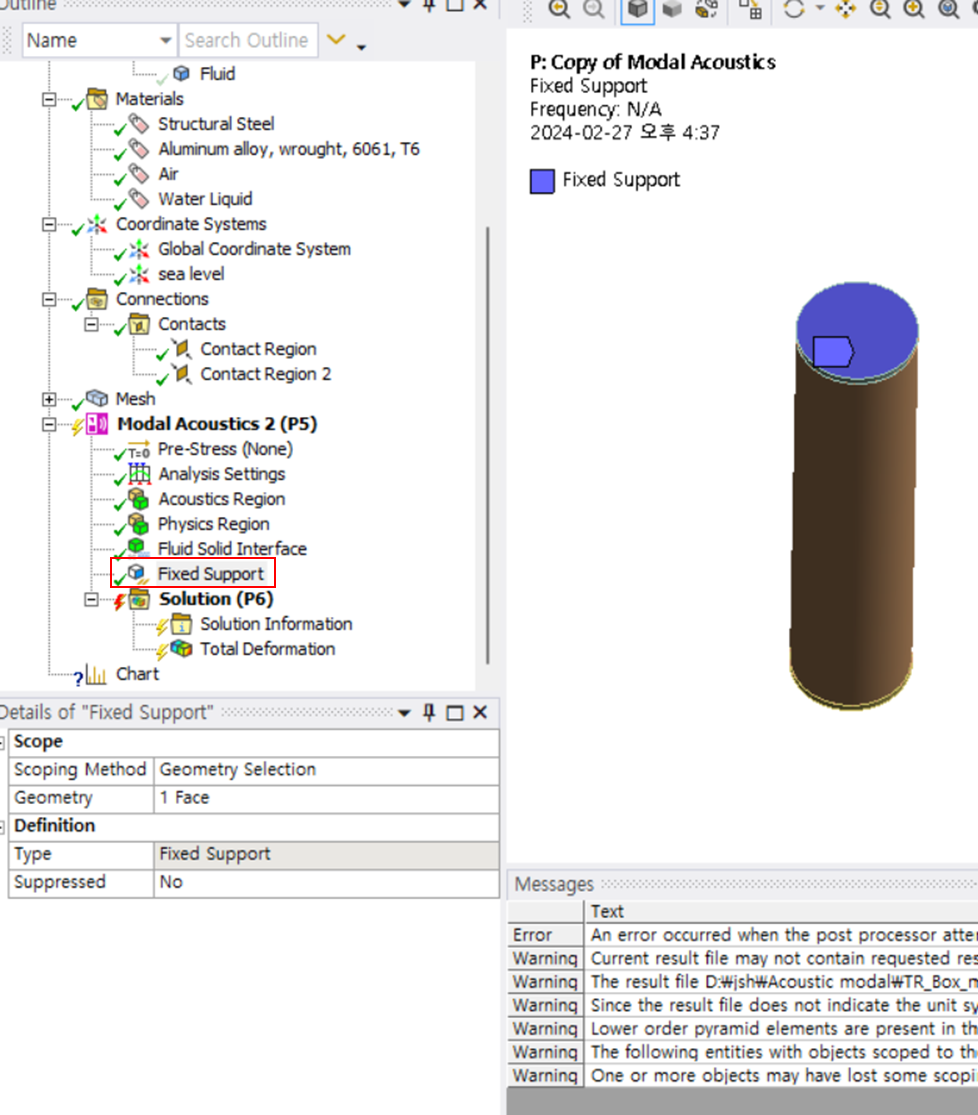
Are these the right settings for the analysis I want to do?
But I'm also wondering how should I set the size of the fluid field here?
What I want is a model submerged hundreds of meters under an infinite ocean, but the results will depend on the size of the fluid field, and I can't make it infinitely large in the analysis.
3.
One last question.
What is the static pressure that I apply to the fluid region in Modal Acoustics?
If I apply static pressure to the fluid, is that pressure transferred to the structure connected to the FSI?
If so, can I use this option to simulate the situation where hydrostatic pressure is applied in 1 above?
Thank you!


















 You are navigating away from the AIS Discovery experience