I am doing an analysis of a steel pipe casted in concrete inside of a drilled rock. My simple Mechanical-model is shown here:
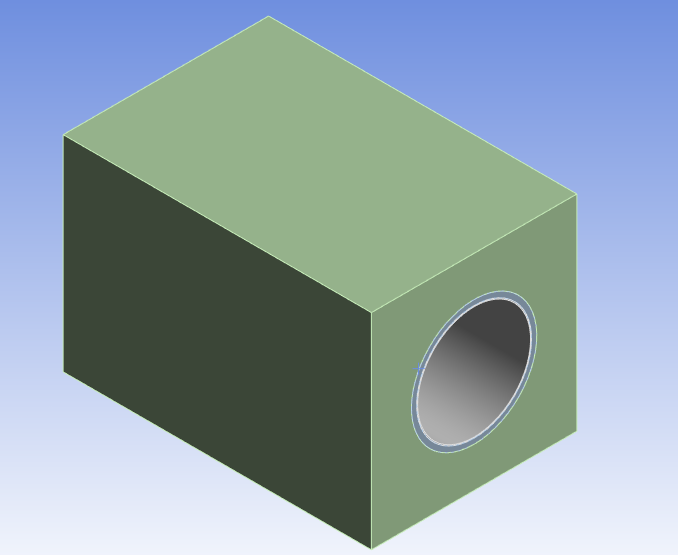
The green part is the rock, the blue part is the concrete and the grey part is the steel tube. The only load is the water pressure inside the steel tube (8,4 MPa), acting perpenticularly outward on the inside of the pipe walls. In my model the rock is fixed on four sides and default bonded contact are defined between the steel pipe and the concrete and between the concrete and the rock.
I am interested in obtaining the contact pressure between the concrete and the rock. I have defined a cylindrical coordinate system based on the outer surface of the concrete like shown here:
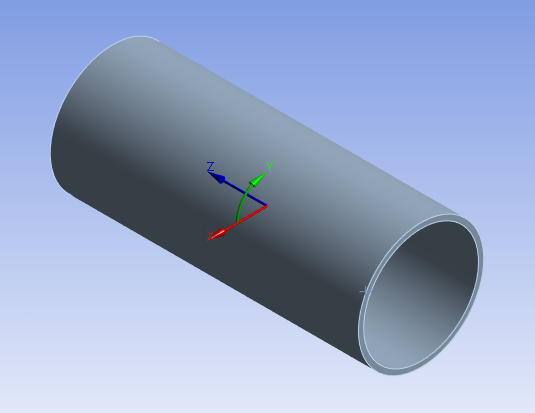
By then linking this coordinate system to a force reaction contact probe, I have obtained the results like shown here:
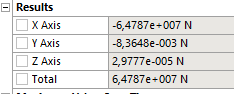
The force in the x-direction is very high. What is the proper way to interpret this? Should I divide this number by the total outer surface area of the concrete in order to obtain the contact pressure? Or is there another way of obtaining this contact pressure in Mechanical?


















 You are navigating away from the AIS Discovery experience