Fluids

Fluids

Topics related to Fluent, CFX, Turbogrid and more.

Time Step Size

    • Max4
      Subscriber

      Hi,


      For a transient simulation, we have to set the time step size in Run Calculation. This time step is based on the CFL-Number and the value of c depends on the type of solver used (explicit or implicit). The parameter are: u for the maximal velocity of the fluid, delta t the time step and delta x the minimal cell size.
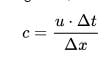


      In order to Preview the Mesh Motion, we have to give a time step size too. Is this time step based on the CFL-Number too, in order to avoid the negative cells? The velocity u in this case is then the maximal velocity of the moving part.


      Is there then an physical time step and a numerical time step?


      To obtain correct results and avoid negativ cells too, should I choose the minimal time step for the running the simulation or are the two times the same?


      Regards,


      Maxime

    • Amine Ben Hadj Ali
      Ansys Employee

      Why do you think that the time step size is based on CFL number? This is not always case. Without any additional modelling the time step size is not based on CFL number.


      The time step for mesh preview is only for mesh preview (pre-prcoessing). For Solver runs and mesh deformation you need to change the time step size under Run Task panel.

    • Max4
      Subscriber

      I have read this:


      "Time step size depends on your problem and your ODE solver/time discretization. If you have a hyperbolic PDE and want to solve it with an explicit method, then you need the time step restriction (called the Courant-Friedrichs-Lewy/CFL condition) or your numerical solution will typically oscillate and may grow to ±">±∞±∞.


      On the other hand, if you have a parabolic problem and an implicit time discretization, then you don't need the restriction."


      Then, how should I choose the time step size?


      I know that by using the Coupled Solver, we have to set a value for the Courant Number. In this case, Fluent tries not to exceed this value for each of the cells?


      Regards,


      Maxime


    • Amine Ben Hadj Ali
      Ansys Employee

      The courant number of the coupled solver has nothing to do with time discretization: It just add an under-relaxation of the solution matrix.


      Choose the time step size based on your physics: SRS CFL<1, Explicit VOF< 1..2, General cases CFL ideally not larger then 10. Do not forget that the pressure based solver in Fluent is just an implicit solver so there is no CFL restriction.

Viewing 3 reply threads
  • The topic ‘Time Step Size’ is closed to new replies.








