Ansys Assistant will be unavailable on the Learning Forum starting January 30. An upgraded version is coming soon. We apologize for any inconvenience and appreciate your patience. Stay tuned for updates.
Fluids

Fluids

Topics related to Fluent, CFX, Turbogrid and more.

Difference between K-epsilon and K-omega Turbulence Model

    • Burhan
      Subscriber

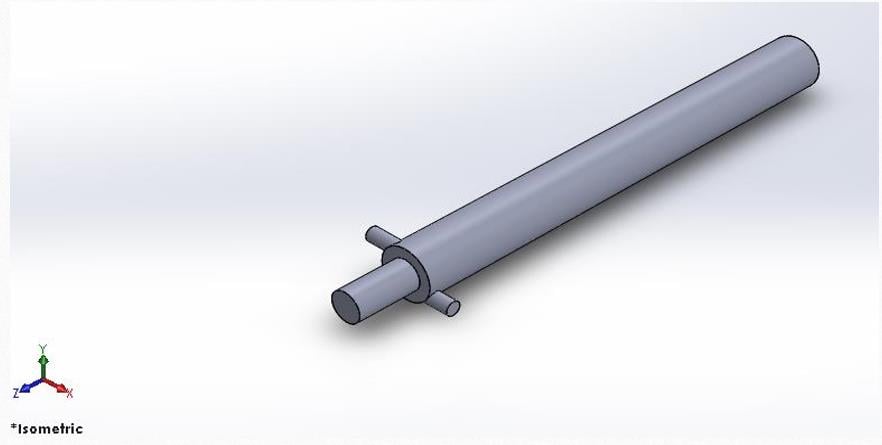
      I am doing simulation of "Vortex Tube" in which compressed air swirl through out the body. 


      1-Which Model can I use (k-e or k-w) ? I want to converge result fast. Suggest me briefly please.


    • raul.raghav
      Subscriber

      Based on the quick literature review, it seems that the Standard k-e model predicts the flow better than the other turbulence models. But you might also want to look into the k-w SST model with curvature correction. Look into the following articles for more information:


      Comparison of different turbulence models in predicting the temperature separation in a Ranque–Hilsch vortex tube


      CFD analysis of energy separation of vortex tube employing different gases, turbulence models and discretisation schemes

    • Raef.Kobeissi
      Subscriber
      k- epsilon model poorly resolves the viscous layer unline K-Omega model. Furthermore,  k-ω model is good in resolving internal flows, separated flows and jets and flows with high-pressure gradient and also internal flows through curved geometries. You always need to make sure that you have a proper mesh at the boundary wall by abiding by the correct Y Plus value.
       
       
Viewing 2 reply threads
  • The topic ‘Difference between K-epsilon and K-omega Turbulence Model’ is closed to new replies.

[bingo_chatbox]