-
-
March 9, 2023 at 10:57 am
Zoltan Wagner
SubscriberHi
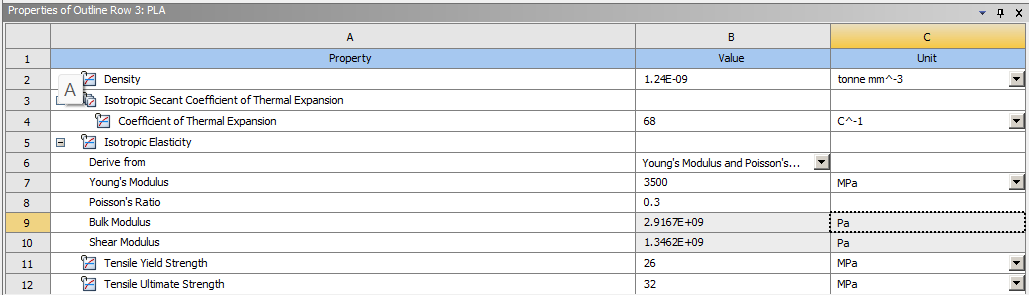
For my project I am doing a simple crash box compression test/analysis where I need to compare my results from Ansys and the actual experiment. I am using PLA as my material which i had to create in ansys and these are the properties I have given:
In the experiment I am compressing the crash box by 3mm and measuring the Reaction force to find the energy absorbed by the structure. My problem is that the results I get from Ansys is very different compared to the tests.
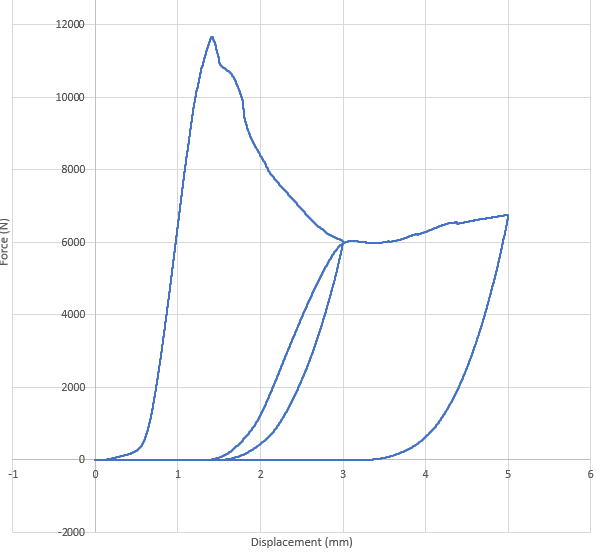
This is the result from the experiment and the maximum froce is just belowe 12000N however this is what I get from ansys:
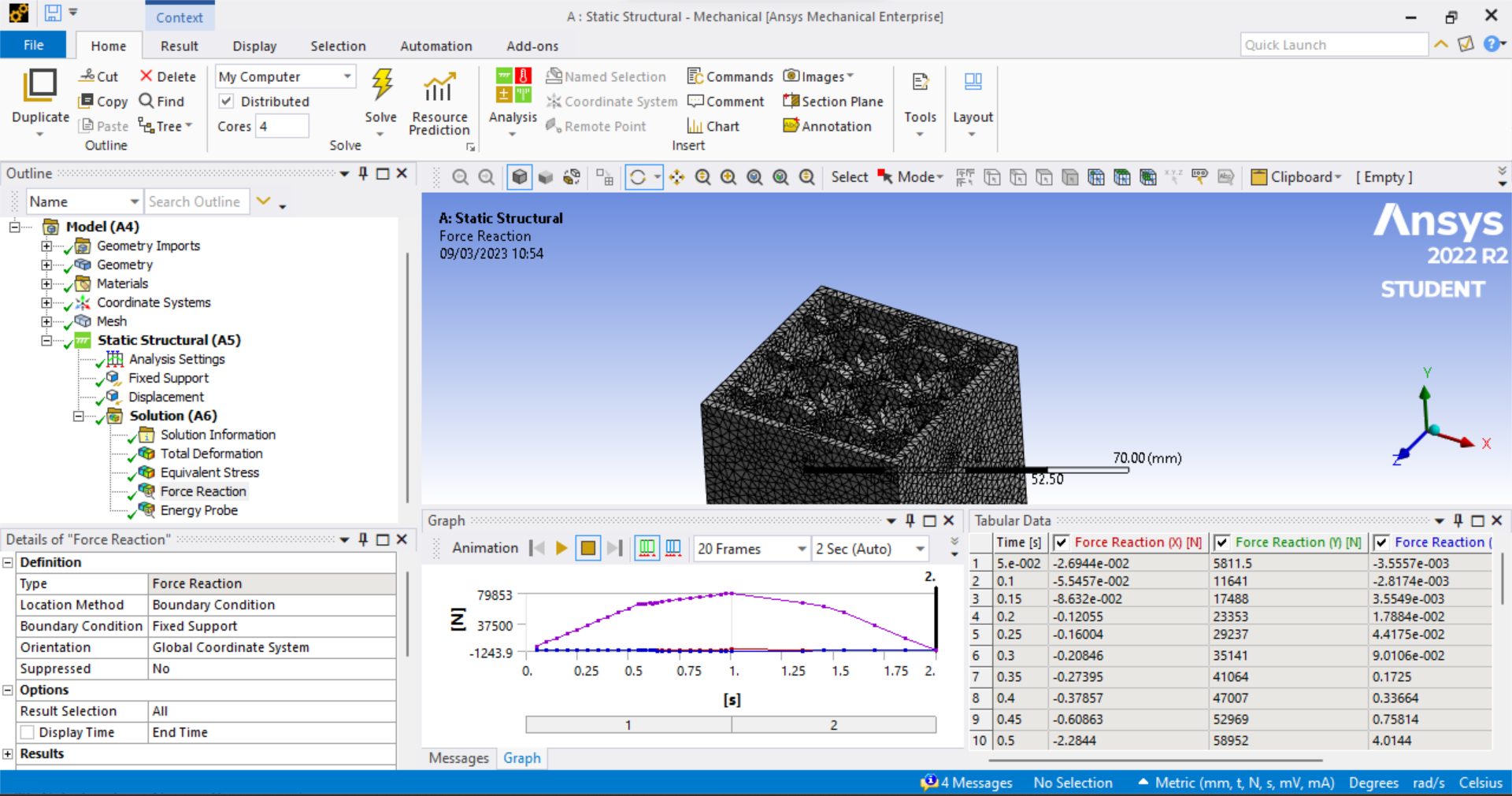
It is clear that the data I recieve from ansys is a lot higher than to the actual simulations but I cant figure out why.
If anyone could help me with what might be the problem it'll be appreciated.
Thanks

-
March 10, 2023 at 7:33 pm
Armin
Ansys EmployeeHi Zoltan,
Could you provide more details about your case?
For instance, what are the boundary conditions of the model and how do they compare to the actual experiment?
Did you observe any buckling in your experiment? Did the model resolve the same mode of deformation?
Did you assume your material to behave as linear elastic? -
March 12, 2023 at 12:03 pm
peteroznewman
SubscriberHi Zoltan,
It seems only linear elastic material properties were used. That would explain the huge forces computed in the simulation that are far above the experimental data.
The Tensile Strength properties in your material do not affect the simulation, they only support plotting Safety Factors results.
In Engineering Data, access the material models under the Plasticity category. The simplest one is Bilinear Isotropic Hardening. Put in the Yield Strength that you know, and use 0 for the Tangent Modulus. See how that changes the force in your simulation.
-
- The topic ‘Material Properties’ is closed to new replies.
-
6014
-
1906
-
1425
-
1308
-
1021
© 2026 Copyright ANSYS, Inc. All rights reserved.








