-
-
November 14, 2022 at 9:15 am
Furkan Bilgi
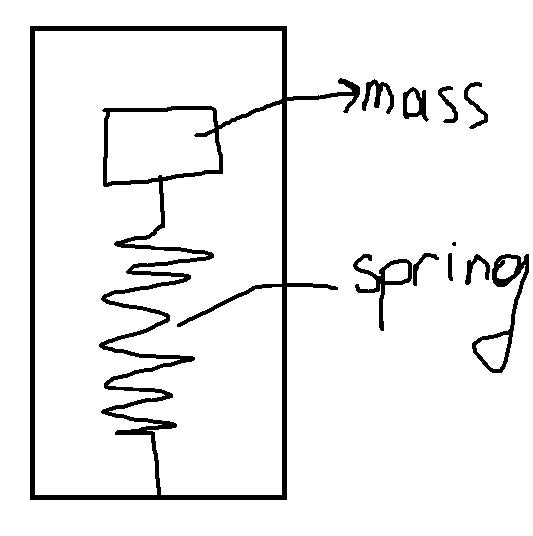
SubscriberHi all. My system is shown in the figure below. There is fluid inside of the big rectangle of which the type and viscosity are known. I also know the mass and spring coefficient. The system works as a standart mass-spring-damper system. The only parameter that is unknown is the damping coefficient. I am planning to use logarithmic decrement formulation to find the damping coefficient. To do so, I need displacement-time graph of the mass in the fluid. What I am trying to ask is that is it possible to model this system in ansys (or fluent) and give an initial condition to the mass and let the mass vibrate freely. Thanks in advance.
-
November 14, 2022 at 1:01 pm
ErKo
Ansys EmployeeHi
The forms of damping here with the last two being what is called radiation damping are:
• Fluid viscosity.
• Component impact.
• Wave generation.
• Acoustic generation.Not sure if all these can be captured, but the best chance of capturing these is a 2 way FSI between a Transient Structural Analysis and a Fluent (compressible flow is needed to capture wave and acoustic radiation damping) analysis.
All the best
Erik
-
- The topic ‘Is it possible to find the damping coefficient in this system?’ is closed to new replies.

-
5834
-
1906
-
1420
-
1305
-
1021
© 2026 Copyright ANSYS, Inc. All rights reserved.