

-
-
May 13, 2022 at 8:30 pm
Arek
SubscriberHello
So my problem is that after creating maxwell 2d design from rmxprt i am getting error "Invalid .SUBCKT format in netlist file".
Maxwell can not see my circuit when i'am trying to import netlist file in excitations. This appears when, in rmxprt adding in the tab Machine-> Control Type, I choose CCC.
I tried to solve this problem in various ways, also searching on the Internet, but I could not find anything.
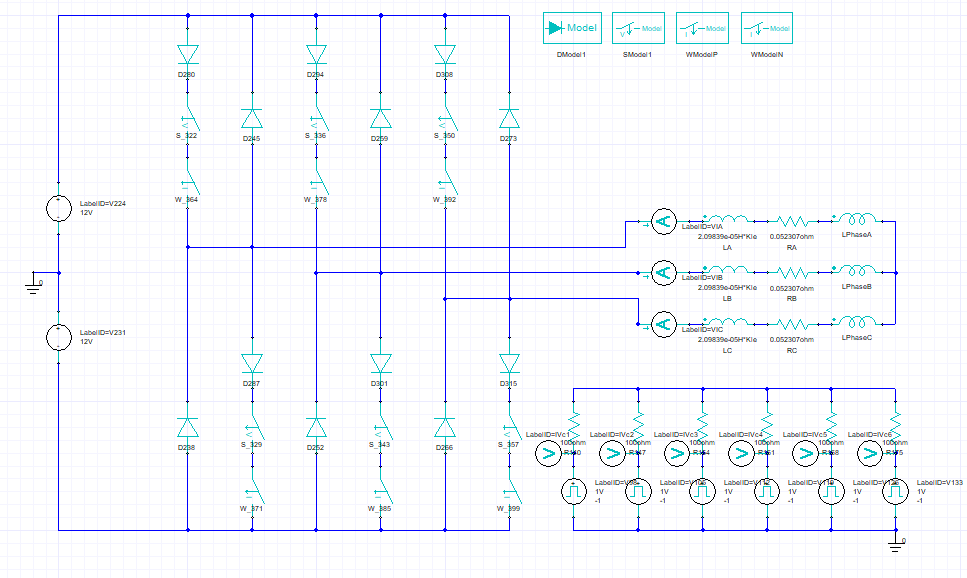
Could any of you tell me what I did wrong? Below is the layout of my circuit
May 17, 2022 at 7:10 pmHDLI
Ansys Employee
Which machine type are you using now? Could you check why you have 3 switch modes and do you use all? Thanks.
Do you change anything? We should create this external circuit with Maxwell model, no need to import the circuit. Could you run the Maxwell model after generating it?
Best regards
HDLI
Viewing 1 reply thread- The topic ‘Ansys Electronics: Invalid .SUBCKT format in netlist file’ is closed to new replies.
Innovation Space Trending discussions
 Top Contributors
-
peteroznewman
 5059
5059 -
scabo
 1770
1770 -
Dennis Chen
 1387
1387 -
javat33489
 1248
1248 -
Shyam Prasad V Atri
1021
Top Rated Tags
© 2026 Copyright ANSYS, Inc. All rights reserved.
Ansys does not support the usage of unauthorized Ansys software. Please visit www.ansys.com to obtain an official distribution.
-


The Ansys Learning Forum is a public forum. You are prohibited from providing (i) information that is confidential to You, your employer, or any third party, (ii) Personal Data or individually identifiable health information, (iii) any information that is U.S. Government Classified, Controlled Unclassified Information, International Traffic in Arms Regulators (ITAR) or Export Administration Regulators (EAR) controlled or otherwise have been determined by the United States Government or by a foreign government to require protection against unauthorized disclosure for reasons of national security, or (iv) topics or information restricted by the People's Republic of China data protection and privacy laws.

 You are navigating away from the AIS Discovery experience