

-
-
October 14, 2021 at 2:52 pm
cs_zy
SubscriberOctober 15, 2021 at 3:13 pmKarthik Remella
AdministratorHello What do you mean by returned to Fluent? Can you elaborate a bit more about the end objective of your code so we may be able to help here?
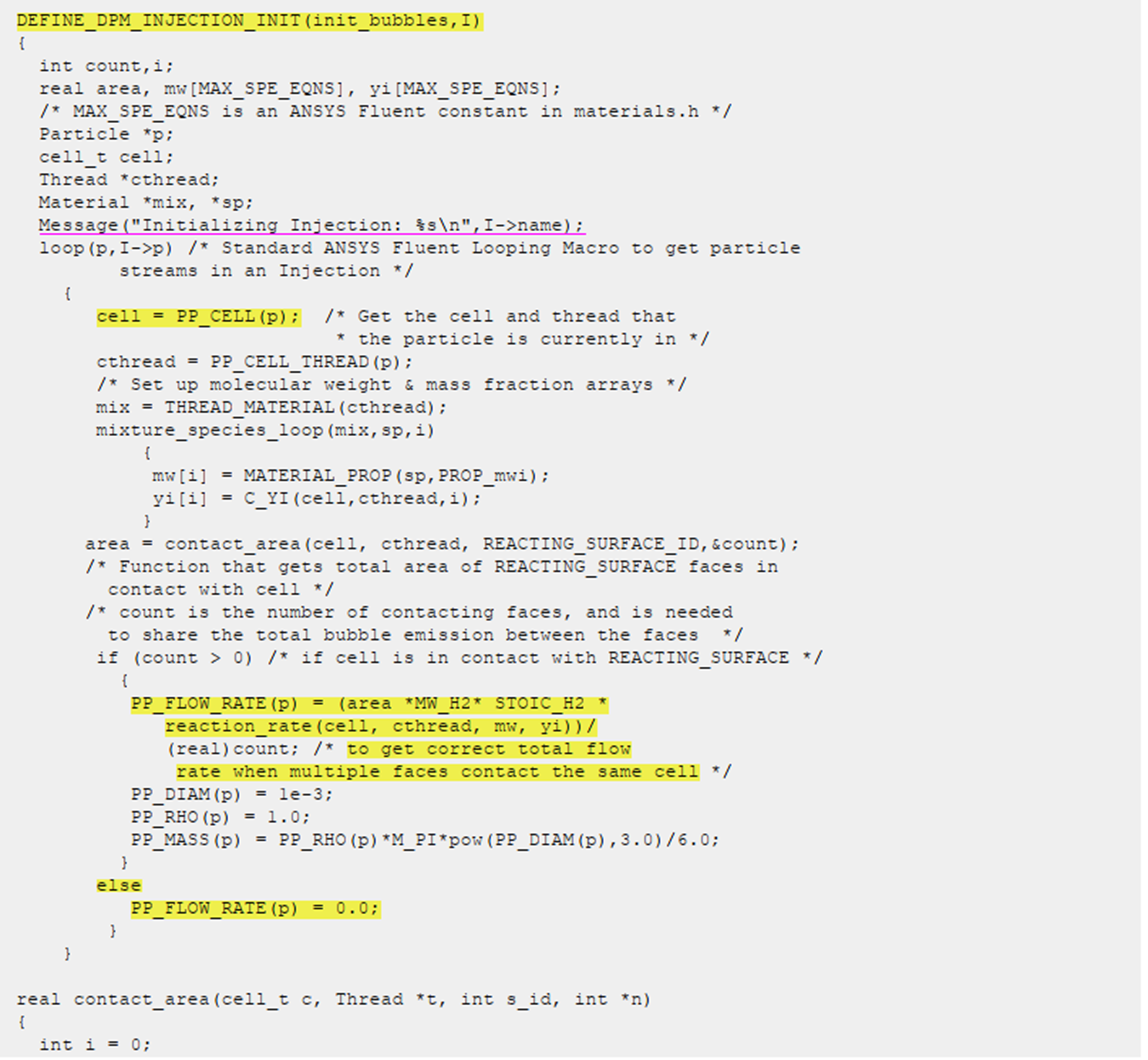
In the above code, it is being estimated using the macro 'reaction_rate'.
Karthik
October 16, 2021 at 2:28 amSubscriber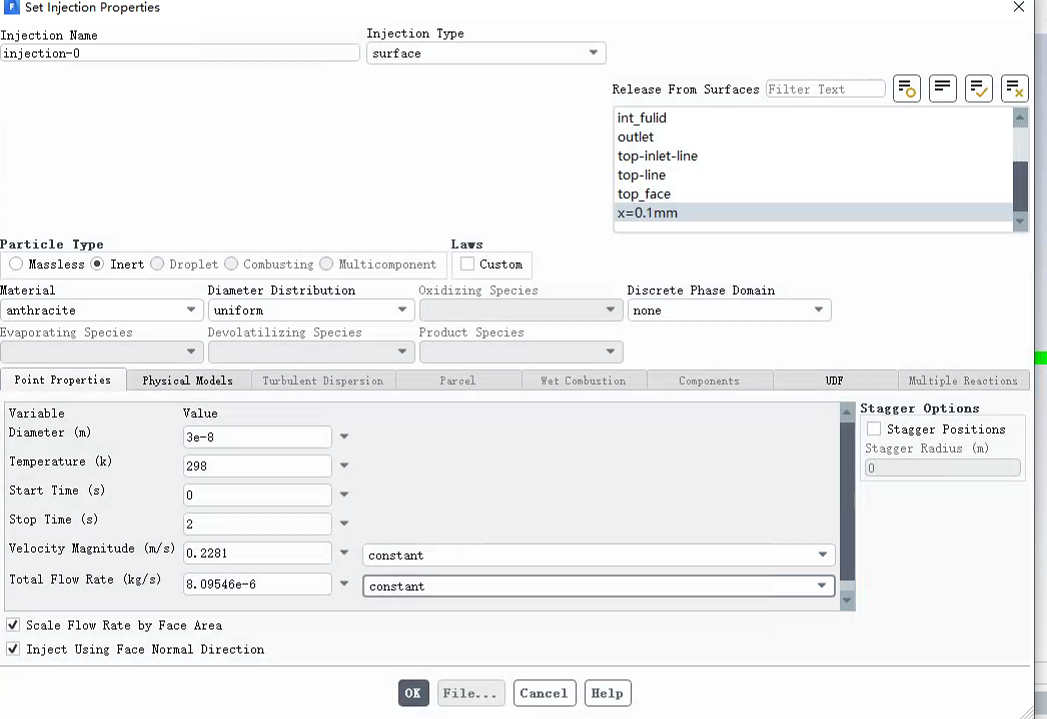 Respected sir
1.I want to realize that the particle mass Flow Rate changes with time, but the Total Flow Rate can only be filled in as a constant. How does the above code realize that the Total Flow Rate varies with time? My code looks like this, but it has an error when compiling.
Respected sir
1.I want to realize that the particle mass Flow Rate changes with time, but the Total Flow Rate can only be filled in as a constant. How does the above code realize that the Total Flow Rate varies with time? My code looks like this, but it has an error when compiling.
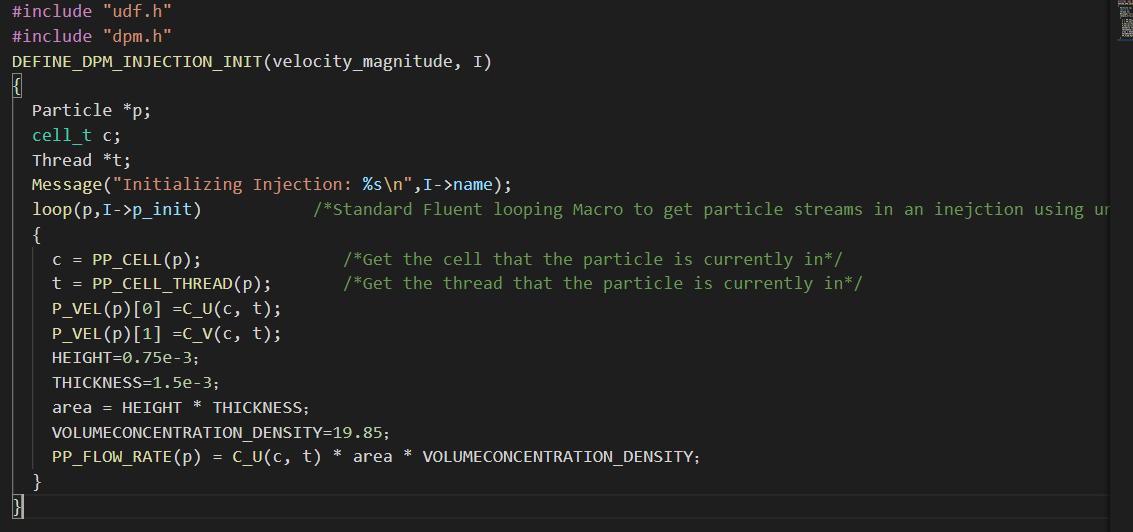
2.How does PP_FLOW_RATE relate to Total Flow Rate? It's defined by the user when they write the code, not defined before in the dpm.h file, right?
I know such as C_V(c, t) and PP_CELL(p),they are macros defined in .h file.
3.And I would appreciate it if you could tell me what's wrong with my code.
October 18, 2021 at 3:02 pmRob
Forum ModeratorRead the macro definition carefully. The PP_FLOW_RATE (assuming it's the correct macro) will overwrite what is in the panel.
Viewing 3 reply threads- The topic ‘How does Fluent get results of PP_FLOW_RATE(p) from UDF?’ is closed to new replies.
Innovation Space Trending discussions
 Top Contributors
-
peteroznewman
 6369
6369 -
scabo
 1906
1906 -
Dennis Chen
 1457
1457 -
javat33489
 1308
1308 -
Shyam Prasad V Atri
1022
Top Rated Tags
© 2026 Copyright ANSYS, Inc. All rights reserved.
Ansys does not support the usage of unauthorized Ansys software. Please visit www.ansys.com to obtain an official distribution.
-


The Ansys Learning Forum is a public forum. You are prohibited from providing (i) information that is confidential to You, your employer, or any third party, (ii) Personal Data or individually identifiable health information, (iii) any information that is U.S. Government Classified, Controlled Unclassified Information, International Traffic in Arms Regulators (ITAR) or Export Administration Regulators (EAR) controlled or otherwise have been determined by the United States Government or by a foreign government to require protection against unauthorized disclosure for reasons of national security, or (iv) topics or information restricted by the People's Republic of China data protection and privacy laws.

 You are navigating away from the AIS Discovery experience