Ansys Assistant will be unavailable on the Learning Forum starting January 30. An upgraded version is coming soon. We apologize for any inconvenience and appreciate your patience. Stay tuned for updates.
Fluids

Fluids

Topics related to Fluent, CFX, Turbogrid and more.

Cyclone Separator Simulation

    • DrAcAryS
      Subscriber

      Hi,

      I am simulating a cyclone separator. I wanted to know the efficiency with respect to particle size.

      I have applied the suitable conditions:

      k-epsilon RNG swirl dominated model, I have used a DPM model with ash-solid as the inert particle. I changed its density as I was concerned with starch.

      Reflect condition at inlet, trap at the bottom outlet, escape at the top outlet and reflect conditions at the wall

      the problem I am facing is I am getting a higher efficiency each time the DPM model iterates. The cyclone model which I am using has an efficiency of 50 percent at 5 microns. Could you tell me why the efficiency is coming higher each time the model iterates and the simulation is varying from the experimental data. Is it due to the high DPM iterations?

      and also as I am concerned with starch is it ok to use ash-solid and change its density or could you suggest other material.

      Thanks

    • DrAcAryS
      Subscriber
      Hi again,
      When I have used Calcium carbonate as the inert material and then changed its density to starch i.e 1500 kg/m3 the efficiency is way less i.e 30 percent than that of using ash solid material as the injection and then changing its density to 1500 kg/m3 since starch isn't available. (85%)
      Could you tell me which inert material injection will be the most appropriate one?
    • Rob
      Forum Moderator
      That doesn't sound right. Assuming you got the model and injection set up correctly you can alter any material to a set density and should get the same answer. Note, for strongly swirling flows I'd use RSM, and k-w with curvature correction is also suitable. Cyclones tend to be fairly sensitive to both mesh and injection setting so please post some images.

    • DrAcAryS
      Subscriber
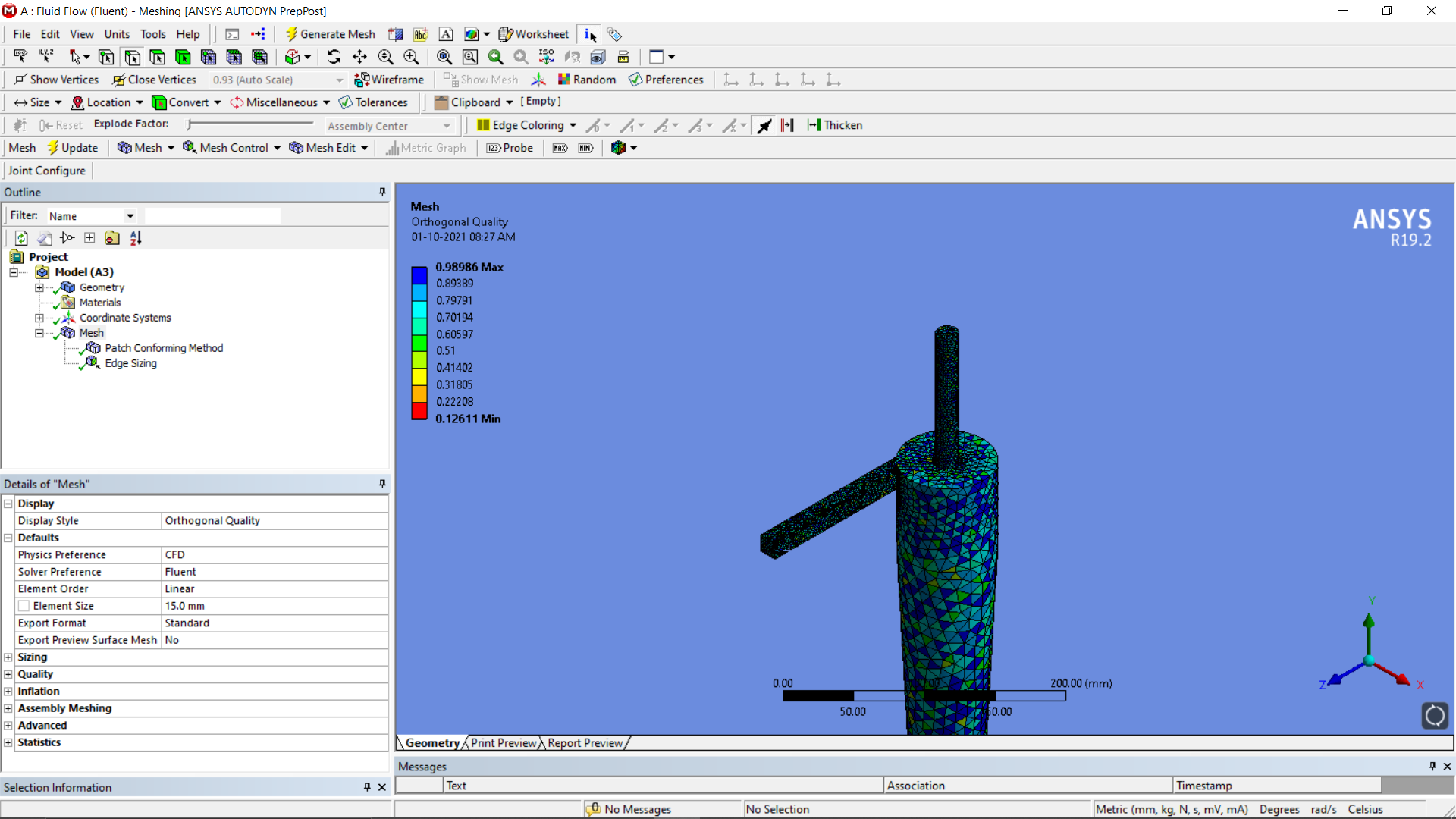
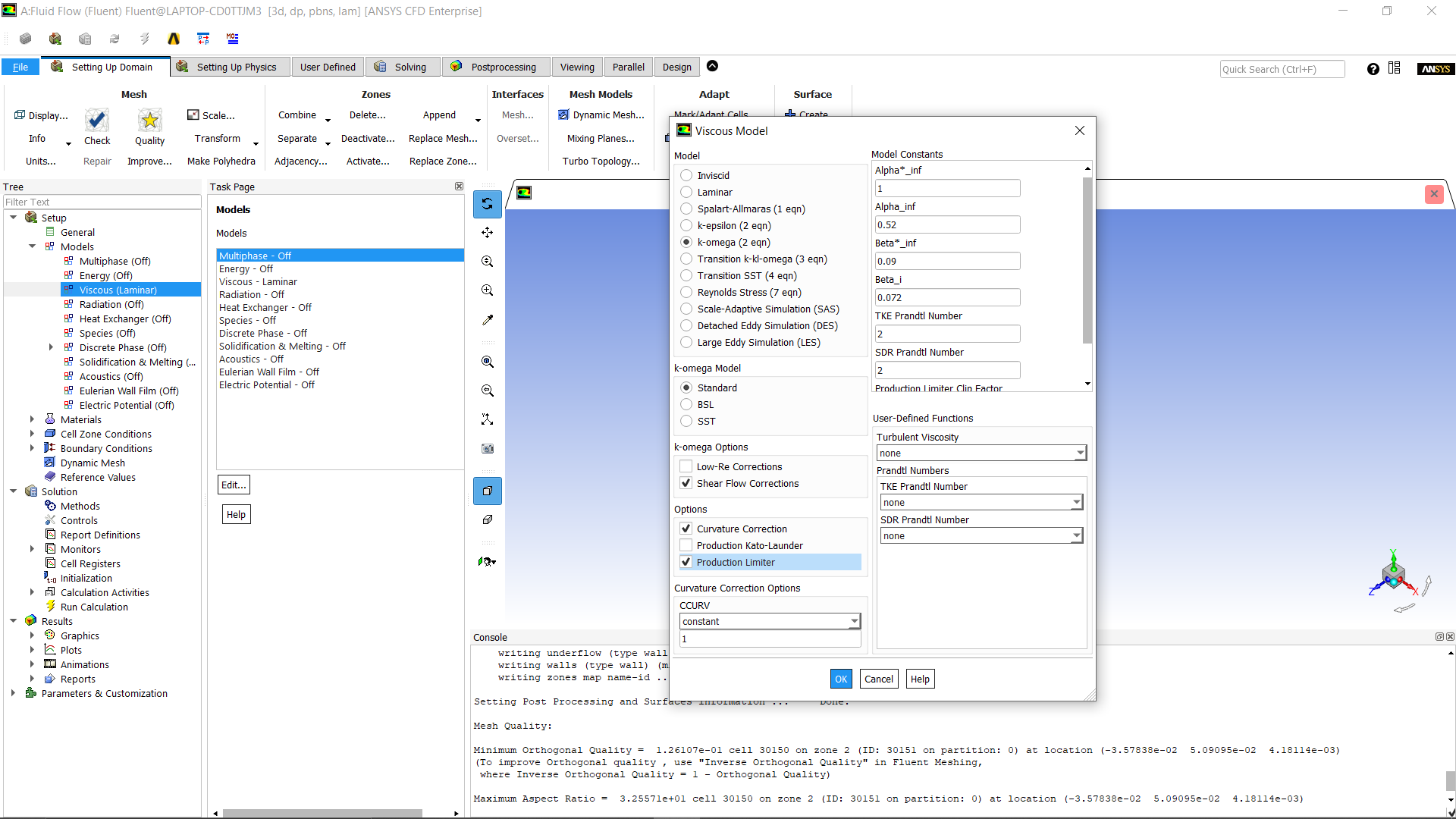
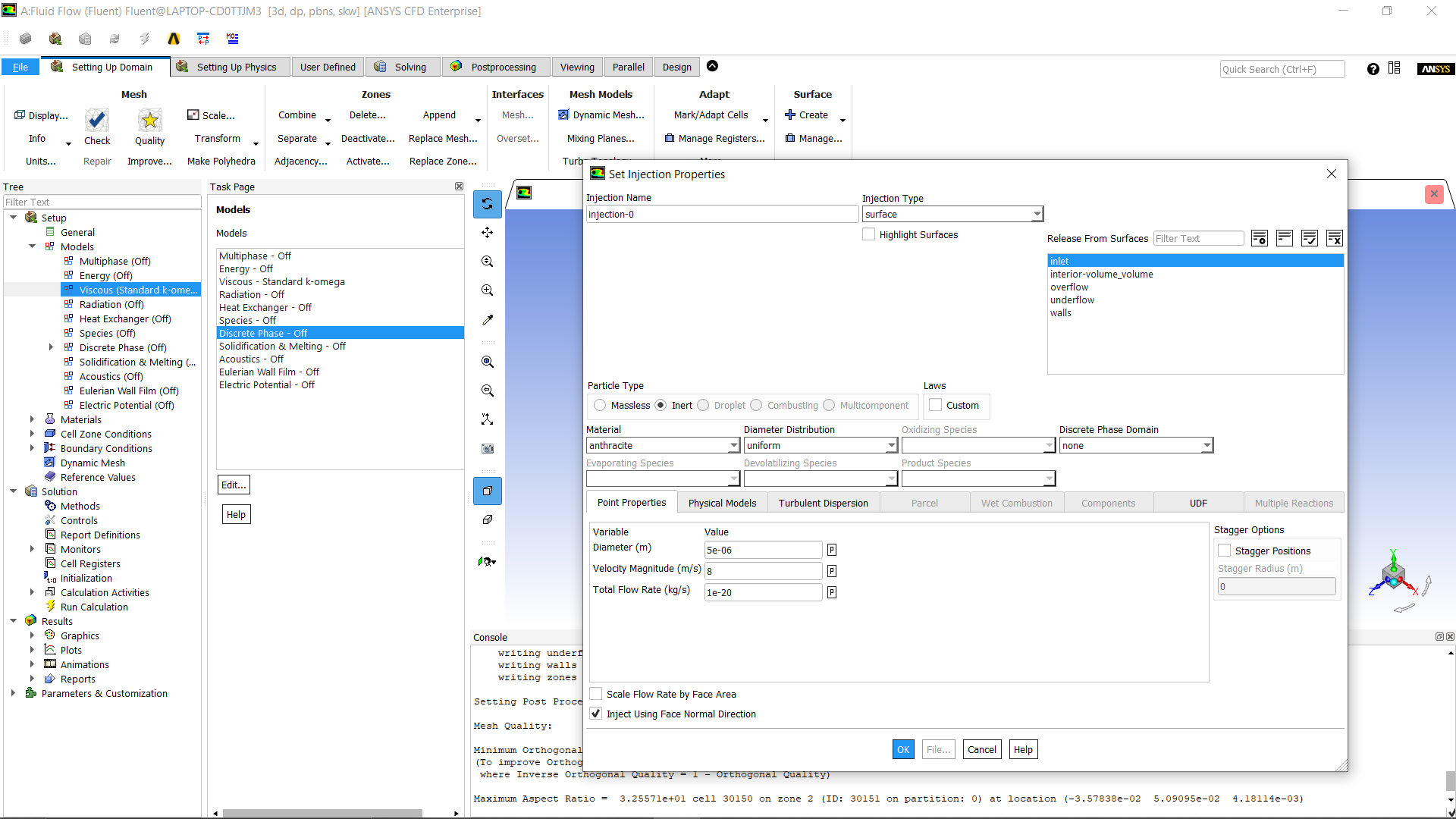
      Can you please check if I am doing it in the right way?
      I used the k omega standard model with curvature correction. The factor was 1.
      The velocity magnitude is 8 m/s and I enabled the Interaction with continuous face and update source flow with every iteration
      Boundary conditions:
      reflect at inlet
      escape at pressure outlet overflow
      wall reflect
      pressure outlet at underflow trap

      most of the particles are incomplete, efficiency is high
    • Rob
      Forum Moderator
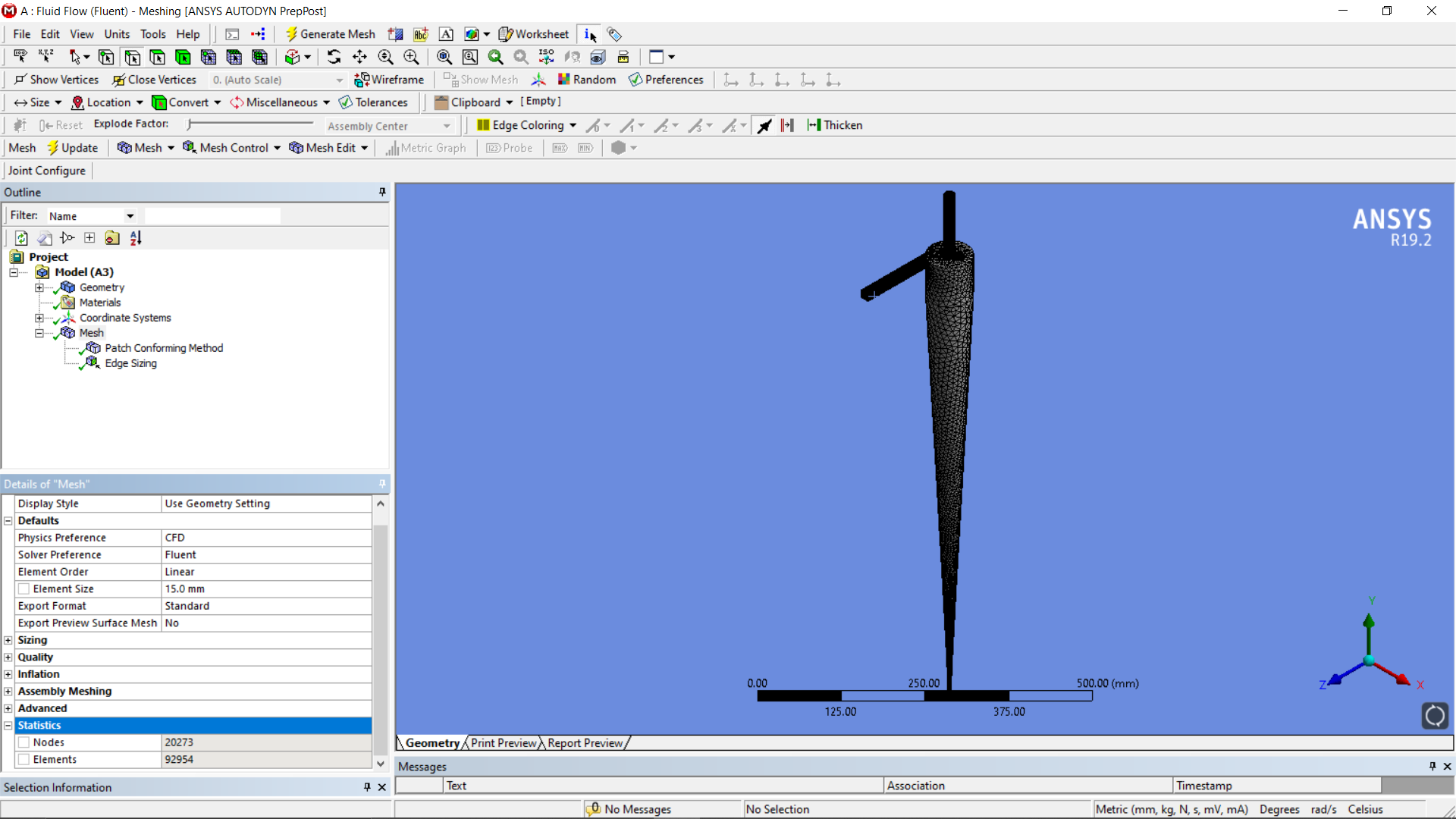
      Cell quality is OK but I suspect you don't have a good refinement in the cyclone body: you need to make sure you resolve the velocity profile and tets aren't good for that.
    • DrAcAryS
      Subscriber
      Could you recommend me some refinement techniques or videos
    • Rob
      Forum Moderator
      Only what's in the Help. I generally set a fairly small max size and use Fluent Meshing to get a poly mesh.
    • DrAcAryS
      Subscriber
      Thanks, I will give it a try and see what happens.
      So the boundary conditions are correct and I am unable to mesh properly?
      So if I get the refinement right I would get the required results?
    • Rob
      Forum Moderator
      You'll get the results for the conditions you have set assuming the model is converged. Currently the mesh isn't helping achieve this.
    • DrAcAryS
      Subscriber
      Hi, I have improved the mesh and model is converged, yet I am getting a higher efficiency than usual, could you please tell me why I am facing these problems
Viewing 9 reply threads
  • The topic ‘Cyclone Separator Simulation’ is closed to new replies.
[bingo_chatbox]