




-
-
May 3, 2022 at 9:25 am
rglsj
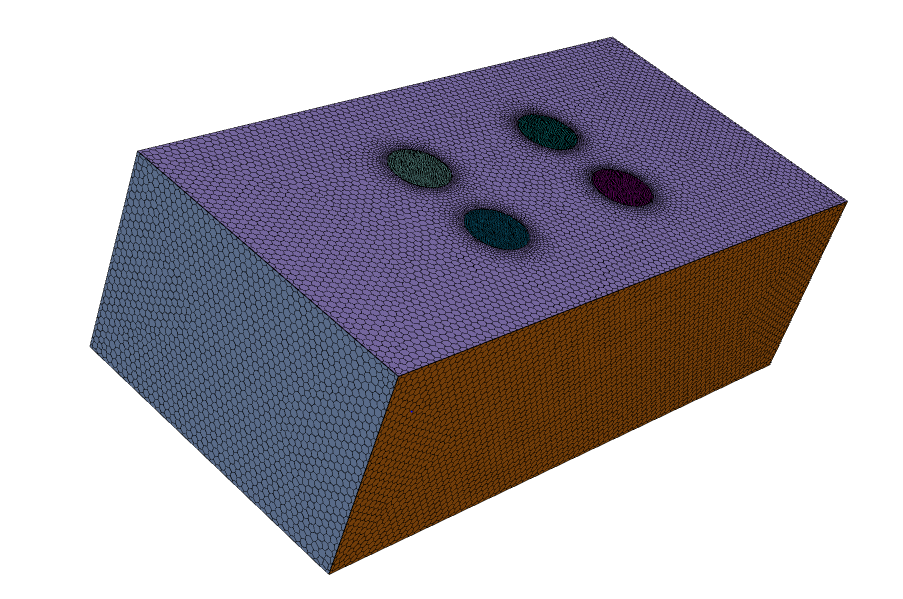
SubscriberHello everyone. I'm trying to simulate human thermal plumes inside a room. I have a simple room with dimensions L×W×H = 10.8×5.4×3.5 m3. Inside that room, four human models are standing (two shorter, and two taller modes). There is no inlets and outlets in my domain. In the next pictures, I'll show my mesh where geometry can also be observed.
May 3, 2022 at 10:25 amRob
Forum ModeratorNot sure why you're including radiation, but otherwise the set-up looks sensible. If you plot temperature & velocity contours on a plane through a couple of the bodies and compare results over (say) 100 iterations how do they look? Hint, if you deselect "auto range" you can fix the range so it's easier to compare.
May 3, 2022 at 12:01 pmSubscriberRob, thanks for your answer.
I'm including radiation because I suppose it's more realistic that way? Actually, I have an interesting comparison of the radiation effect which is shown in the next picture (the radiation included is on the left):
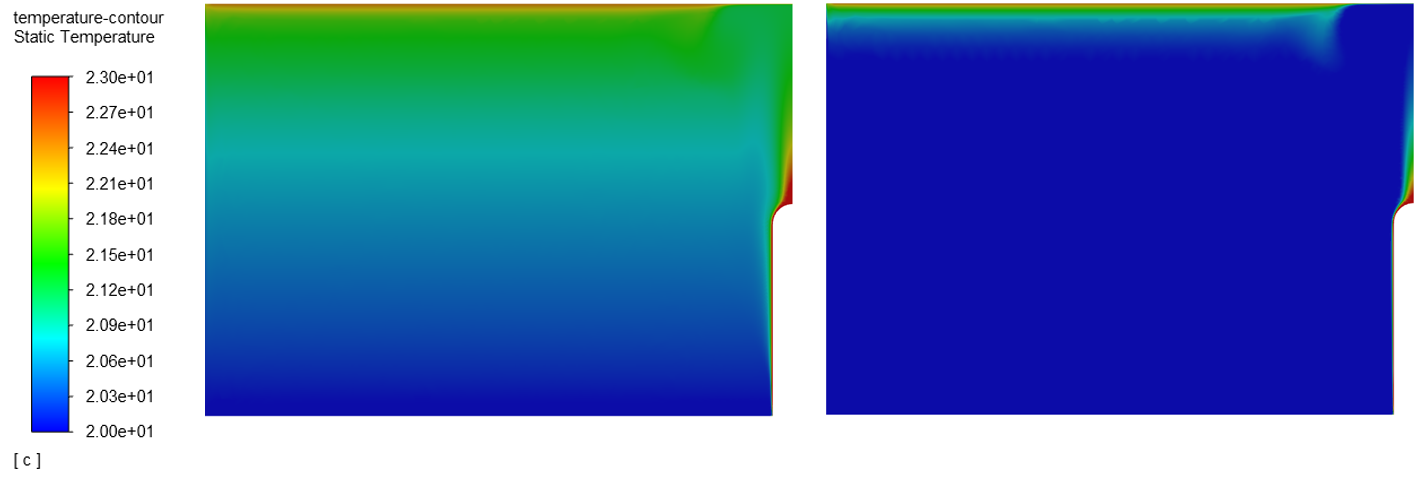 However, that's not the important part of my discussion. As you suggested, here are the velocity and temperature contours for every 100th iteration:
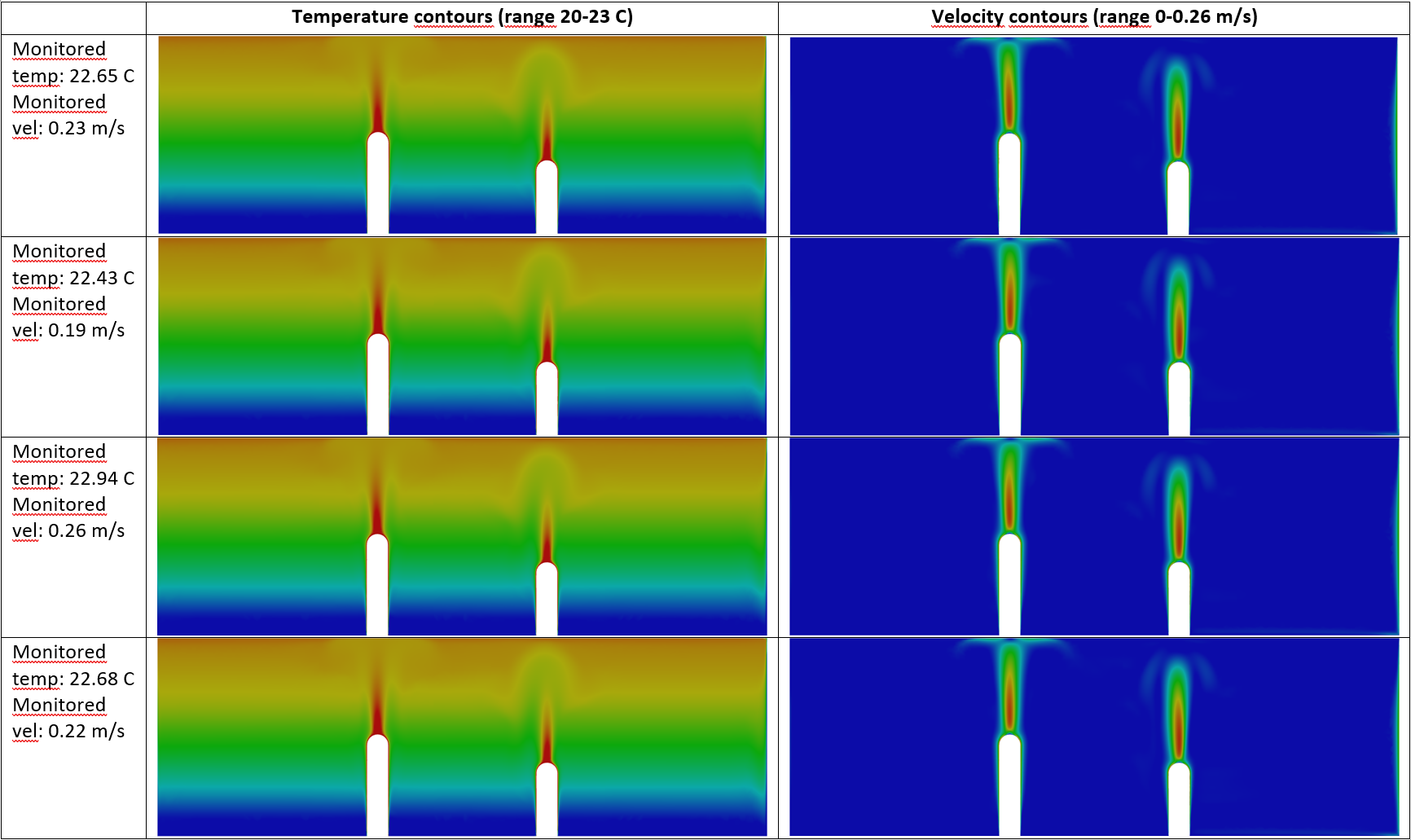 Based on these results I guess that my results don't change that much in the sense that the thermal plume gets bigger and smaller/hotter and colder, but that it goes from left to right? I'm actually surprised that the results are similar if we take into account that my monitored velocity (at the point little above the model is ranging from 0.19 to 0.26 m/s). Is the correct approach to use data sampling for steady statistics (i.e. to take the average values from x iterations?
May 3, 2022 at 1:16 pmForum ModeratorThis is where the engineering comes into CFD - and why you're spending the time working towards a degree of some sort.
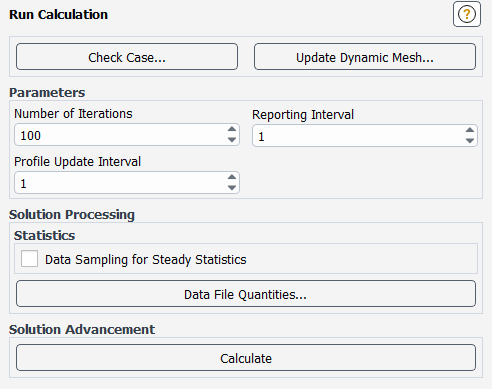
The buoyant plume goes up, easy to see. However, the amount of inertia is low so you'll see the length vary very slightly, and it'll wobble based on other flow features. In an experiment you'll see some noise, in CFD in a transient run you'd see slight changes in the plume and understand why. In steady state we're seeing a pseudo transient effect (NOT the same as the pseudo transient solver option - that was a poor choice of label when it was implemented) where the solver drifts between an infinite number of stable solutions. Taking iteration averaged data is probably the best solution, but you also need to check that doesn't lose a jet region if the jet wobbles a lot: here it doesn't. You use the Data Sampling once the solution is fairly converged, too early and you'll be including the "unconverged" part of the run before the solver settled down.
May 4, 2022 at 5:50 amSubscriberThanks Rob, that helped a lot. I will try to do my simulations that way.
Viewing 4 reply threads- The topic ‘Simulating human thermal plume convergence problem’ is closed to new replies.
Innovation Space Trending discussions
 Top Contributors
-
peteroznewman
 6450
6450 -
scabo
 1906
1906 -
Dennis Chen
 1457
1457 -
javat33489
 1308
1308 -
Shyam Prasad V Atri
1022
Top Rated Tags
© 2026 Copyright ANSYS, Inc. All rights reserved.
Ansys does not support the usage of unauthorized Ansys software. Please visit www.ansys.com to obtain an official distribution.
-


The Ansys Learning Forum is a public forum. You are prohibited from providing (i) information that is confidential to You, your employer, or any third party, (ii) Personal Data or individually identifiable health information, (iii) any information that is U.S. Government Classified, Controlled Unclassified Information, International Traffic in Arms Regulators (ITAR) or Export Administration Regulators (EAR) controlled or otherwise have been determined by the United States Government or by a foreign government to require protection against unauthorized disclosure for reasons of national security, or (iv) topics or information restricted by the People's Republic of China data protection and privacy laws.

 You are navigating away from the AIS Discovery experience