I am studying static strength of fillet weld according to eurocode, (1993-1-8) which suggests studying stresses at the throat thickness mid-line (a-dimension). I have a few options that came to my mind but neither one seems quite accurate. I have bilinear material, 3D geometry and nonlinear analysis. stresses are far beyond yield but below UTS. Nodal forces = ON. Tet mesh with 6 elements through-thickness overall.
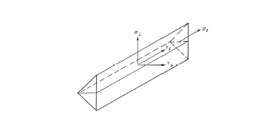
I came up with these:
1: splitting geometry in half and using bonded contact to capture reaction forces
2: splitting geometry in half and using shared topology to connect pieces and capture force on the splitting surface
3: a single fillet, using construction surface to capture stress components
4: a single fillet, using construction surface to caputre force components with force probe.
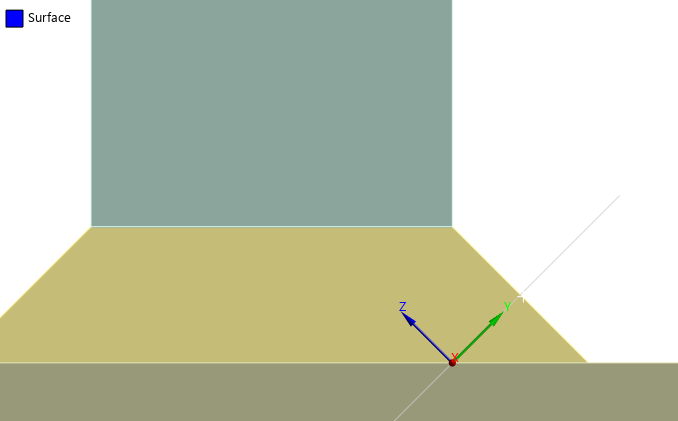
Here's the construction surface for options 3 and 4. My issue is that with option 4 the extraction options "nodes on surface", "nodes on positive side" and "nodes on negative side" give remarkably different results and it seems quite unaccurate.
My concern with option 1 is that nonlinearity is not captured accurately enough due to material plasticization and bonded contact gives misleading results. share topology seems somewhat reasonable but I am still not sure about accuracy. Option 3 also seems quite robust and gives a clear stress mapping instead of vectors as in option 4, but still not sure about the accuracy.
So, I would appreciate some help and shared experience. My goal is to get as accurate results as possible. Thank you in advance :)



















 You are navigating away from the AIS Discovery experience