



-
-
May 12, 2026 at 1:36 pm
muhammad.sarwar
SubscriberHello,
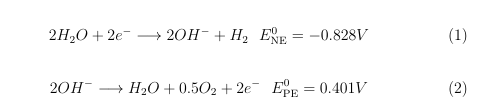
I am modeling alkaline electrolyzer with eulerian-VOF and species models. Please let me know how I should define phases according to chemical reactions

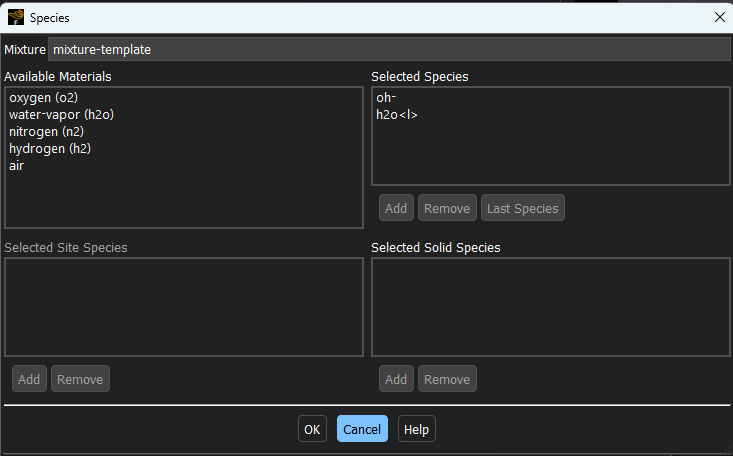
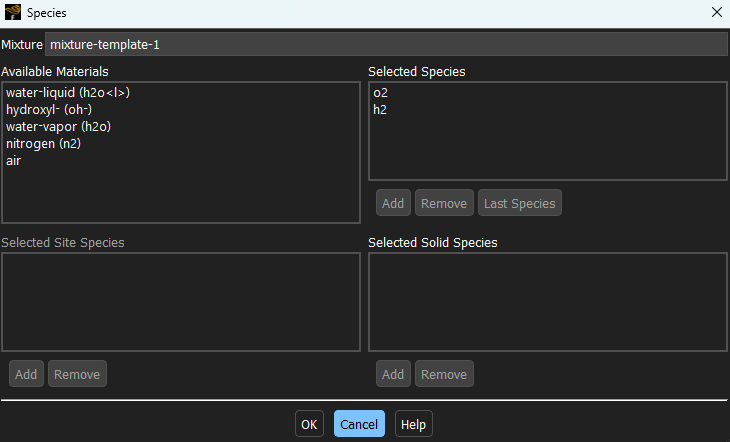
Is this correct? The primary phase is H2O(l) and OH-. The secondary phase is H2 and O2.
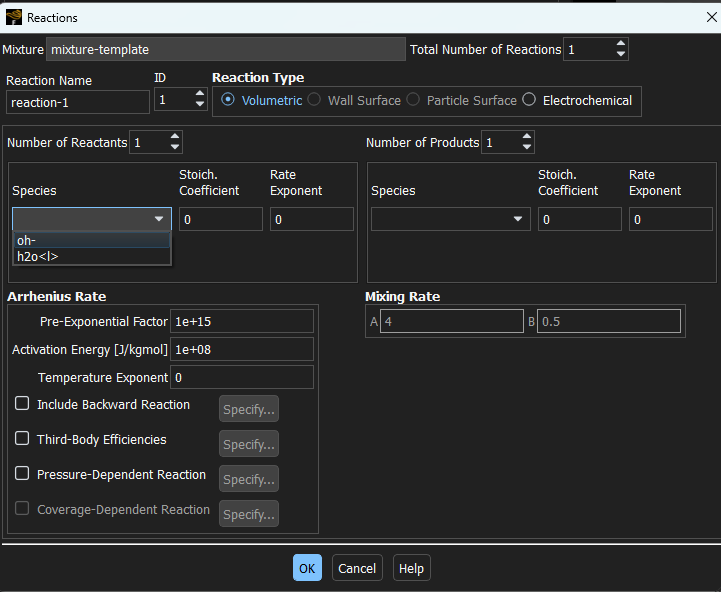
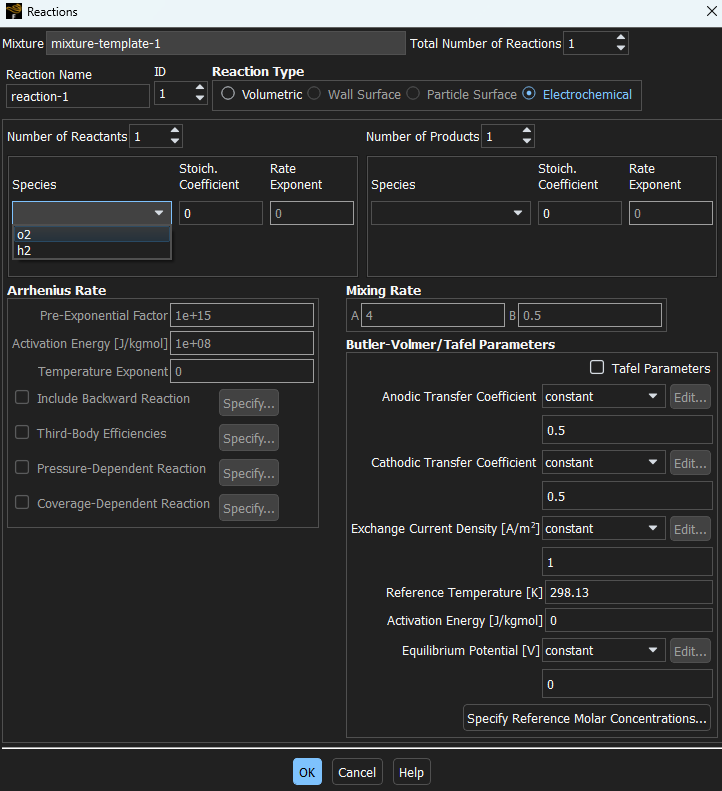
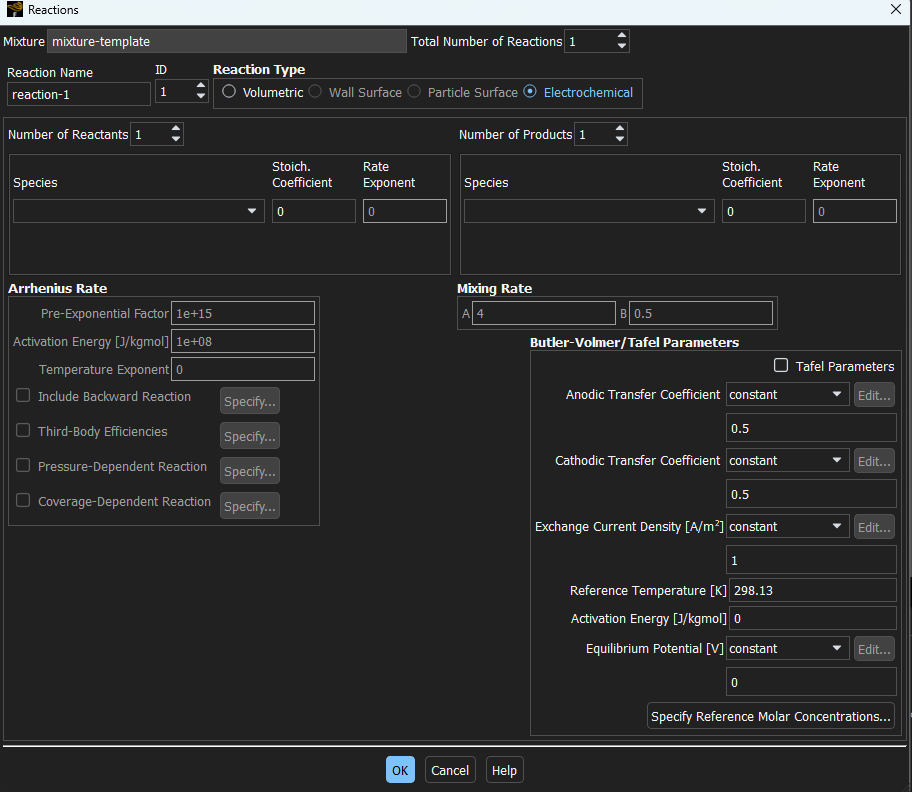
But the problem is in defining electrochemical reactions in the species model. Here you can see I set the phase 1 as a mixture-template and in reactions I have only these two options.Â
Same in the case with phase 2 which is named as mixture-template1
  
Please let me know how should I define the phases so that I can set up the reactions according to the formula
Regards,Muhammad Asim Sarwar
-
May 12, 2026 at 2:27 pm
Rob
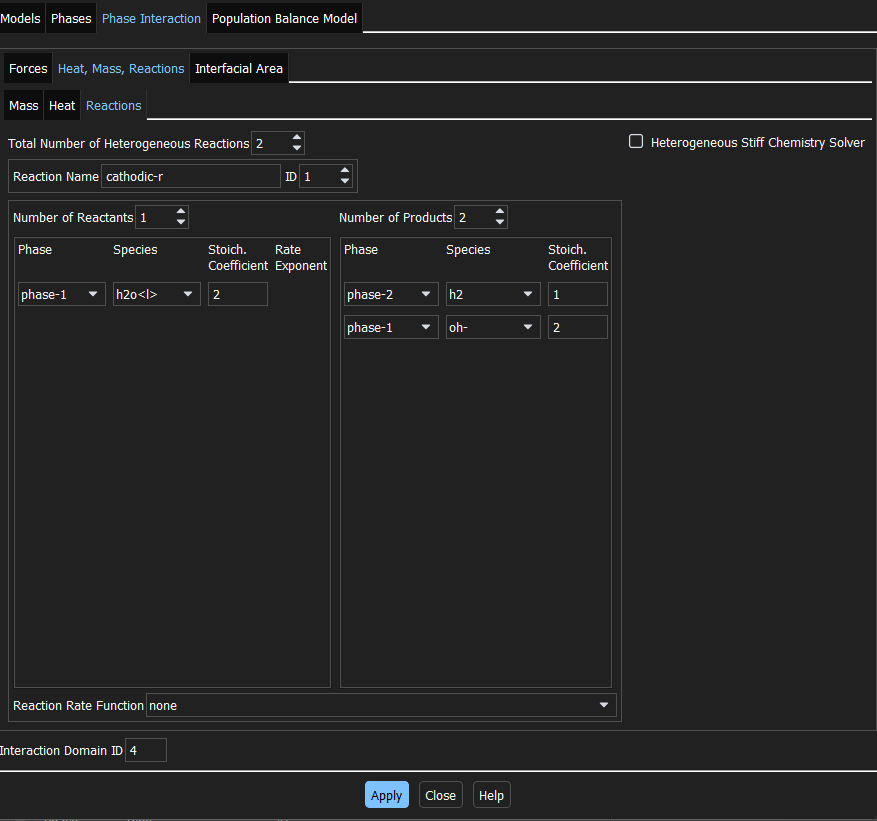
Forum ModeratorYou've defined the phases as the two mixtures - that's correct. Have a look in Phase Interaction for the chemistry but first turn the species reactions off.Â
-
May 13, 2026 at 7:38 am
muhammad.sarwar
SubscriberHi Rob,
Thanks for the answer. I checked in the phase interaction for the chemistry. First, heterogeneous reactions mean reactions occur within the fluid, right? However, in an alkaline electrolyzer, the reaction occurs at the electrode wall.
Secondly, in a heterogeneous reaction, there is no option to set the transfer coefficient and exchange current density, which are available in the species model. I need this since I want to model coupled electrochemistry, fluid, and energy models for the domain I have.

Â
Regards,
Asim
-
May 13, 2026 at 8:41 am
Rob
Forum ModeratorIf the reaction is on the wall, then it's a surface reaction?Â
-
May 13, 2026 at 8:48 am
muhammad.sarwar
SubscriberHi Rob,
Yes, the reaction happens at the surface (the interface between current conductor and electrolyte region)
Regards,
Asim
-
May 14, 2026 at 4:14 pm
Rob
Forum ModeratorAnd is it a solid electrode or porous? There are some resources on the Learning Hub, but I'm not sure what we have on the public side other than the tutorials.Â
-
May 15, 2026 at 7:14 am
muhammad.sarwar
SubscriberHi Rob,
It is a solid electrode. The domain consists of: Cathode Current Collector, Cathode Electrolyte region, Membrane, Anode Electrolyte region, and Anode Current Collector.
At outer surface of cathode and anode current collector I have to give ground and potential, respectively. At interface between current collector and electrolyte region I have to give electrochemical reactions.
As mentioned earlier, I have to include the electrochemistry, two-phase flow and energy physics. Also, I have to include the bubble affect on the butler volmer equation.
If I select hetrogenous reaction in multiphase flow, there is no option to specify the exchange current density as opposed to species model which has this option.
Regards,
Asim
-
May 18, 2026 at 3:43 pm
Rob
Forum ModeratorI see a couple of other threads on this that you've posted so I'll comment & close this one.Â
One option is to do the phase change with Eulerian and then have the reactions in the gas phase. Products can be taken back to the liquid phase afterwards too. Furher details are on the Ansys Learning Hub, and aren't something I can share on here.Â
-
- The topic ‘Define phases: Coupled Multiphase and Species Model’ is closed to new replies.

-
6545
-
1906
-
1463
-
1311
-
1022
© 2026 Copyright ANSYS, Inc. All rights reserved.