

-
-
April 1, 2022 at 3:39 pm
aliamini
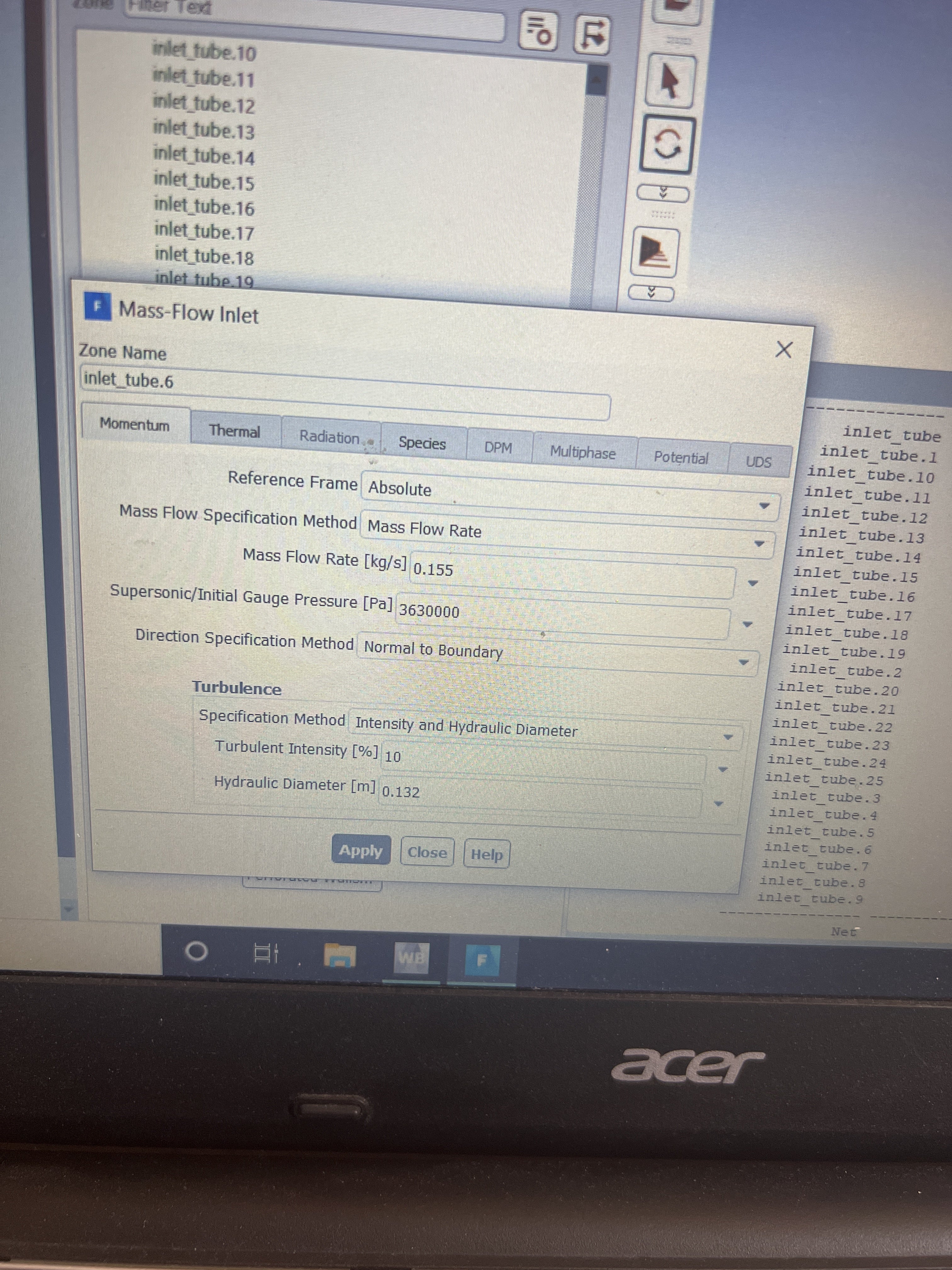
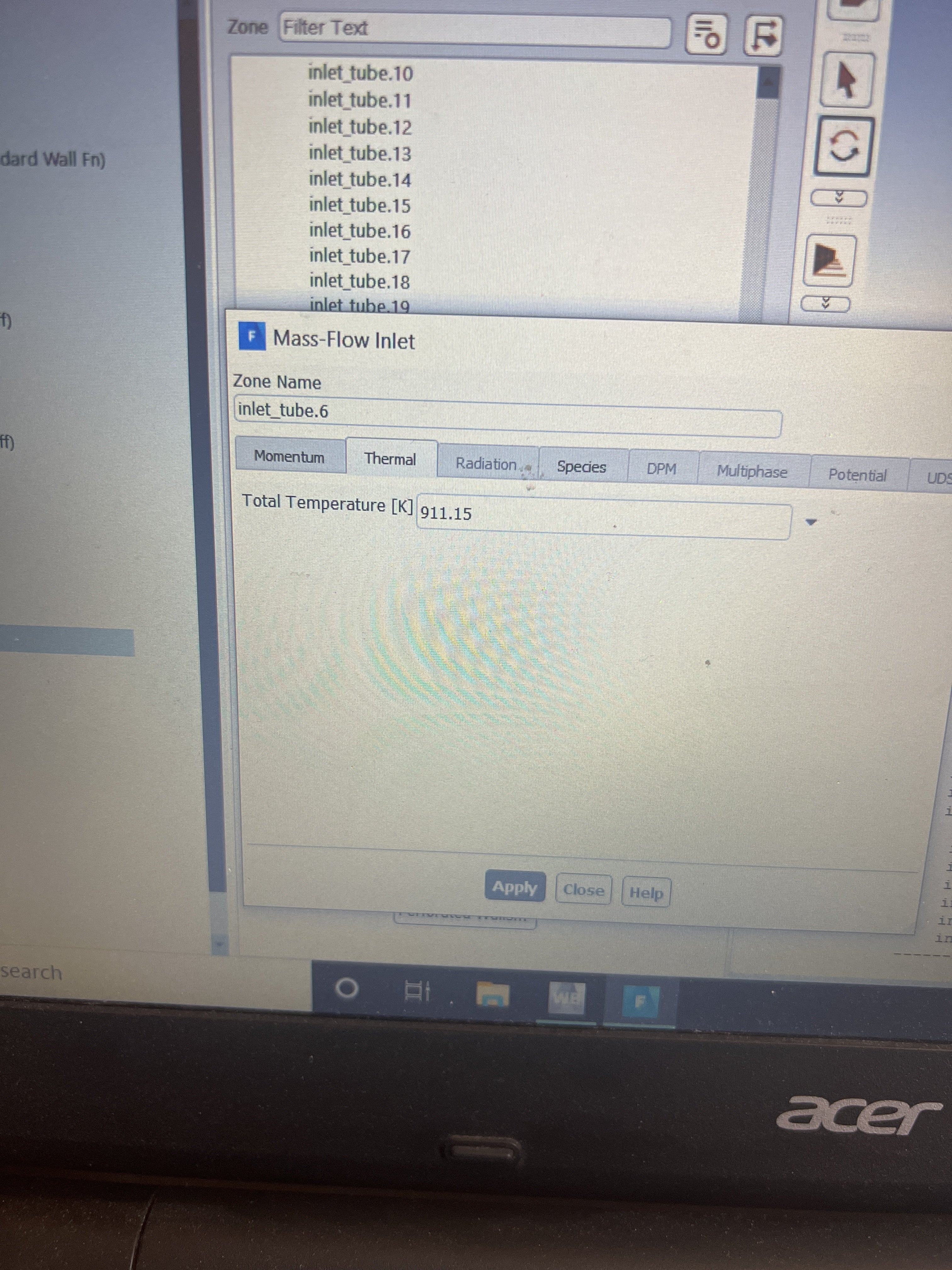
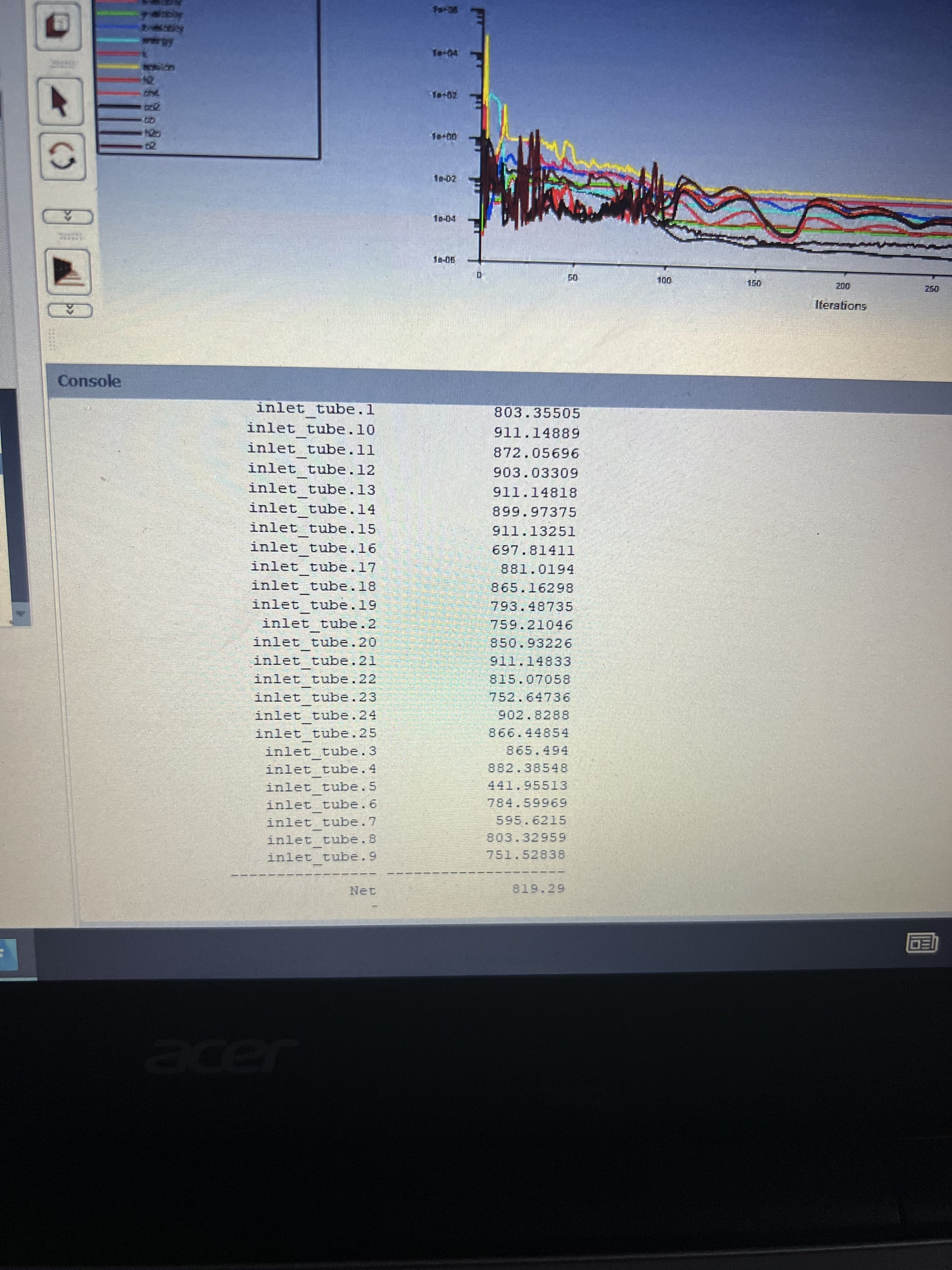
SubscriberHello i want to simulation 3d tubes with porous (use ergun equation) and use catalyst in there. I use mass flow inlet boundary conditions for them and take temperature 911k.i use couple for solve . And for mesh use polynomials mesh with minimum originality 0.2 and boundary layer mesh . When i solve this (but not converge completely),i check results for input temperatures all of my input temperates change !!! The numbers of input temperature are different from 911k
April 1, 2022 at 3:58 pmRob
Forum ModeratorWhat boundaries did you set on the tubes, and what exactly are you reporting. Screen grabs of the panels would be useful to avoid any confusion.
April 1, 2022 at 4:09 pmSubscriberHello this picture is my boundary condition
 The result for first picture is area weighted average -static temperature
thanks
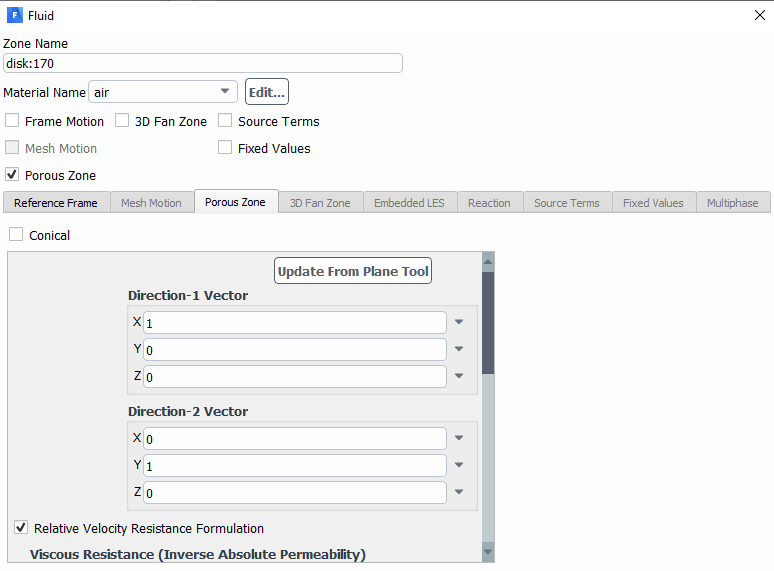
April 1, 2022 at 4:22 pmSubscriberAnd use porous zone for define catalyst in tubes
April 1, 2022 at 9:27 pmSubscriber
April 4, 2022 at 3:14 pmForum ModeratorHow big are the cells near the inlet? Plot a temperature contour that cuts through the model and plot with node values off.
August 16, 2023 at 10:18 pmjose monteiro
Subscriberhello, i think i know the problem and i have some questions about it to. I think is because the total termperature, that is requeried in mass flow and pressure inlets.
In my problem im simulating the filling of an hydrogen tank, and when i check the static temperature it comes down to values below what i input(to 275 from 293 Temp constant that i input for example) and then whith some time like 40 seconds of real time simulated it comes close to what i input. My velocity decreases with the time as it should in a real experiment and i check my mach number and was above 0.5 in the first second of real time simulated. My questions are:
1- what is the number that fluent uses as limit to compressible flow, i have seen some sources saying it considers compressible above 0.3 of mach number, so between 0.3 and 1 is compressible but subsonic that is my case, so i expect differences exist between total and static temperature and on a incompressibles dont.
2- if what i said above is true, how can we input static temperature inlet (on pressure or mass flow inlets) or its impossible. Because i want to use a temperature profile inUDF that i found on a article and i suspect it is static temperature because most of sensors measure static temperature.
3- if my input was a pressure profile and subsonic how can i do to an UDF with absolute pressure since is a static pressure and fluent only uses stagnation for pressure subsonic inlets.
More informations about my model: K-e standart, scalable wall functions, transient , pressure based, simple, inlet tube adiabatic and walls are couple (aluminium and fiber walls), mass flow rate of 0.008 kg/s, that gives me a velocity of 750 and 0.5 approximately, (important: im getting this conclusions because when i do contours of total temp in the inlet the values that i input are equal and if i do static the values decrease as mentionated but in the surface of the tube are correct since in that zone is no slip condition and adiabatic so the fluid rests adiabtic and in that case total and static temperature are the same, it is why i think is the problem above).
Viewing 6 reply threads- The topic ‘Temperature change in input fluent’ is closed to new replies.
Innovation Space Trending discussions
 Top Contributors
-
peteroznewman
 6495
6495 -
scabo
 1906
1906 -
Dennis Chen
 1458
1458 -
javat33489
 1308
1308 -
Shyam Prasad V Atri
1022
Top Rated Tags
© 2026 Copyright ANSYS, Inc. All rights reserved.
Ansys does not support the usage of unauthorized Ansys software. Please visit www.ansys.com to obtain an official distribution.
-
Ansys Assistant will be unavailable on the Learning Forum starting January 30. An upgraded version is coming soon. We apologize for any inconvenience and appreciate your patience. Stay tuned for updates.


 You are navigating away from the AIS Discovery experience