

-
-
May 25, 2021 at 3:23 pm
AMOLGILORKAR
SubscriberDear friends,
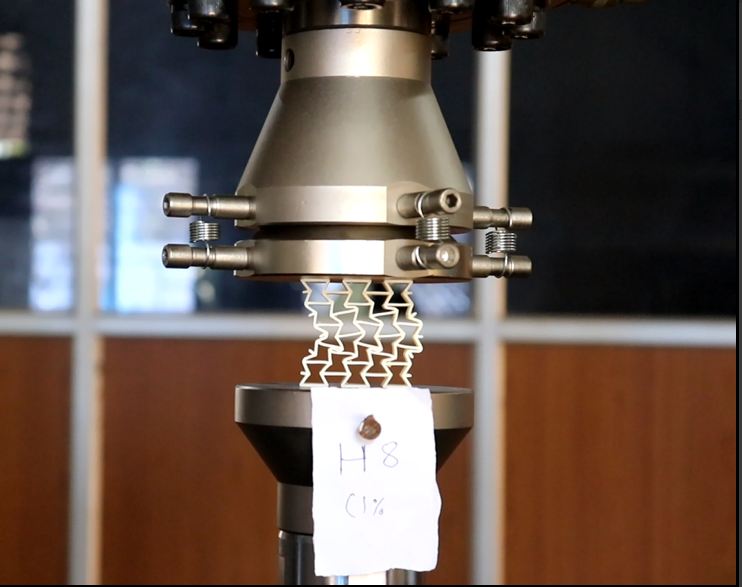
I have performed a compression test and I have all the data. Now I want to validate the experimental data using simulation results. Three specimen were tested with displacement rate of 0.25 mm/s, 0.5 mm/s and 0.75 mm/s individually.
Should I use Explicit Dynamics or static structural analysis?
Material used is ASA (thermoplastic), which is not listed in ANSYS materials data. I want the stress strain curve upto 50% strain, which is in the plastic region (from experimental data).
Hence my question is should I use only isotropic data?
Please reply.
May 26, 2021 at 3:13 pmRam Gopisetti
Ansys EmployeeCompression test are mostly made using the implicit so preferably use Static structural with sub steps on.
yes you can use isotropic data. Check the following research papers to know more on the approach on implementing the material model.
Cheers, Ram
May 26, 2021 at 8:05 pmSubscriberThank you Ram for your reply. In experiment
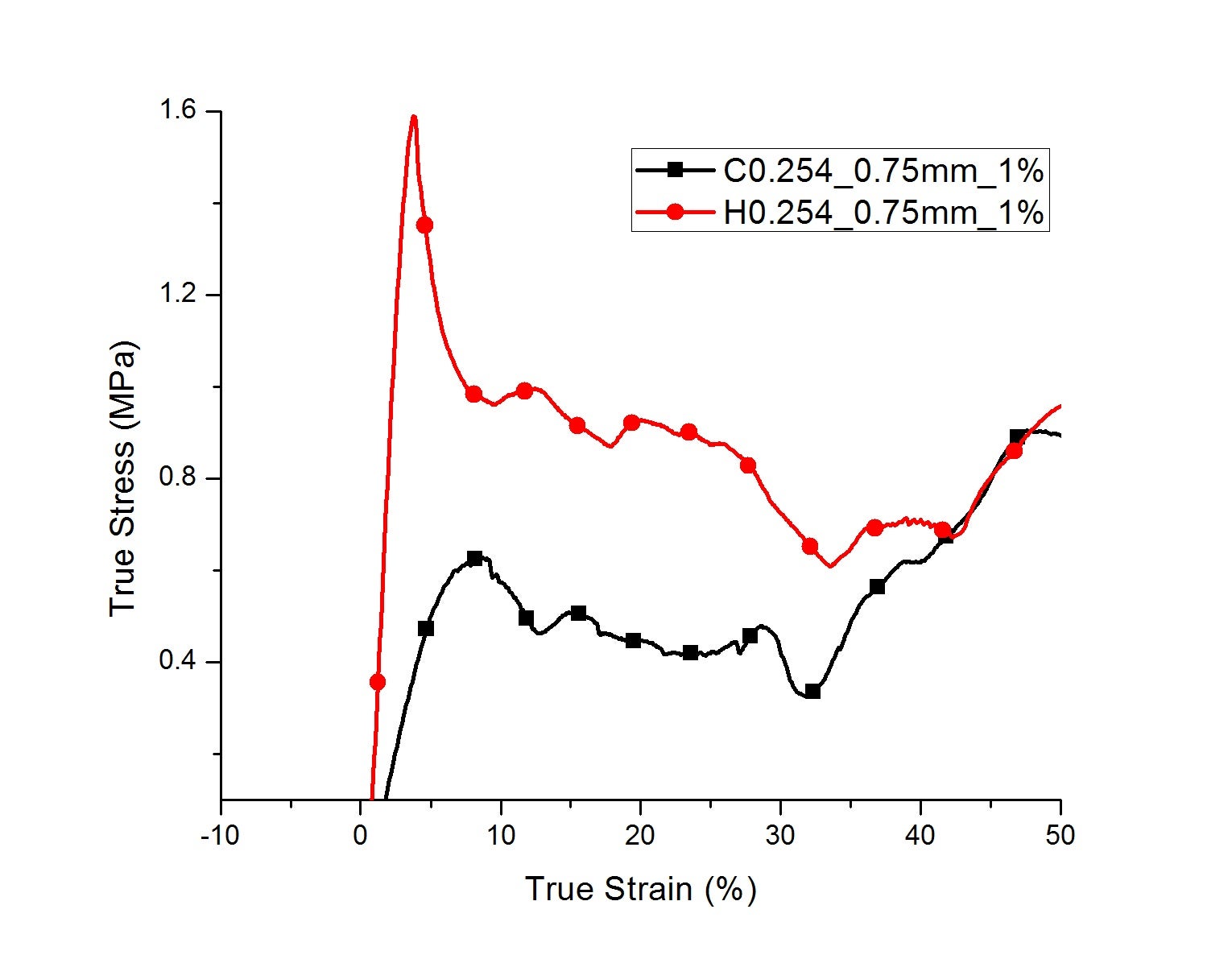 this is the True Stress-True Strain plot. So if I use only isotropic properties, then I am getting curve upto elastic region.
I have gone through this paper for material properties. Also I have the material properties data provided by manufacturer of ASA material, hence I used that data only.
Please find the below image showing the material added using the material properties provided by manufacturer of ASA material.
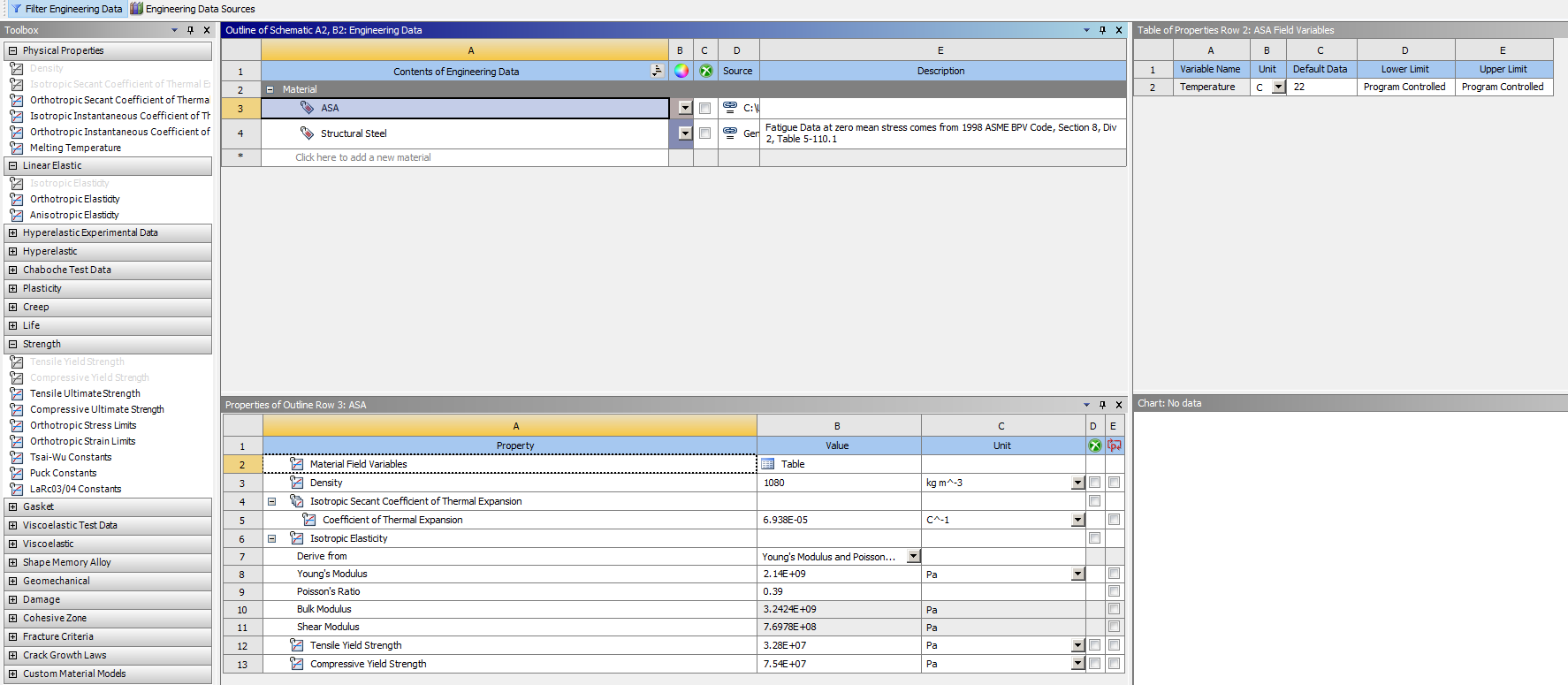 Please suggest some additional properties needs to be added to get the approx curve. Thank you.
May 27, 2021 at 12:25 ampeteroznewman
SubscriberHi I helped a member in this site with this kind of a structure before, and because of the self contact, found Explicit Dynamics to be very beneficial.
Unfortunately, the link to the original post is broken.
May 27, 2021 at 5:27 amSubscriberThank you @peteroznewman for your reply.
Material (ASA) used for fabrication is not listed in Ansys Engineering Data Sources. Hence can you please suggest some additional properties needs to be added except this.
April 25, 2022 at 2:18 pmszeles1996
Subscribercan you tell us how you did that simulation?
I would really appreciate if you could briefly explain the workflow, constrains etc.
April 25, 2022 at 6:56 pmAnsys Employeeits suprising that the trends of the cure is same with some offset, Have you tried mesh convergence studies, what is the strain rate of your experiment, perhaps the following paper might help you on tuning the material properties
Finite element analysis of 3D-Printed Acrylonitrile Styrene Acrylate (ASA) with Ultrasonic material characterization by Yee Ling YapÔêù, William TohÔÇá, Rahul Koneru and Zhong Yang Chua
cheers, Ram
May 2, 2022 at 3:24 amp88087063
SubscriberI am simulating lattice structure using explicit LS _DYNA with ANSYS workbench. I do have compression test data and wanna use it in ANSYS, so I need suggestions on how to input stress vs strain experiment data into ANSYS? Also wanna see both elastic and plastic regions on the curve after simulation, is it possible?
In another word, I wanna validate the experimental result with the simulation. Hence could you also share with me the above video procedure for the simulation of lattice compression?
Thank you very much! Appreciated!!
-
March 4, 2023 at 12:51 pm
Raghu Nandhan
SubscriberPlease help with settings for compression testing on lattice structure with 1mm/sec loading
Viewing 7 reply threads- The topic ‘Simulation of Compression Test of Thermoplastic Material’ is closed to new replies.
Innovation Space Trending discussions
 Top Contributors
-
peteroznewman
 6495
6495 -
scabo
 1906
1906 -
Dennis Chen
 1458
1458 -
javat33489
 1308
1308 -
Shyam Prasad V Atri
1022
Top Rated Tags
© 2026 Copyright ANSYS, Inc. All rights reserved.
Ansys does not support the usage of unauthorized Ansys software. Please visit www.ansys.com to obtain an official distribution.
-


The Ansys Learning Forum is a public forum. You are prohibited from providing (i) information that is confidential to You, your employer, or any third party, (ii) Personal Data or individually identifiable health information, (iii) any information that is U.S. Government Classified, Controlled Unclassified Information, International Traffic in Arms Regulators (ITAR) or Export Administration Regulators (EAR) controlled or otherwise have been determined by the United States Government or by a foreign government to require protection against unauthorized disclosure for reasons of national security, or (iv) topics or information restricted by the People's Republic of China data protection and privacy laws.

 You are navigating away from the AIS Discovery experience