Photonics

Photonics

Topics related to Lumerical and more.

Oscillations of reflectance & transmittance in FDTD results

TAGGED: 

    • handon
      Subscriber
      Hello, 
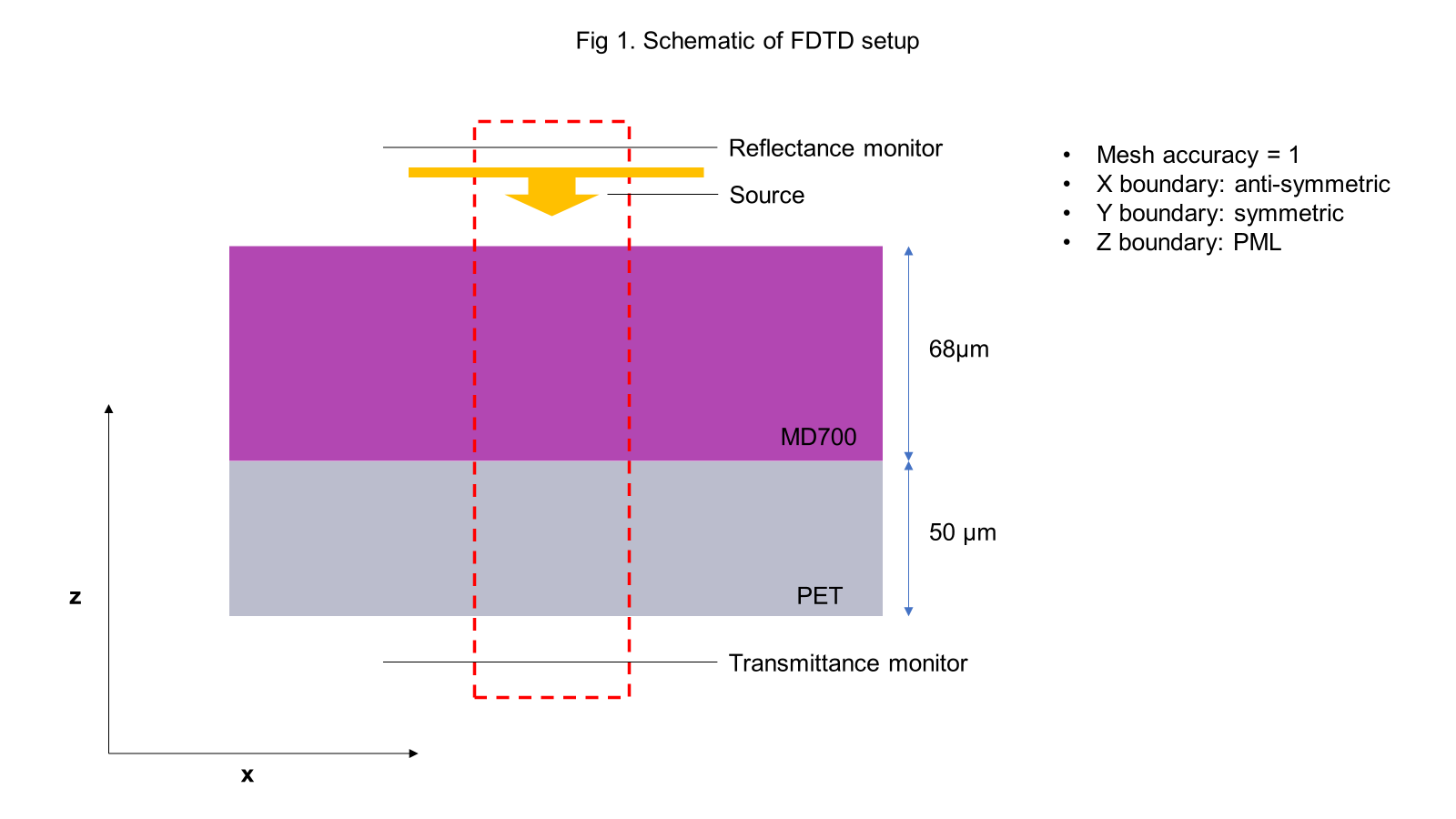
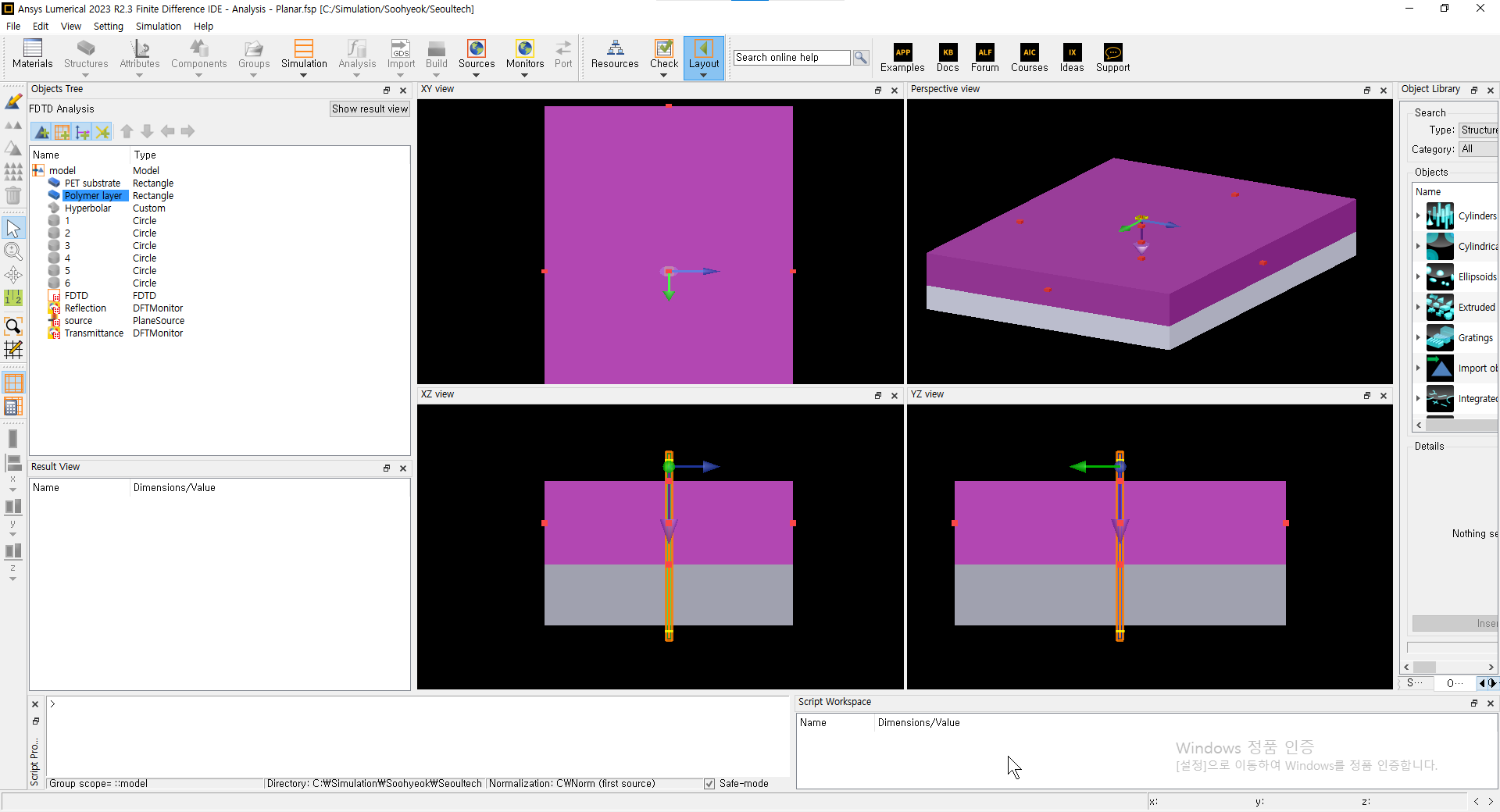
      I simulated the structure of the polymer layer on the PET substrate. (Fig 1.)
       
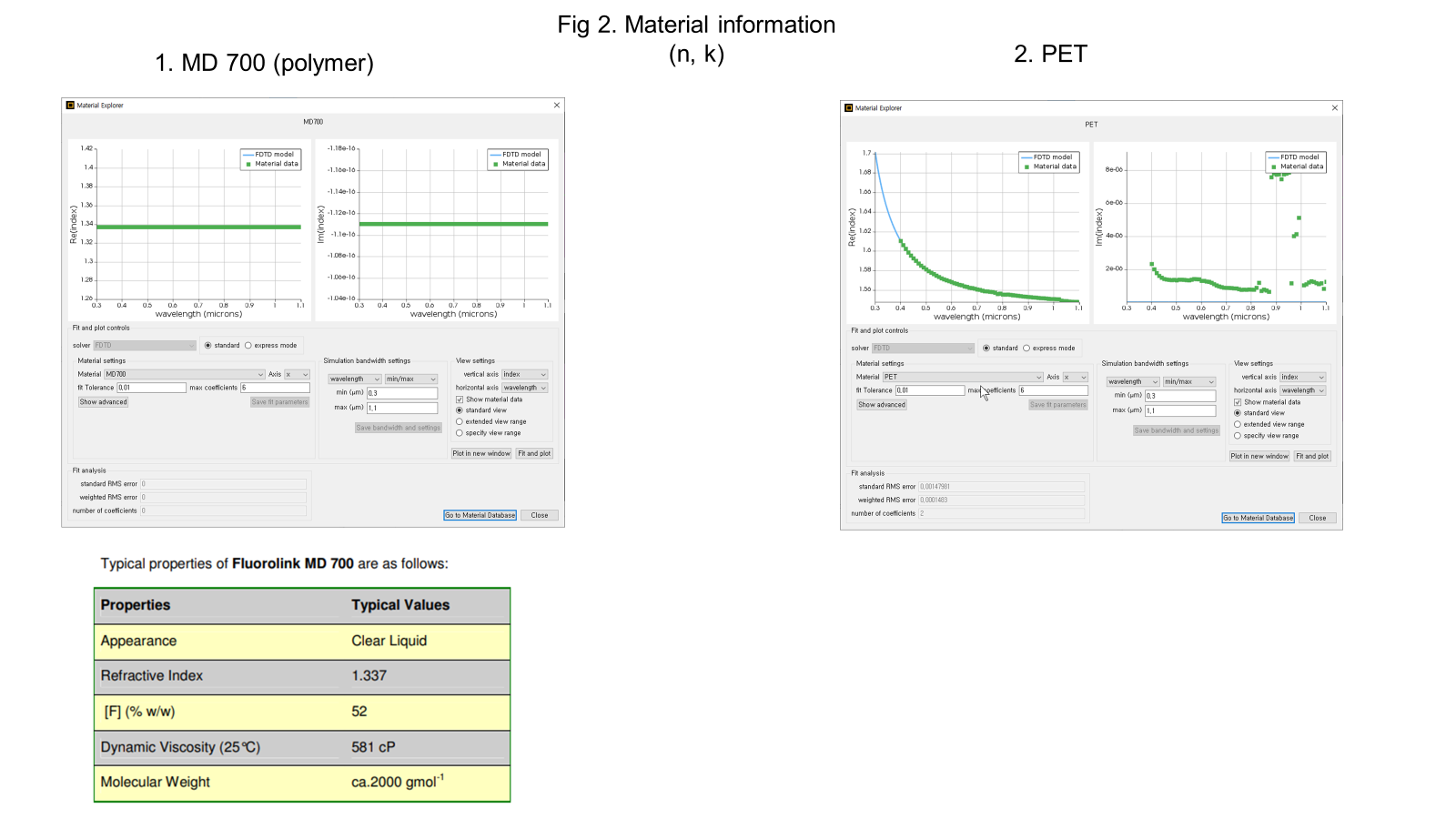
      And I imported each material's n, k value and fit the parameters. (Fig 2.)


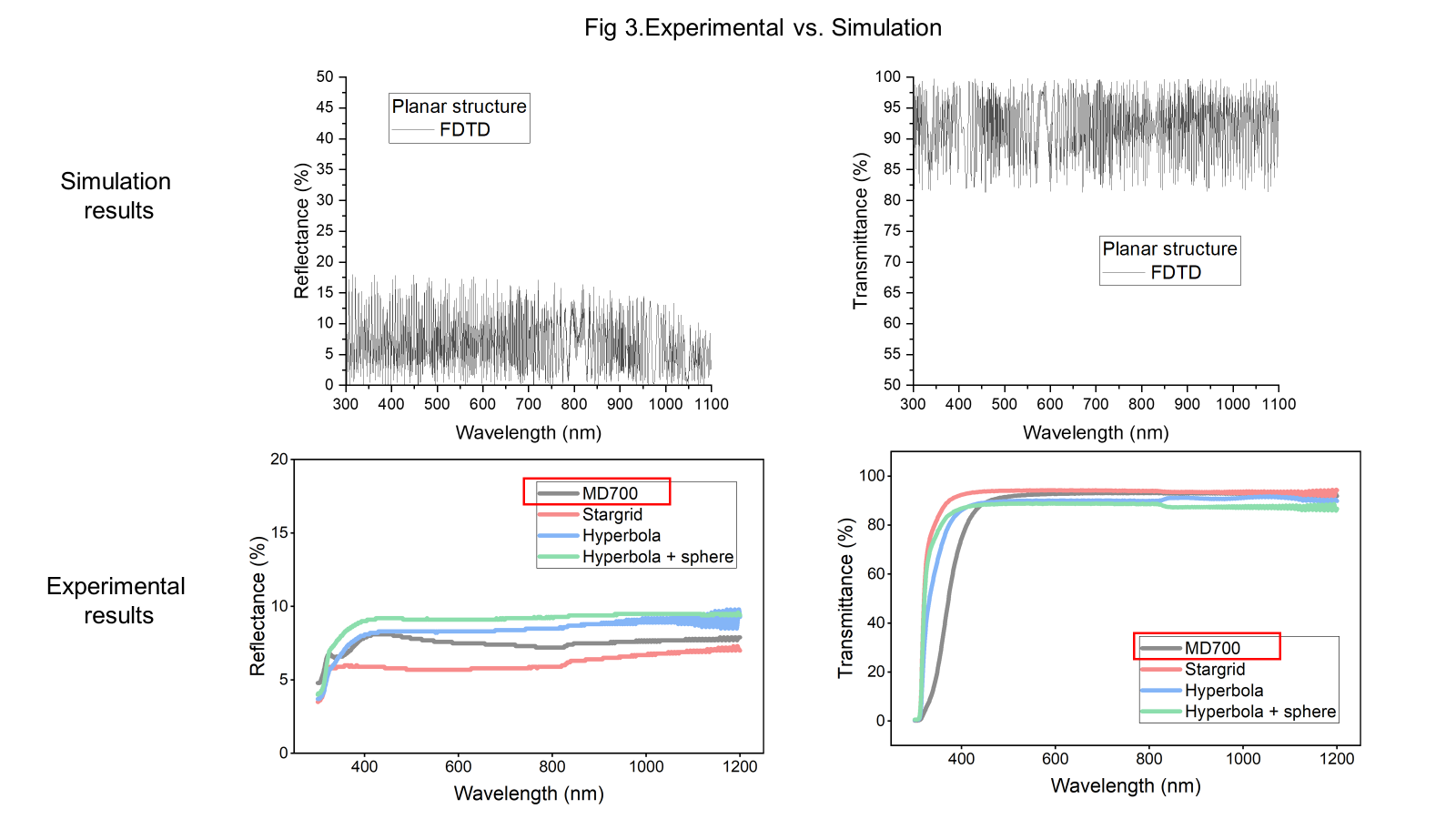
      The FDTD results showed a similar trend with experimental results in reflectance (~ 5%) and transmittance (~ 90%).
       
      However, the FDTD results have severe oscillations as you can see in Fig 3, whereas the experimental results show a flat graph of reflectance and transmittance.
       
       
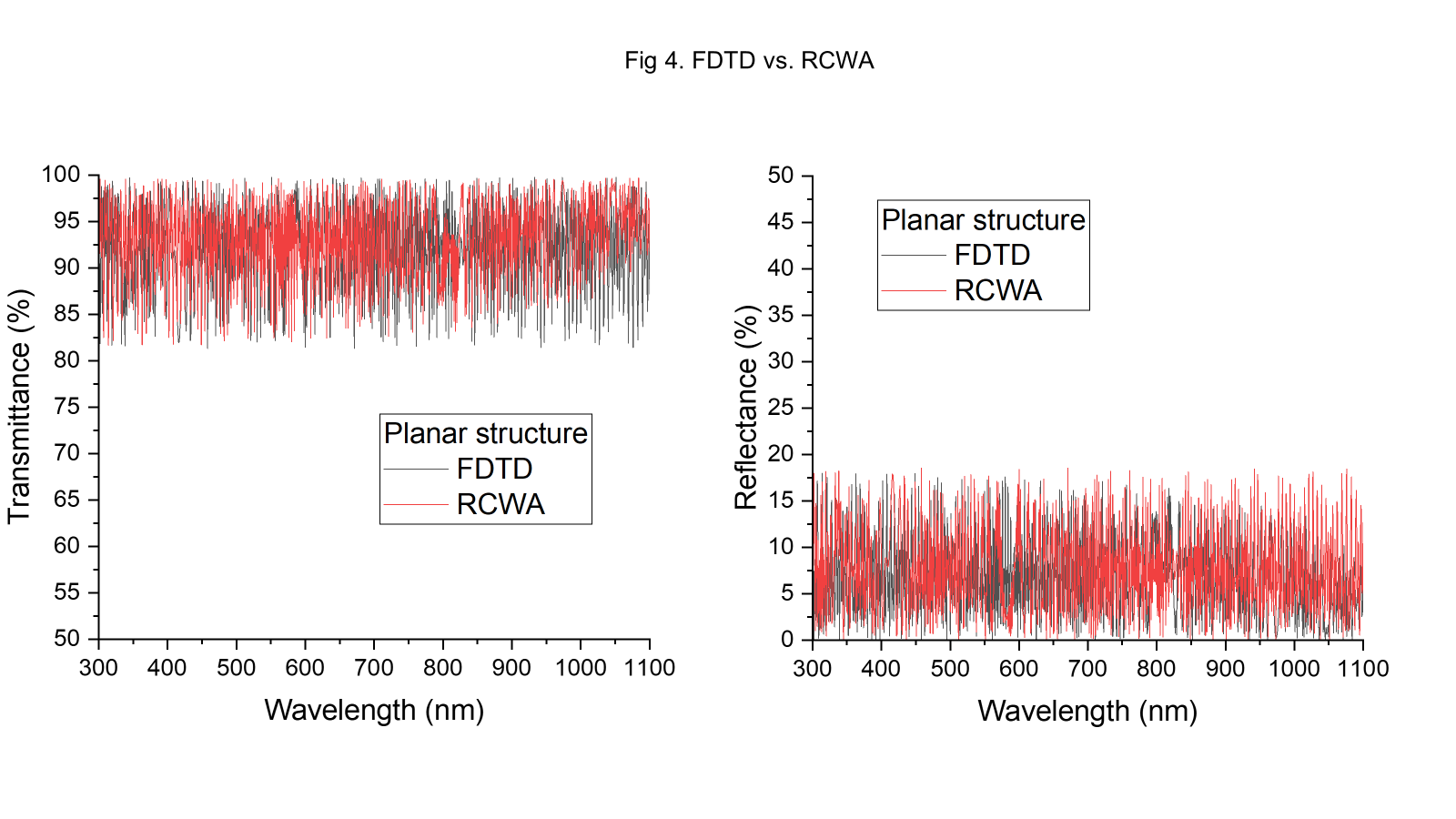
      These oscillations also occurred in the CHARGE same as the FDTD results. (Fig 4.)
       
      I know that the simulation results show oscillations due to the resonance of light because the simulation structure has an ideal design.
      But, in the case of this simulation, it seems that the oscillations are out of the normal range.
       
      How can I suppress these oscillations in the simulation?
    • Guilin Sun
      Ansys Employee

      I do not get the information about the thicknesses of the two slabs and the source in experiment. However when both FDTD and RCWA give very similar result, but different from experiment, then you may need to consider the effect of coherence. I believe the thickness of each layer is very large, on the scale of 100um or more.

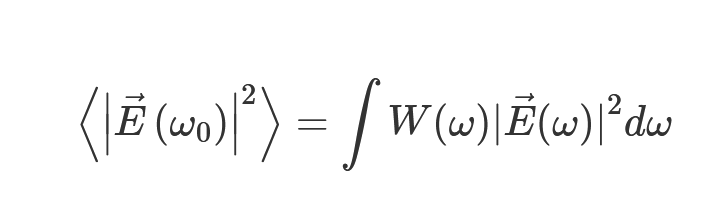
      FDTD gives pure, single wavelength in coherent way. It does not consider any incoherence or partial coherece. However in experiment, if you do not use laser source, for example, you use nature light or florescent light or other incoherent sources, they are incoherent thus the ripples are averaged out. that is, the measured result is like this

       where W is the spectral weight of the source. More information maybe found here https://optics.ansys.com/hc/en-us/articles/360034383074-Understanding-temporal-incoherence-in-FDTD

      You can use stackrt to verify the FDTD/RCWA result: stackrt - Script command

      • handon
        Subscriber

        hello, Guilin.

        the slab (thickness) consists of MD 700 layer (76um)/PET (50um). And I use a plane wave source in the case of FDTD.

        So is it impossible to suppress oscillation in my simulation either FDTD or RCWA?

    • Guilin Sun
      Ansys Employee

      The oscillation is physical for coherent light, I believe. You can use stackrt to verify the FDTD/RCWA result since it is thin-film type device: stackrt - Script command

      This is one main reason why simulation is different from experiment, due to source (in)coherence.

      You may be able to smooth the simulation result, as long as you know the wieght function, which we do not know, in general, of the source used in experiment. (please give more details about the source in experiment if you want dig out more). 

Viewing 2 reply threads
  • The topic ‘Oscillations of reflectance & transmittance in FDTD results’ is closed to new replies.